
At most conferences and corporate events, the day follows a familiar structure. There are keynote presentations, panel discussions, networking sessions, sponsor activations, and plenty of smaller moments happening around the venue.
Because of this, an event photography shot list can be a helpful way to think about the kinds of moments you’ll need to cover. It helps you mentally map out the flow of the event and the different types of photos that will likely end up in the final gallery. This ties closely to the broader thinking behind how to photograph events professionally.
In this guide, I’ll walk through the types of photos that commonly appear in conference and corporate event coverage, with examples of each.
Venue and Establishing Shots
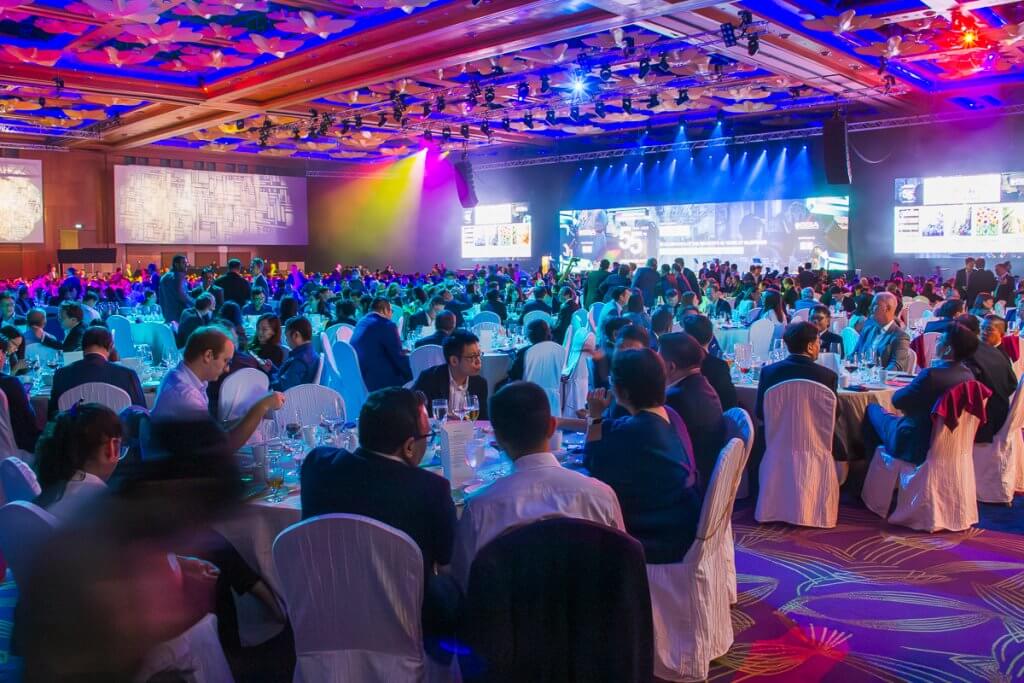
The first photos in a gallery usually focus on the venue itself. These establishing shots help show where the event is taking place and give viewers a sense of the scale, layout, and atmosphere, which often means working with the available light in the space.
They are also a good opportunity to capture the event’s branding throughout the venue, such as logos on stage backdrops, banners, signage, and sponsor displays.
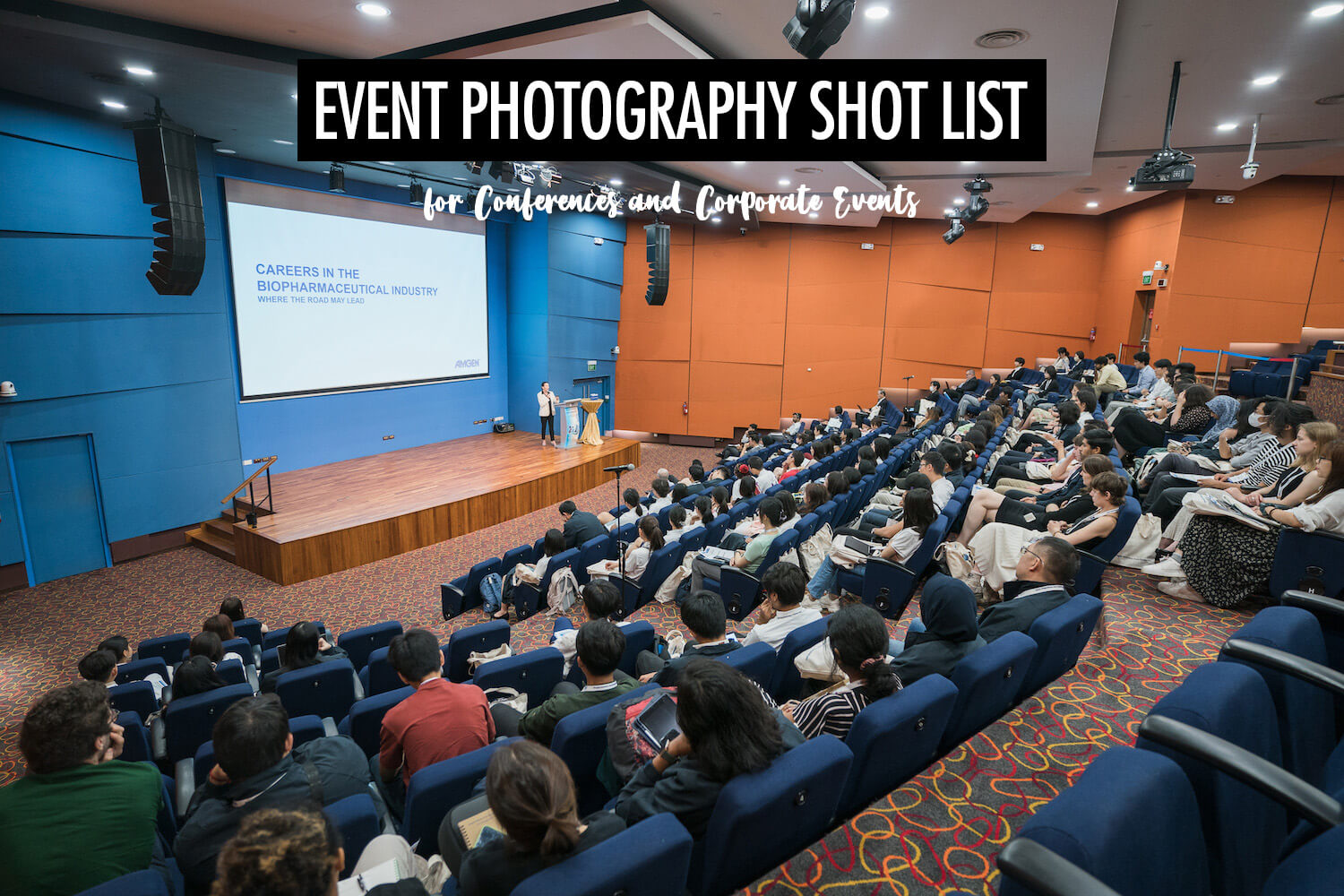
One photo I almost always include is a wide shot of the main conference hall taken from a higher vantage point. This can be done either before the audience arrives to show the full stage design and production setup, or during a session when the room is filled, which helps convey the scale and energy of the event.
Shots to capture:
- Wide shot of the venue before guests arrive
- Wide shot of the venue during a session with the audience present
- Stage setup with lighting and screens visible
- Event signage and branding throughout the venue
- Registration or check-in area
- Exterior shot of the venue or conference location
Speakers and Panel Discussions
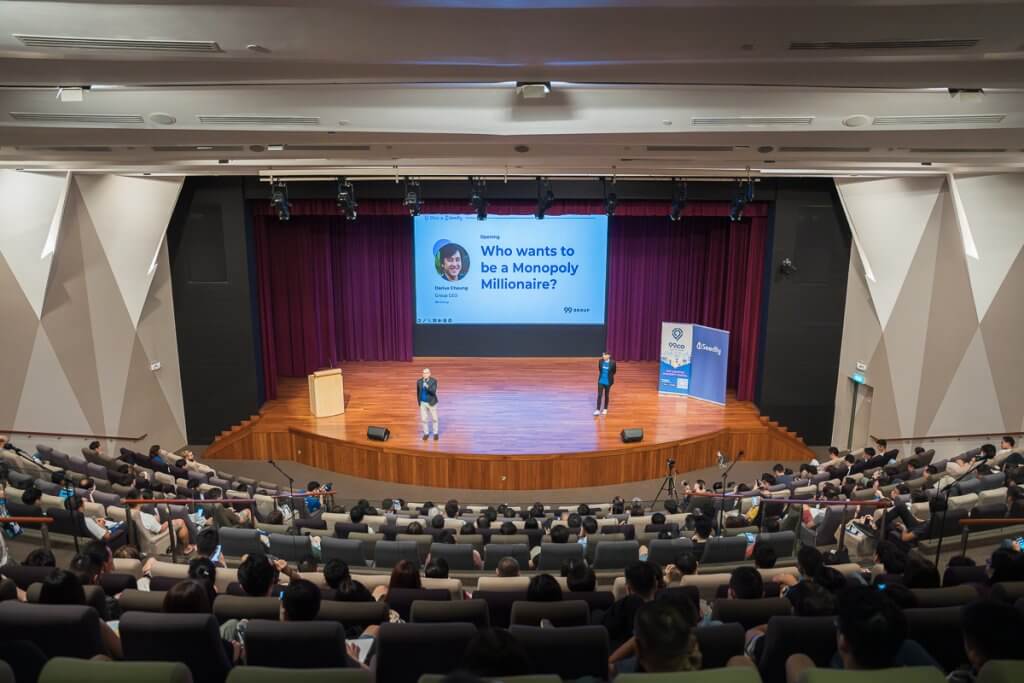
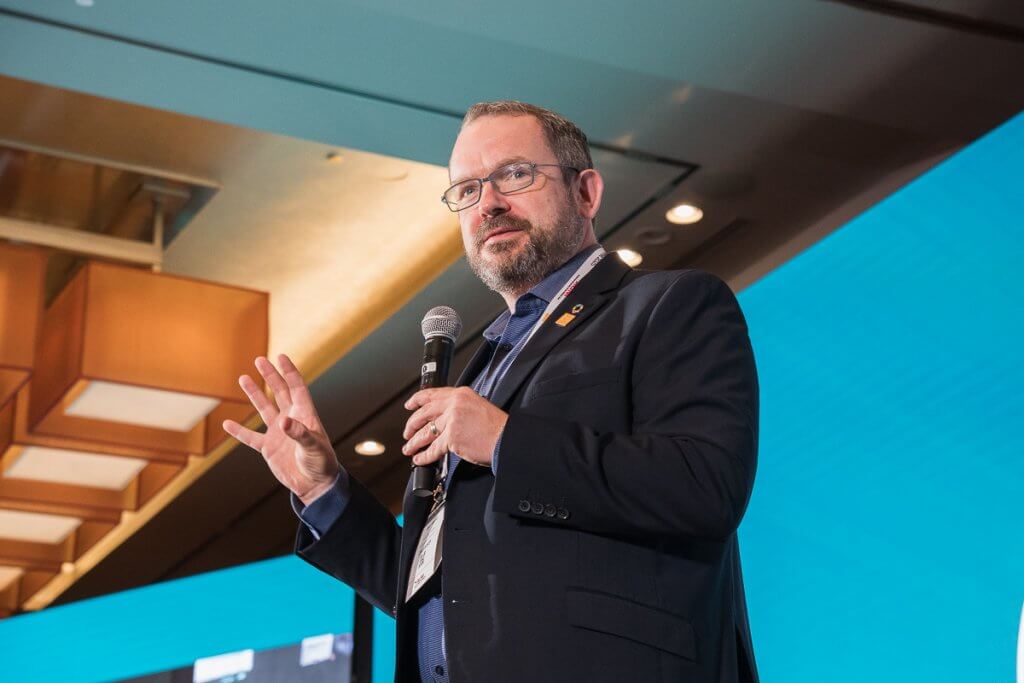
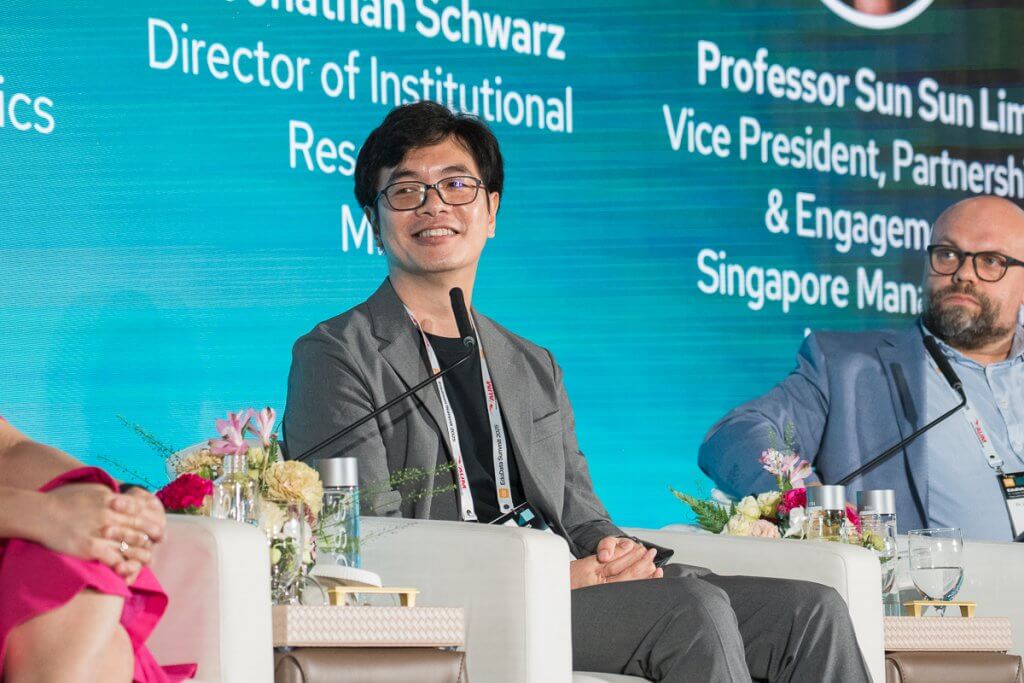
Keynote presentations and panel discussions are usually the main focus of conferences. These sessions feature industry experts, company leaders, or invited speakers, so organisers expect a strong set of photos from the stage.
Different framing choices help tell the story of the session, which often depends on having the right event photography equipment for both wide and telephoto coverage. Wide shots show the stage setup and scale of the event, mid-range shots keep the speaker clearly visible, and close-ups capture expressions and gestures during key moments of the talk.
Panel discussions add another layer because multiple speakers are interacting on stage. During these sessions, I always watch for candid reactions between panelists, such as moments where speakers laugh, nod, or respond to each other. These interactions often make the photos more engaging and help show the dynamic nature of the discussion.
Shots to capture:
- Wide shot of the speaker on stage
- Mid-range shot of the speaker presenting
- Close-up of gestures or expressions
- Speaker with the audience visible in the foreground
- Full shot of the panel on stage
- Moderator asking questions
- Individual panelist close-ups
- Panelists reacting to each other
Audience Engagement
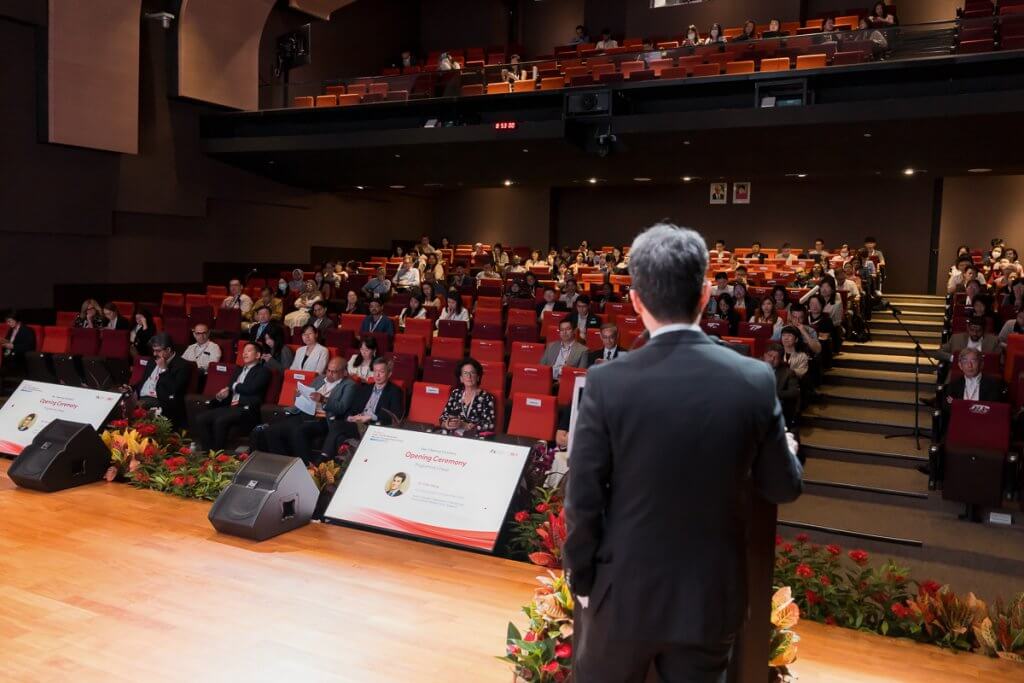
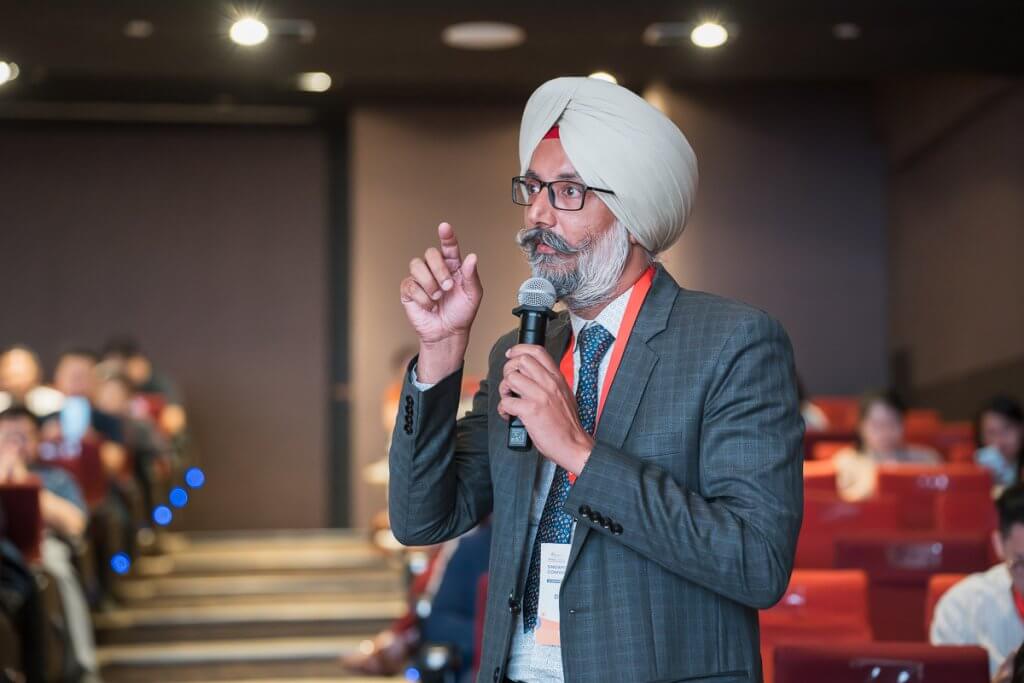
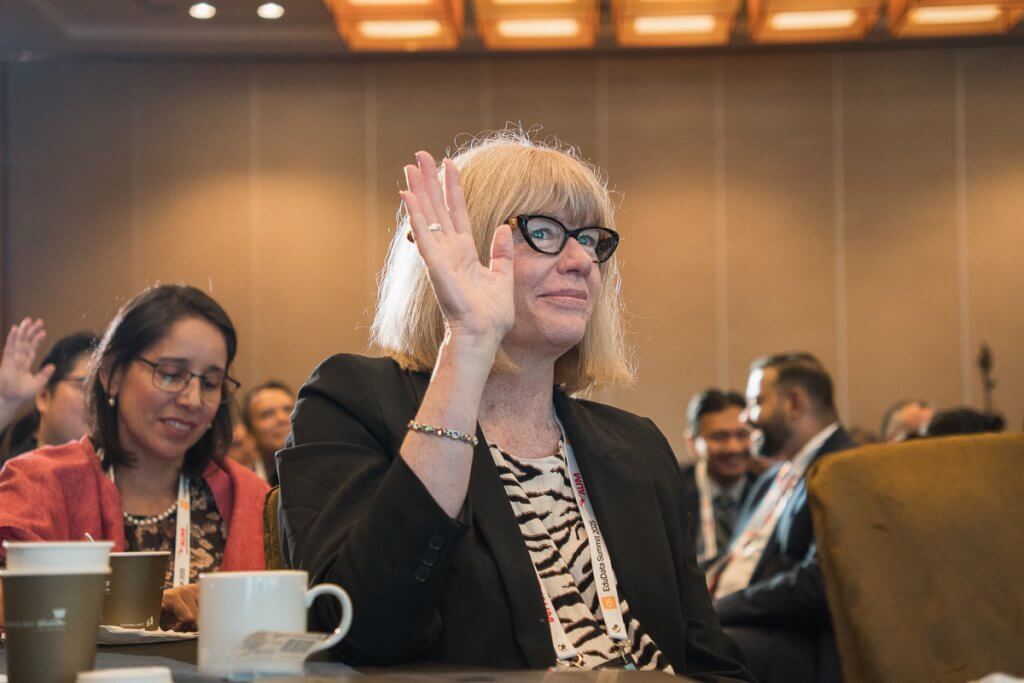
Photos of the audience help show how people are responding to the event. While stage photos document the speakers, audience images provide context by showing participation, attention, and the overall energy in the room.
There are also moments during presentations when audience reactions become especially important. If a speaker is about to tell a joke or say something that will likely get a strong reaction, I’ll often turn the camera toward the audience instead of the stage. Capturing smiles, laughter, or applause can help convey the atmosphere of the session.
Shots to capture:
- Audience listening attentively
- People taking notes or using laptops
- Applause moments
- Audience members asking questions
- Reactions such as laughter or smiles
- View of the audience from the stage
Sponsor Booths and Brand Activations
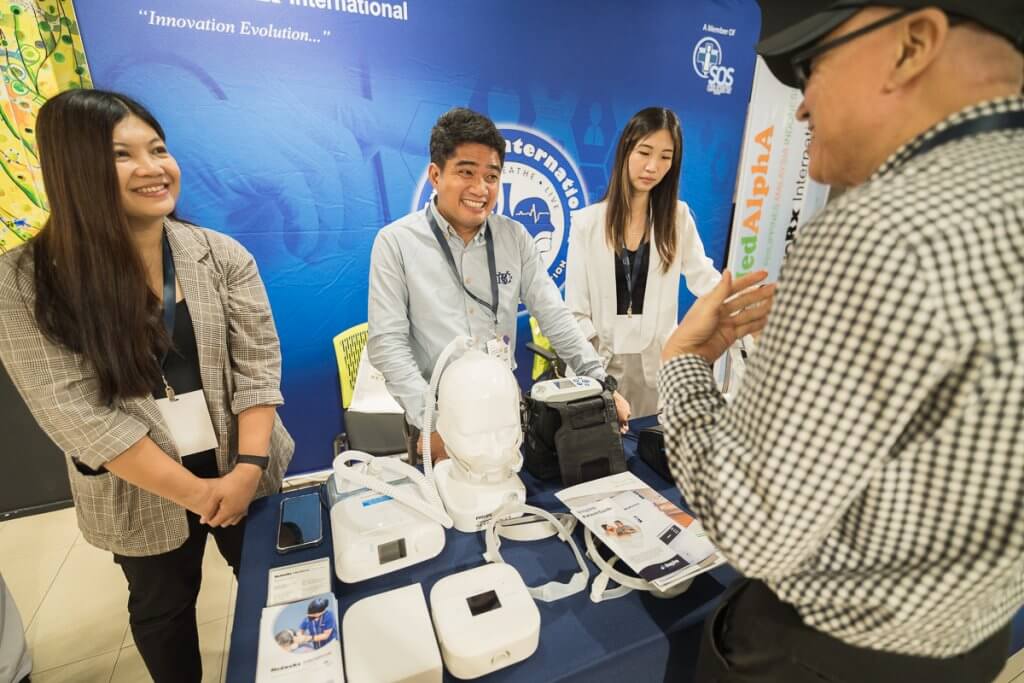
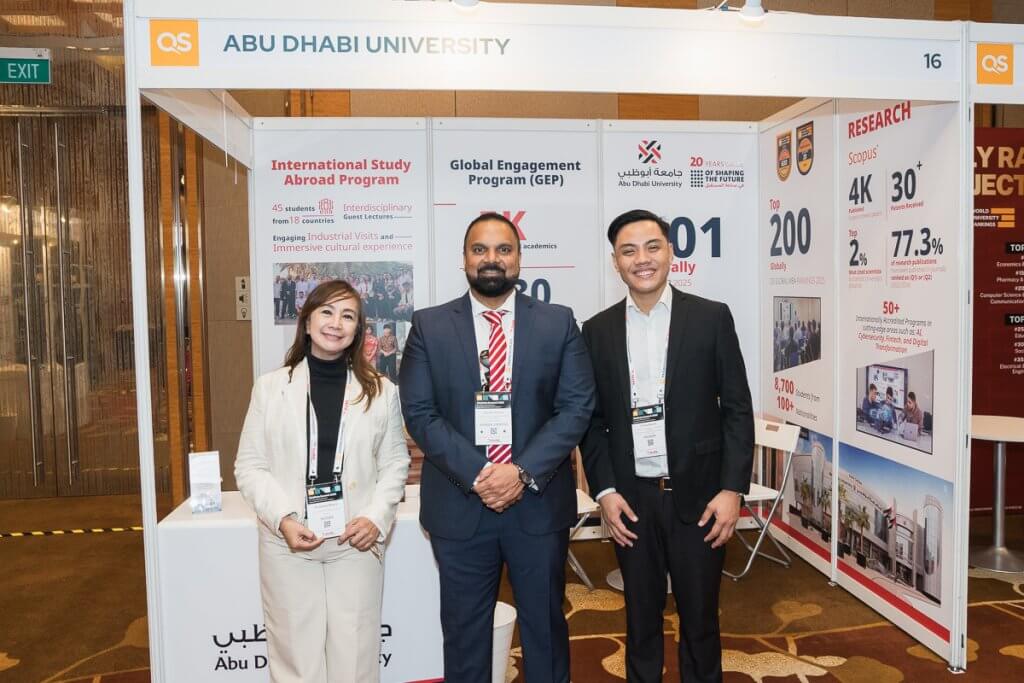
Sponsor booths and brand activations are another important part of conferences and corporate events. While stage sessions highlight the speakers and program, sponsor areas show how exhibitors interact with attendees.
For many organisers and sponsors, these photos are especially valuable because they demonstrate brand visibility and engagement on the exhibition floor. Sponsors may care even more about these images than stage photos.
When covering these areas, I usually focus on showing both the booth itself and the activity happening around it, with branding clearly visible.
Shots to capture:
- Wide shot of the booth
- Brand signage clearly visible
- Staff interacting with attendees
- Product demonstrations
- Crowds gathered around booths
Networking and Social Moments
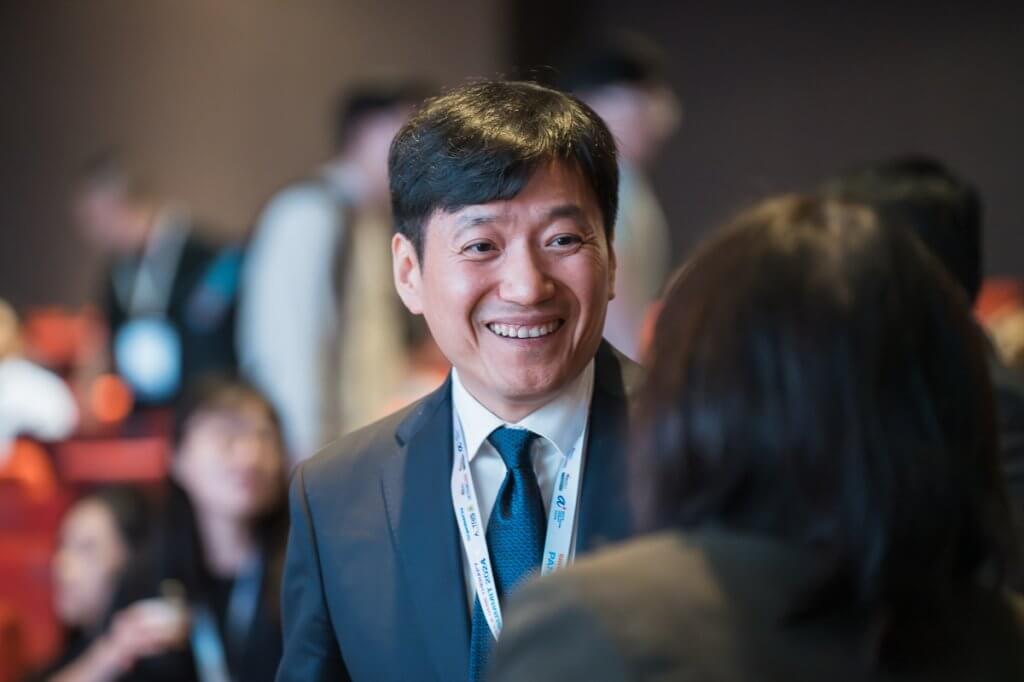
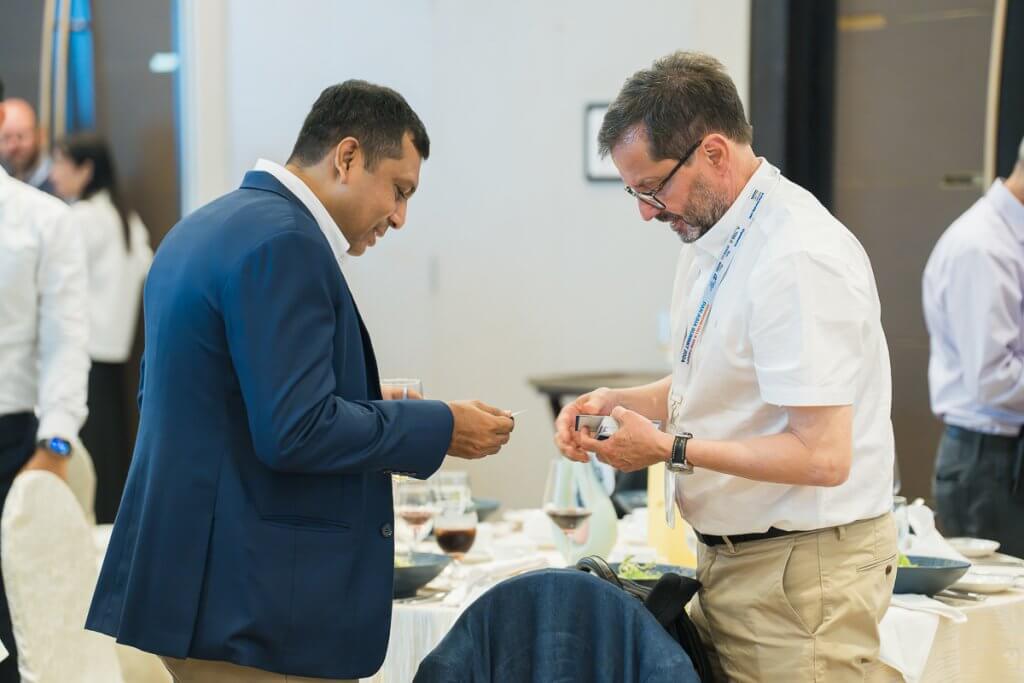
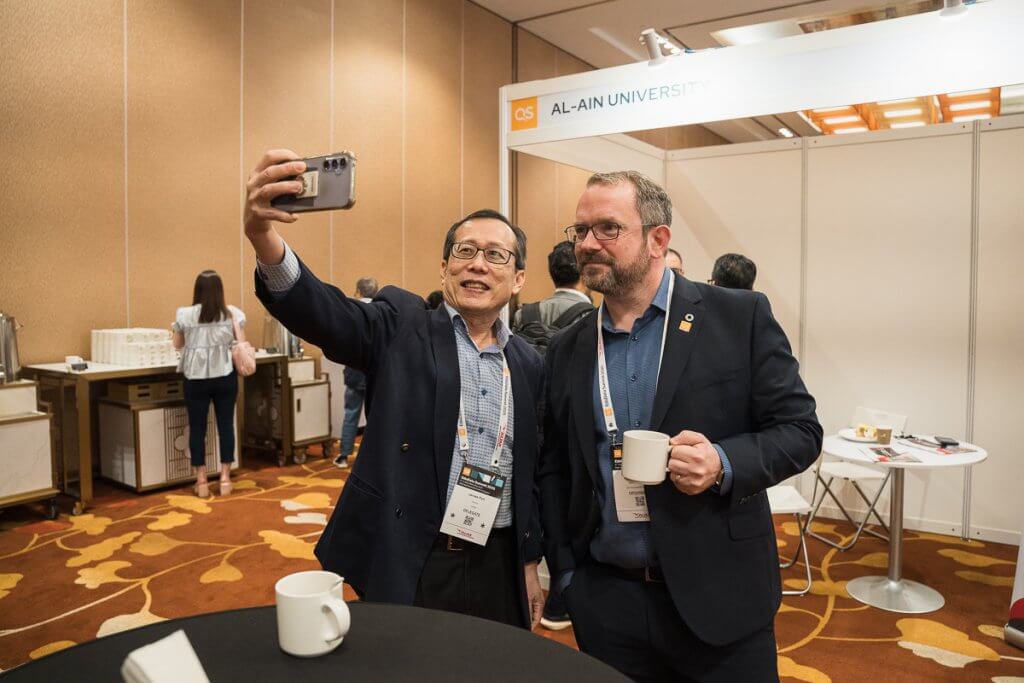
Beyond the talks and presentations, a large part of conferences and corporate events happens between sessions. Breaks, hallway conversations, and informal meetups are where attendees connect, exchange ideas, and build relationships.
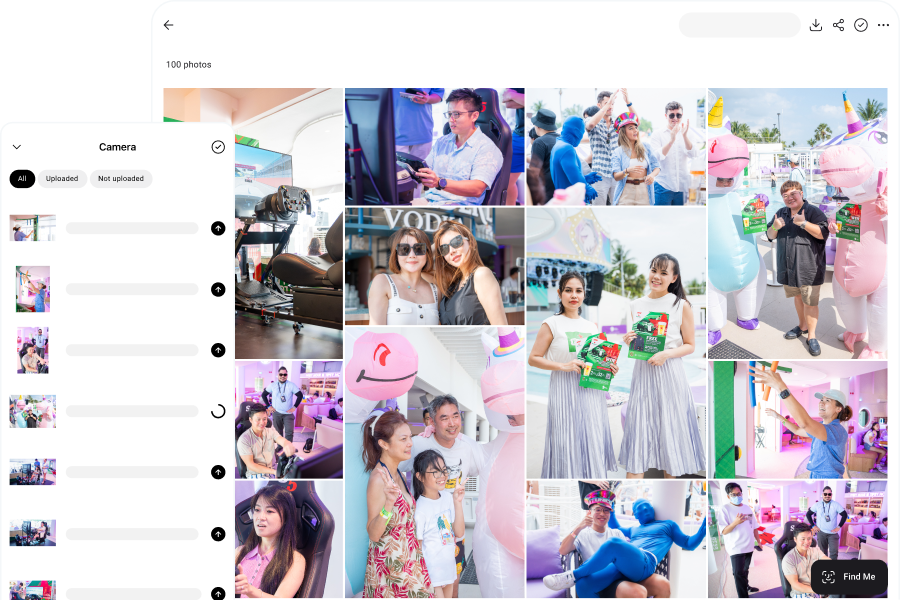
Candid interactions capture the energy of networking sessions best. Small groups talking, quick introductions, or people laughing together often illustrate the social side of the event more naturally than staged photos. That said, posed group shots still have their place. Attendees often ask for quick photos with colleagues or friends, and organisers usually appreciate having a few clean group shots that show people connecting at the event. At some events, photographers also run roaming photography, where guests can take quick posed photos that are shared with them shortly after they’re taken.
Some events also include branded photo backdrops where guests can take posed photos with colleagues or friends.
Shots to capture:
- Small groups chatting
- Handshakes and introductions
- Laughter and candid reactions
- Business cards or phone exchanges
- Posed group photos of attendees, including at branded photo backdrops
VIP Guests and Executives
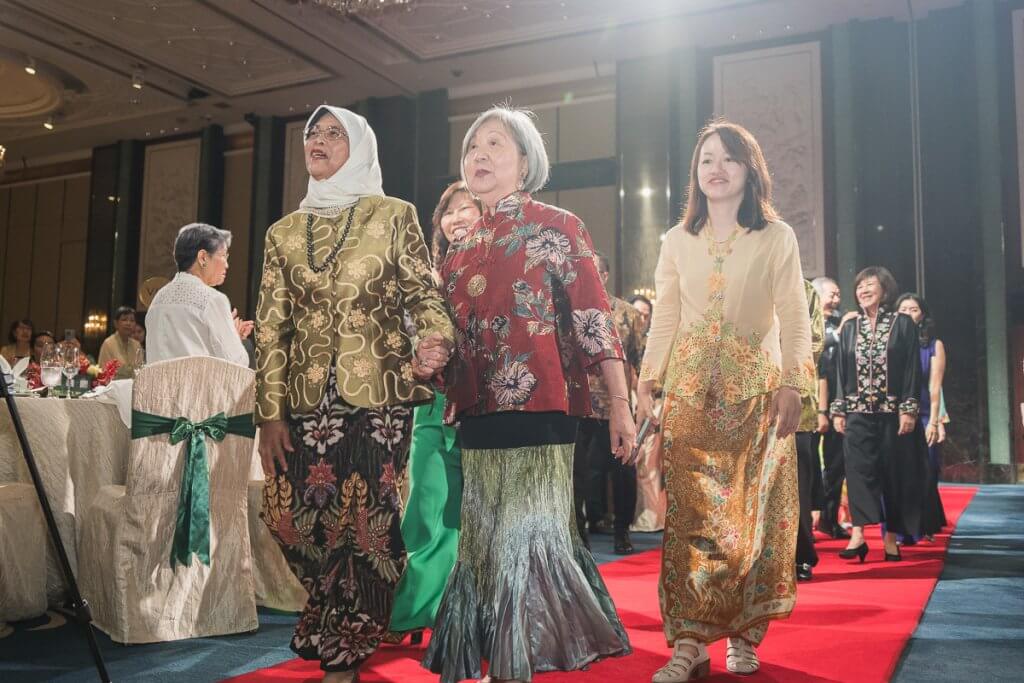

Many corporate events include appearances from key executives, special guests, or industry leaders. Organisers want these moments documented because they show who attended the event and how VIPs interacted with guests and participants.
VIP interactions often happen quickly, such as arrivals, brief conversations with attendees, or posed photos with company leaders. Even though these moments may be brief, they are usually important for documentation and are often used in post-event reports, press releases, and internal communications.
I usually confirm the list of important figures that need coverage at least a day before the event. This helps avoid confusion during the event and reduces the risk of missing key people that organisers expect to see in the final gallery.
Shots to capture:
- VIPs arriving at the venue
- Executives greeting guests or partners
- Leaders speaking with attendees
- VIP speaking on stage
- Posed photos with other VIPs or company leaders
Award Presentations
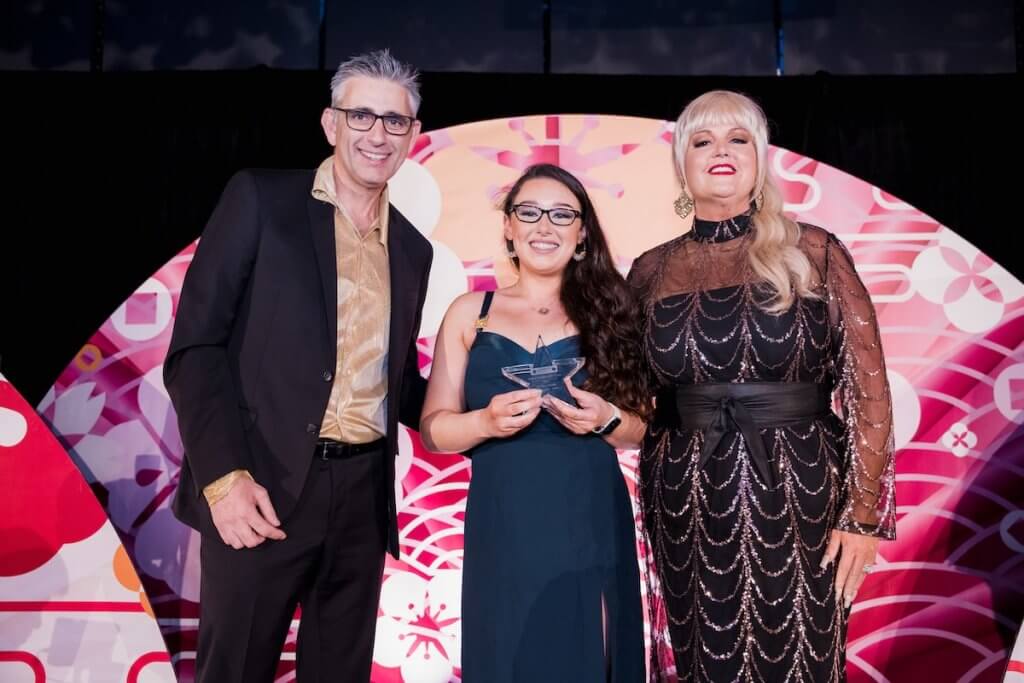
Many corporate events, especially conferences, gala dinners, and company ceremonies, include award or recognition segments. These moments are scheduled parts of the program where individuals or organisations are recognised for achievements, contributions, or performance.
Award ceremonies follow a predictable flow. An emcee introduces the award, the recipient is called onto the stage, the presenter hands it over, and a short photo moment follows. Because of this structure, it’s easier to anticipate the key shots and position yourself before the moment happens.
Shots to capture:
- Recipient walking onto the stage
- Award presentation and handshake
- Recipient and presenter holding the award
- Group photo of award recipients (if applicable)
Dinner and Afterparty
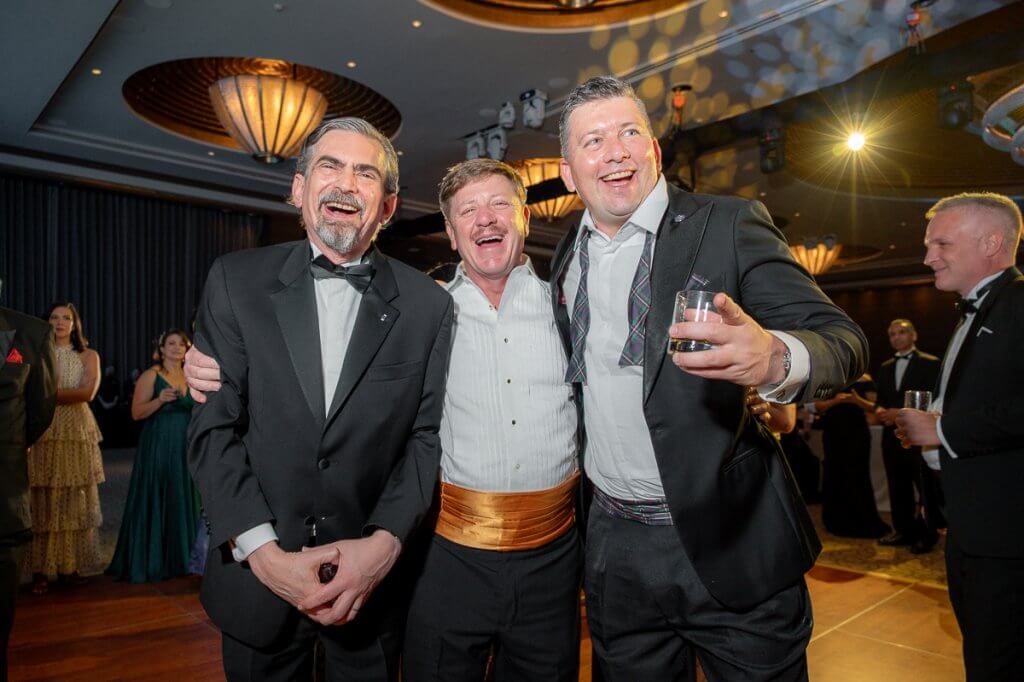
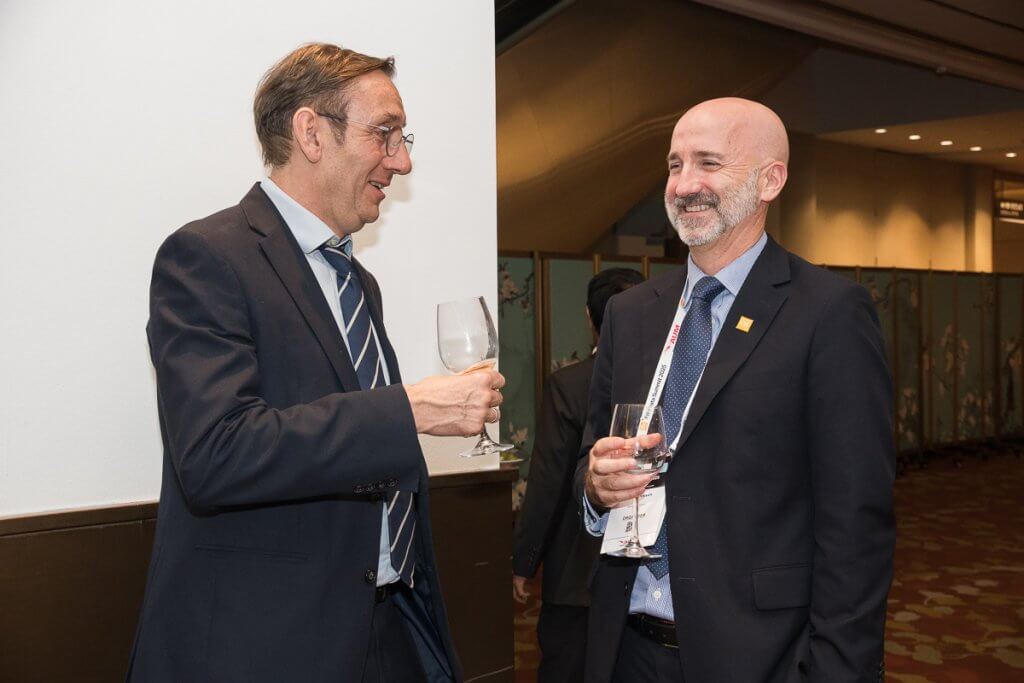
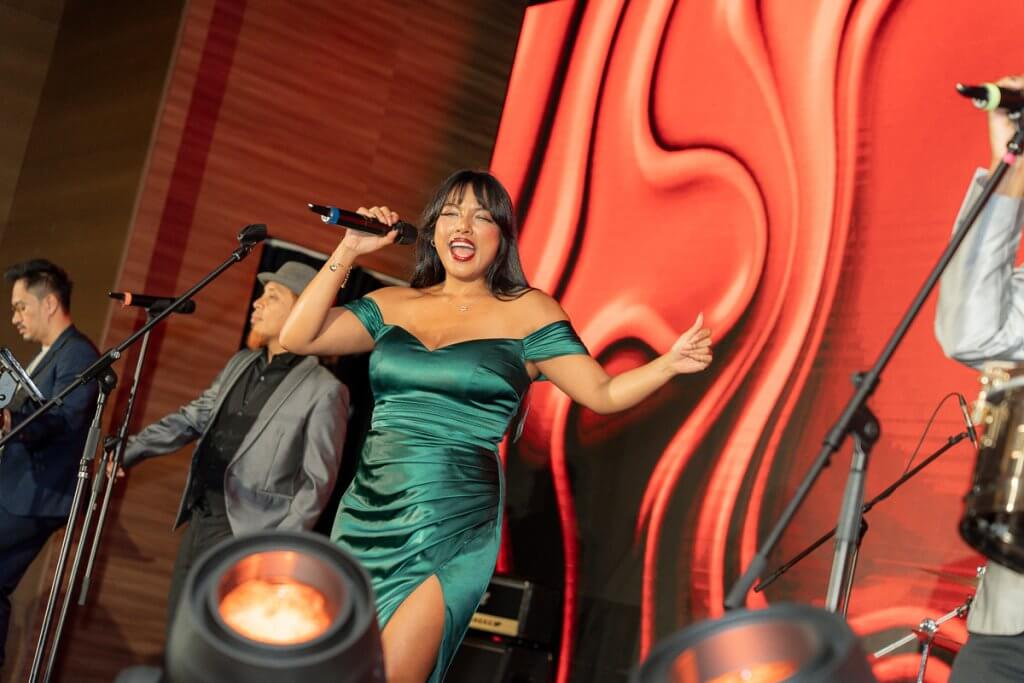
Many conferences and corporate events conclude with a dinner or afterparty. These moments are more relaxed than the daytime program, giving attendees a chance to unwind, socialise, and celebrate the end of the event.
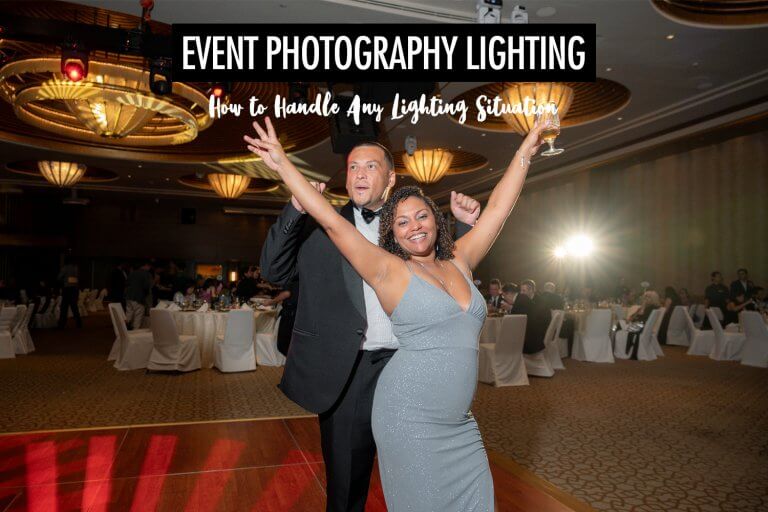
The atmosphere during these segments is usually informal, which leads to candid and energetic photos. Conversations over dinner, people raising glasses, and groups celebrating together can help capture the social side of the event.
Shots to capture:
- Wide shot of the dinner hall with guests seated
- Attendees chatting and socialising over drinks
- Group photos at dinner tables
- Guests raising glasses during a toast
- Speakers or organisers giving closing remarks
- Entertainment such as live music or performances
- Dance floor or afterparty moments
Conclusion
Conference and corporate events tend to follow a similar structure. From venue setup and speaker sessions to networking moments and award presentations, these are the types of photos organisers typically expect to see in the final gallery.
Keeping this event photography shot list in mind helps you anticipate key moments and deliver a gallery that captures the full story of the event, which is part of how you become an event photographer. Once the photos are captured, the next step is sharing event photos with guests, ideally through a photography workflow designed for fast delivery.