
Event photography tips often focus on camera settings, lenses, and gear. Those things matter, but they don’t teach you how to actually handle a real event.
This article looks beyond surface-level advice and focuses on how experienced event photographers think, plan, and make decisions under pressure. It’s about judgment and priorities, because those are what determine whether coverage feels reliable.
I’ve shot events at every scale, from small internal sessions to brand activations, conferences, and large multi-day productions. The size changes, but the challenge stays the same. Events rarely follow a clean plan, schedules shift, and the moments clients value most are often unplanned.
Over time, I realised that professional event coverage is about having a clear mental structure in place before anything starts moving:
- What defines the event
- Who matters most
- When the images need to be delivered
- How failure is prevented
- How to work in a team
This article lays out how that structure works in practice. How priorities are set, how decisions are made when things overlap, and how the final body of work stays coherent even as plans change.
Who Matters Most
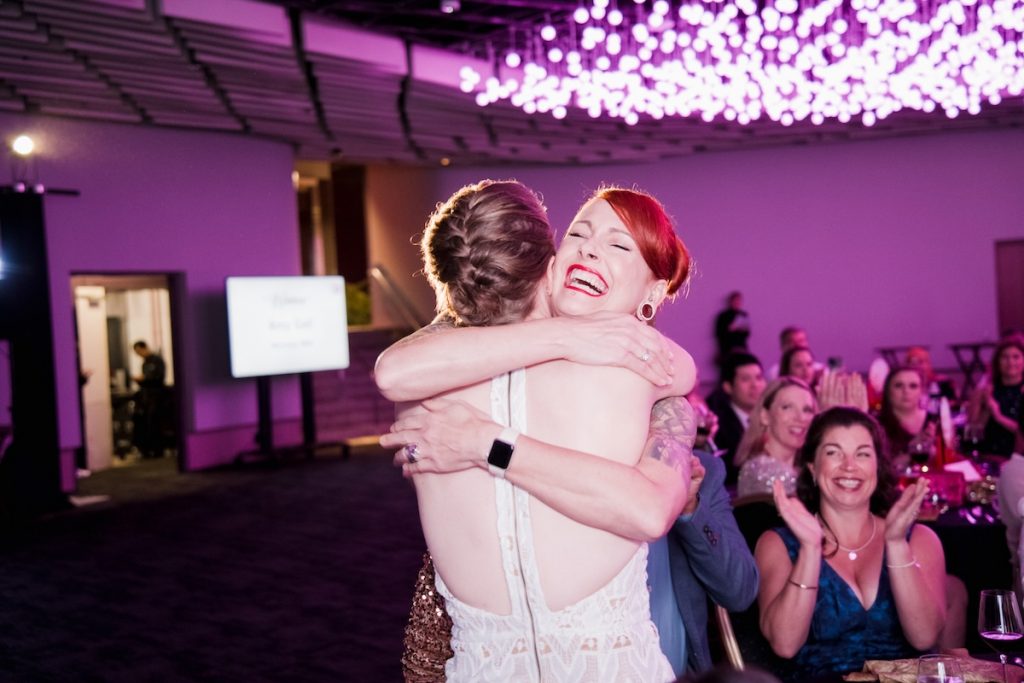
After shooting events of all kinds, one thing is consistent: what you choose to shoot is shaped by who you’re shooting for. Every event has multiple stakeholders, and strong coverage reflects their relative importance throughout the day.
Clients usually make this clear in the brief. Shoot all the booths. Don’t miss any sponsors. Focus on the speakers. Get coverage of VIPs. The direction is explicit. Your role is to execute that brief with judgment and consistency.
Take conferences as an example. VIPs, speakers, and sponsors matter most. Booth sponsors, in particular, are non-negotiable. Missing even a single sponsor booth can turn into a problem for the organiser, regardless of how strong the rest of the coverage is. Attendees, by comparison, are secondary. They’re important mainly as proof points to show scale, energy, and turnout.
Contrast that with red carpet events or gala dinners. Here, the hierarchy flips. Attendees are no longer background context. They are the subject. Photo ops, arrivals, posed shots, and candid interactions become the priority.
Personal events like birthdays or retirement parties usually centre on one individual. Coverage revolves around that person and the relationships that define the occasion.
Professional event photography is guided by stakeholder importance. When coverage falls short, it’s usually because the hierarchy wasn’t understood clearly enough. Once it is, decisions about coverage become straightforward.
In my experience, most client issues come back to this point. When there’s a mismatch between the client’s priorities and your understanding of them, problems surface later in the form of questions like, “Are there more photos of the VIP?” or “Why isn’t this sponsor shown more?” The images themselves may be strong, but if the hierarchy wasn’t aligned early, coverage can feel incomplete from the client’s perspective.
What Needs to Be Covered
When I arrive at an event, I’m not reacting to whatever happens in front of me. I’ve already made a set of decisions.
I decide my priorities early. I need to know which moments define the event, which depend on access and timing, and which images connect everything together. That structure lives in my head and guides my decisions as the day unfolds.
That clarity has to happen before the event starts. If the client’s brief is vague, it’s your responsibility to clarify it in advance. Once you’re on the floor, there’s no time to check assumptions or ask follow-up questions. Miss that alignment early, and you risk missing moments that don’t repeat.
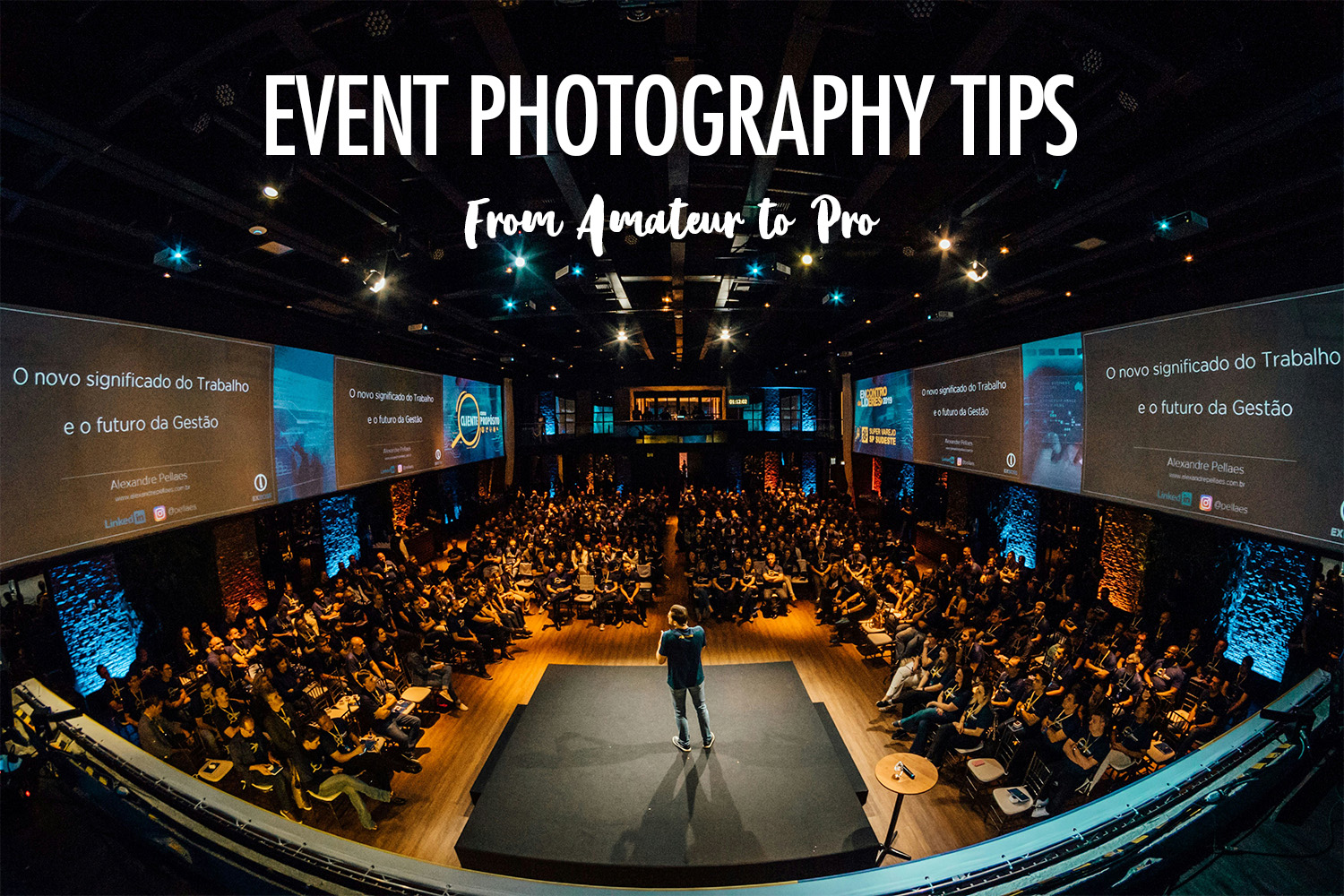
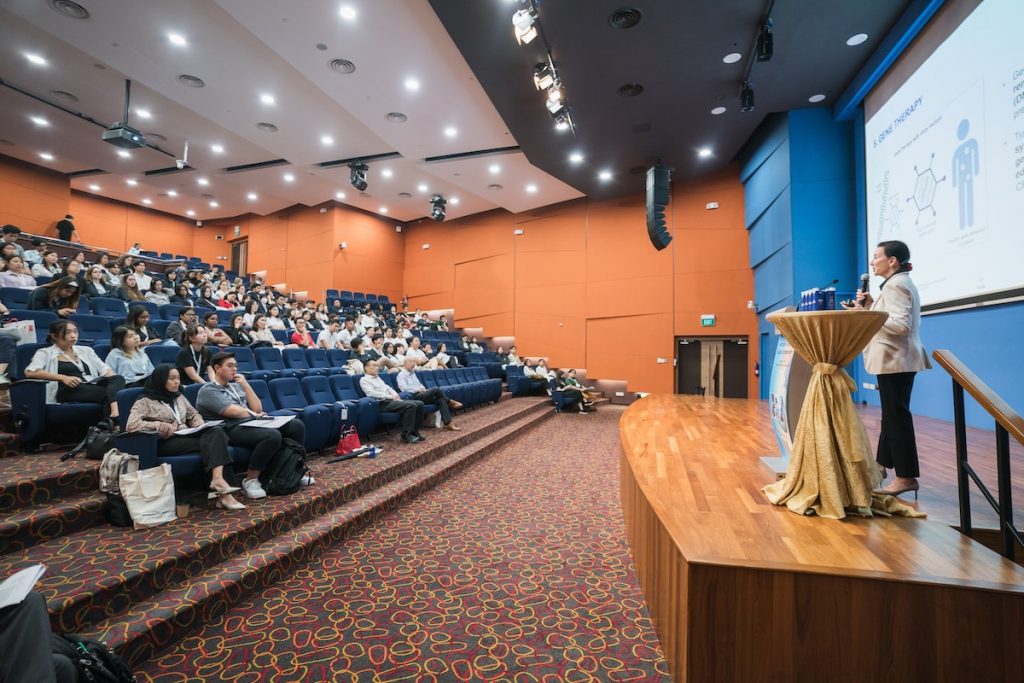
At a conference, those priorities are usually clear. The opening keynote, key speakers, and VIPs come first. I position myself for those moments, then stay alert for predictable but unscheduled interactions between hosts and speakers, sponsors and attendees, or leadership behind the scenes. In between, I capture what connects the day: wide shots that convey scale, details that show production value, and transitions that move the program forward.
Clients talk in outcomes: who matters and what needs to be covered. They don’t ask for establishing shots, transitions, or environmental details, but they still expect the final delivery to feel coherent. Translating that brief into complete coverage is part of the job.
Shot lists can help early on, but only as a mental exercise. I don’t bring a checklist into an event, and I don’t know anyone else who does. What is useful, especially when you’re starting out, is mentally mapping the coverage beforehand. Once the event starts, that structure has to be internalised. From that point on, it’s muscle memory.
When the Images Need to Be Delivered

“On time” means different things depending on why the images exist.
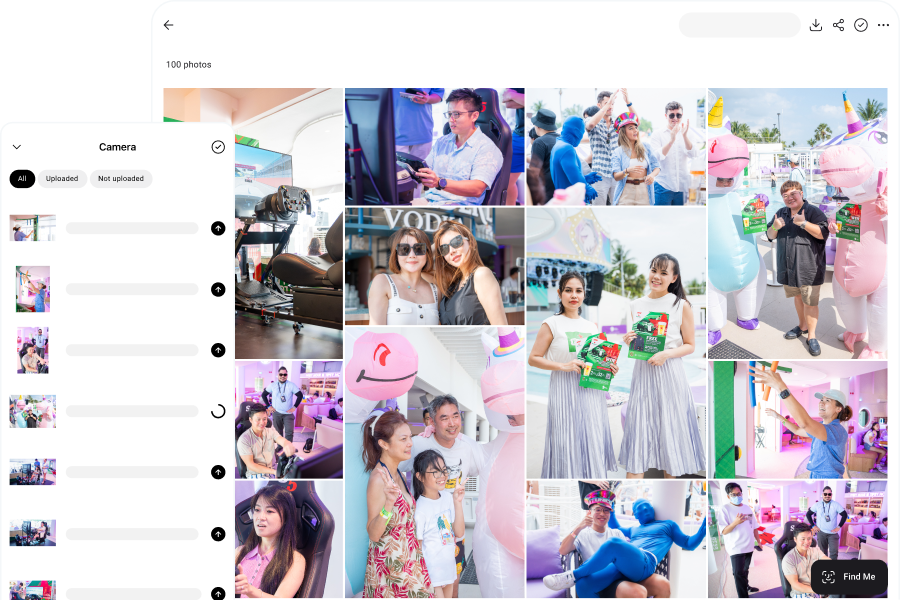
For guest-focused events like red carpets, award shows, and gala dinners, on time can mean real-time. The value of the images is highest while the event is still happening. Guests want photos immediately after photo ops and posed shots. In these situations, I use Honcho to upload from camera to cloud and share images through face recognition.
The same can sometimes apply at conferences. I’ve worked with organisers who wanted speaker images delivered immediately after they stepped off stage. The purpose was to recognise the speaker and show appreciation immediately after their session.
Other events run on a different clock. I’ve shot ministerial walkabouts that required fully edited images within 24 hours for media distribution and official channels. At multi-day conferences, organisers often request a small set of daily highlights, usually 10 to 20 images, delivered at the end of each day for press releases, internal updates, and corporate communications before the next morning.
In one international conference I covered, the delivery timeline was longer by design. The client commissioned a magazine-style album to be printed and distributed to sponsors, VIPs, and selected prominent attendees. The value of the work came from sequencing, layout, and print quality. The final albums were delivered just under three weeks after the event, and that was considered on time because the expectation was defined from the start.
If no timeline is specified, I usually deliver within three days because of the time-sensitive nature of events. That’s achievable because event images rarely require heavy retouching. I break down my full workflow in this guide on how I edit event photos.
Understanding what “on time” means is part of professional event work. It comes from knowing how the images will be used, setting expectations early, and delivering while they still serve their purpose.
Why Use Two Cameras

Most experienced event photographers carry two cameras to reduce friction and manage risk.
My go-to setup is simple. One body stays on a 16–35mm with flash. That’s my wide camera for establishing shots, environmental portraits, and group photos. The second body carries a 70–200mm for candid coverage and reactions, allowing me to work at a distance without drawing attention. A constant f/2.8 aperture matters most on the longer lens, since those shots are made without flash.
The main advantage of two bodies is speed. Events don’t pause for lens changes. Every time you stop to swap gear, you stop observing what’s happening around you. With two cameras, I stay in rhythm and respond as moments unfold.
There’s also the reality of failure. Redundancy is part of professional coverage. If one body goes down, the event doesn’t stop, and neither do I. You can shoot an event with a single body and a 24–70mm, but if that camera fails, your coverage ends with it.
I’ve applied the same thinking beyond traditional cameras. While covering an economic forum, I mounted a GoPro high in the main hall to capture a wide establishing view of the space. That perspective provided context and freed my main cameras to stay focused on people and interactions.
How to Work in a Team
Large events change how you work. Coverage stops being about individual output and becomes about coordination and role clarity.
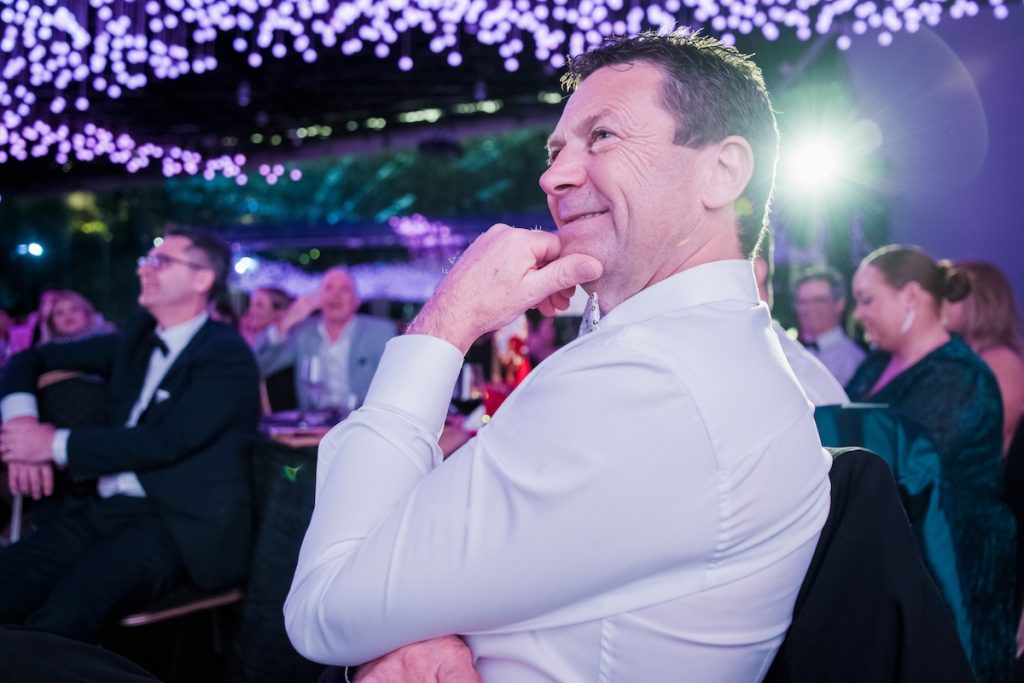
At one large, multi-venue event I covered, the team included photographers with very different experience levels. Instead of assigning everyone the same responsibilities, we divided roles based on risk. The most experienced photographers were placed on moments that couldn’t fail: keynote speakers, VIP walkthroughs, sponsor obligations, and media-facing appearances. Less experienced photographers were assigned to controlled areas such as breakout rooms, registration, and general atmosphere, where timing was more flexible and coverage could be repeated if needed.
Ownership was clear. That prevented overlap and avoided the problem of multiple photographers clustering around the same area, getting in each other’s way. Everyone knew what they were responsible for, which reduced hesitation and second-guessing during the day.
Workflow mattered just as much as assignments. The venue was large, the event ran long hours, and file management was built into the plan. One team member made regular rounds collecting memory cards, bringing them to a central workstation where files were ingested, backed up, and reviewed.
How to Practice
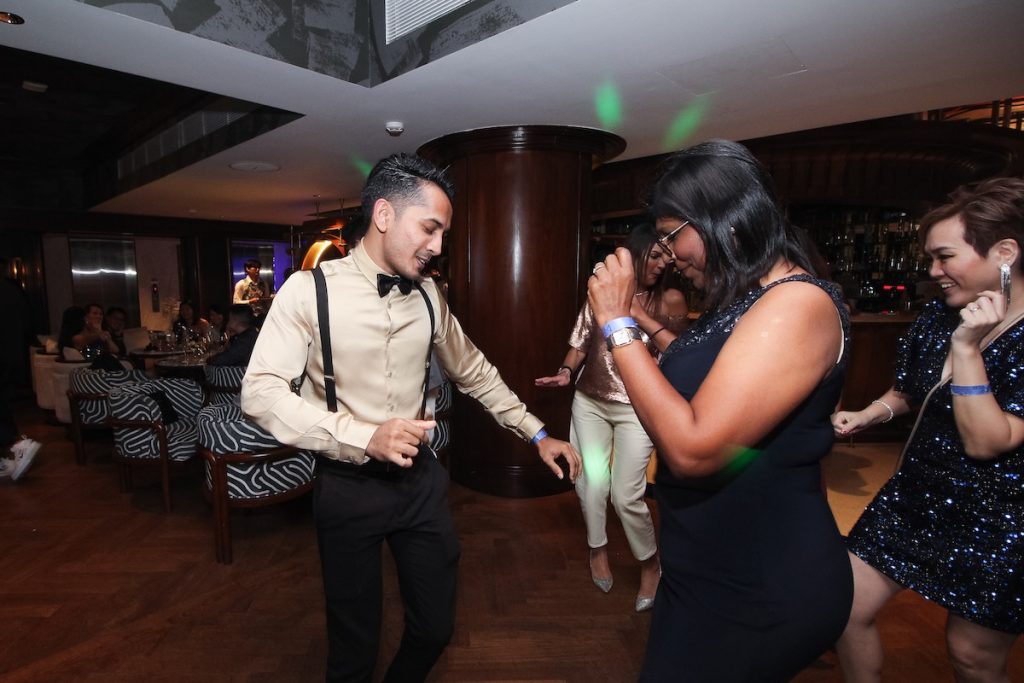
I believe in deliberate practice, and that applies to event photography as much as any other discipline. One of the most useful event photography tips I can offer is this: practise the right skills, not just for more hours.
The challenge is that real events don’t leave much room for practice. In many markets, including where I’m based, it’s uncommon to have second shooters for events the way you might in weddings. You’re hired to deliver, not to learn. That creates a familiar problem: you need experience to get the job, but you need the job to get experience.
That’s where many photographers feel pressure to take on work at any cost. But gaining experience shouldn’t come from devaluing your services. In a recent conversation with Mik Milman, he put it plainly:
“We’ve all been there when starting out—the temptation to take a pro-bono gig because the portfolio boost seems worth it. But if you’re doing work that typically commands a paycheck, don’t devalue yourself. If a corporate entity with a marketing budget tries to talk you into a freebie, the answer is a hard no. If you want to gift your talent to a budget-strapped nonprofit, that’s a personal choice, not a business mistake.”
That’s where street photography became useful for me. It trains the same core skills that events demand: reading body language, anticipating moments, reacting quickly, and interacting with strangers without hesitation.
The difference is context. At events, people expect to be photographed and are already prepared to be seen. Street photography removes that safety net. If you can approach a stranger, engage them, and take a portrait under those conditions, event environments feel slower and more forgiving by comparison.
For me, street photography helped me stay fluent in observation, timing, and interaction. Those skills transfer directly to events and compound over time.
Conclusion
Professional event photography is defined by judgment. Knowing what the event is really for, who matters most, and how the day is likely to unfold.
Across different event types and timelines, the fundamentals don’t change. Priorities are set early. Coverage is guided by stakeholder importance. Systems are put in place to reduce friction and avoid failure. When those things are clear, decisions on the floor feel calm instead of reactive.
Most of the real work happens before the event starts. Once things are moving, you’re relying on a structure you’ve already internalised. That’s why experienced coverage feels steady even when plans change.
The key takeaway is simple: good event photography comes from clarity. Event photography tips only become useful when they’re grounded in intent and judgment. When those elements line up, the work holds together. That’s what clients notice, even if they never see the thinking behind it.
Frequently Asked Questions
The difference is judgment. Professional event photographers understand what the event is for, who matters most, and how the images will be used. That clarity guides every decision during the day.
Not during the event itself. Shot lists can help early on as a planning or visualisation exercise, especially when you’re starting out. Once the event begins, decisions happen too quickly for checklists. Experienced photographers work from an internalised structure instead.
There’s no fixed number, because it depends on the type of event and how the images will be used. As a rough reference, I usually aim for around 50 usable photos per hour of coverage, which gives enough variety without overwhelming the client. That number isn’t a quota to hit, though. The right delivery is defined by purpose and coverage quality, not by volume alone.
“On time” depends on the event. Some situations require real-time delivery, while others allow days or even weeks. What matters is agreeing on the timeline in advance and delivering while the images are still relevant. If no timeline is specified, I aim to deliver within three days, because event images are time-sensitive and lose value quickly once the moment has passed.
It’s both. Posed photos and photo ops ensure clean, usable images, while candid moments add energy, context, and realism. Strong event coverage comes from balancing the two, based on what matters most to the client.
Real events don’t leave much room for learning on the job. Practising related skills, like anticipation, observation, and interaction, outside of events helps. Street photography is one way to build those skills so event environments feel more manageable when opportunities come.