
Part of our Business guides
Explore more articles on marketing, pricing, and growth in our Business section.
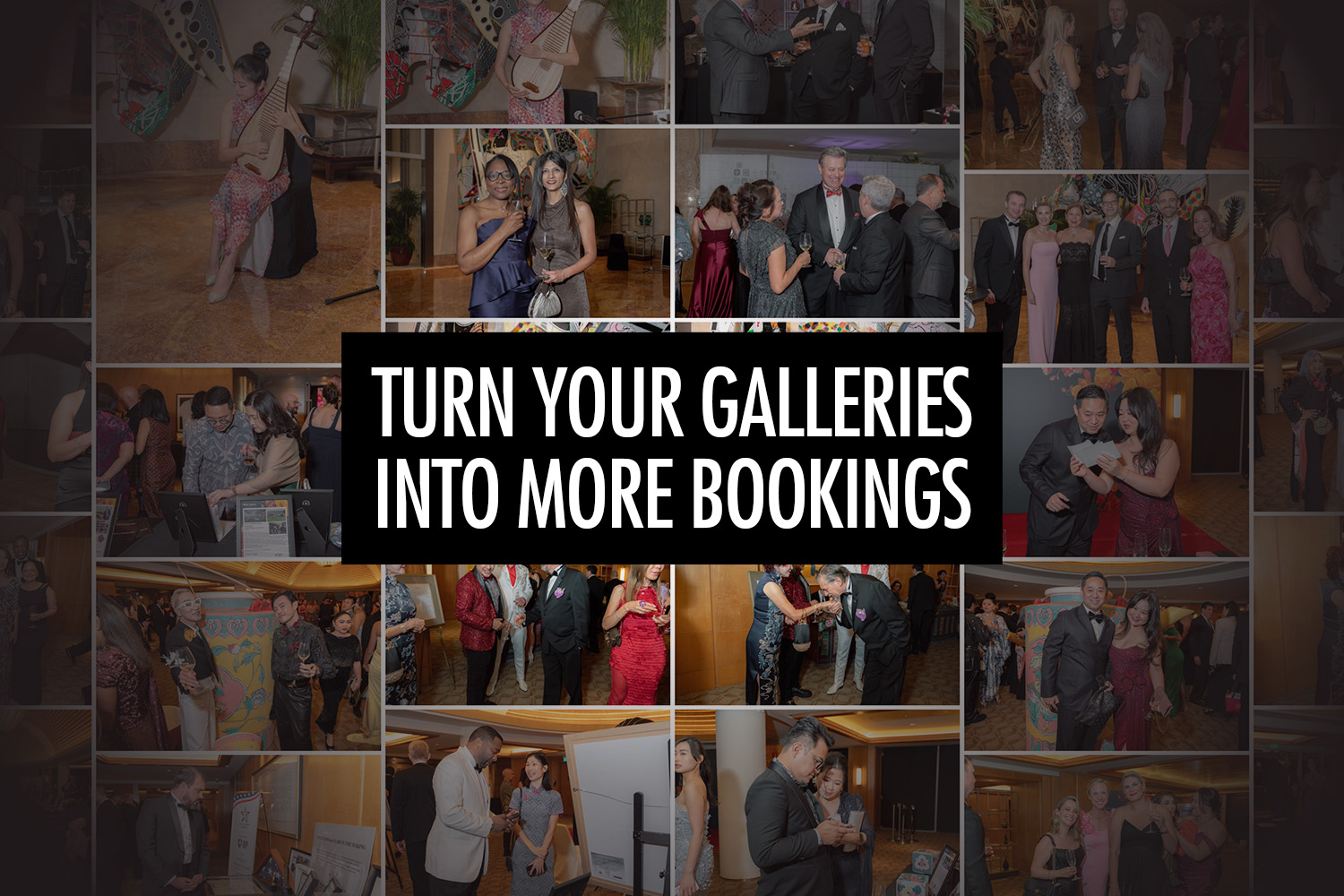
Photography marketing does not always have to start with ads, cold outreach, or another social media post. If you already photograph events, you have something valuable: people are already seeing your work.
Your gallery can help turn that attention into future business. The key is to make the gallery useful first. When people have a good reason to engage with your photos, you have an opportunity to introduce them to your work and make it easy to take the next step if they ever need a photographer.
Who can this photography marketing approach help?
This approach works best for event photographers who regularly deliver galleries to groups of people. Think conferences, corporate events, races, weddings, activations, headshot booths, and similar jobs.
At these events, the person who hires you is often not the only person who sees your work. A company might book you for a conference, but hundreds of employees, speakers, sponsors, and guests may open the gallery afterward. A race organizer might be your client, while thousands of runners visit the gallery to look for their photos.
That gives your work a much bigger audience than the person who signed the contract.
But there is an important catch: most of those people are not looking for a photographer. They are looking for their photos. If you treat every visitor like a sales lead, the gallery can quickly feel pushy.
Someone might see your photos from a conference today and remember your name when their company needs a photographer six months later. Another visitor might share your details with the colleague who books events. You cannot force either outcome, but having more people encounter your work creates more opportunities for them to happen.
If you are still trying to get your first few clients, galleries will not solve that problem by themselves. You will still need ways to reach people before they book you, such as referrals, networking, partnerships, search, or social media for photographers. Gallery marketing becomes more useful once your work is already reaching real people.
How does your gallery create marketing opportunities?
Think about the last time someone loved a photo you took of them. At that moment, you already have their attention. They are not looking at an ad. They are looking at something they care about.
That is what makes photo delivery such an interesting marketing opportunity.
Start with the gallery experience itself. Make it easy to use and, most importantly, help people get to the photos they actually want.
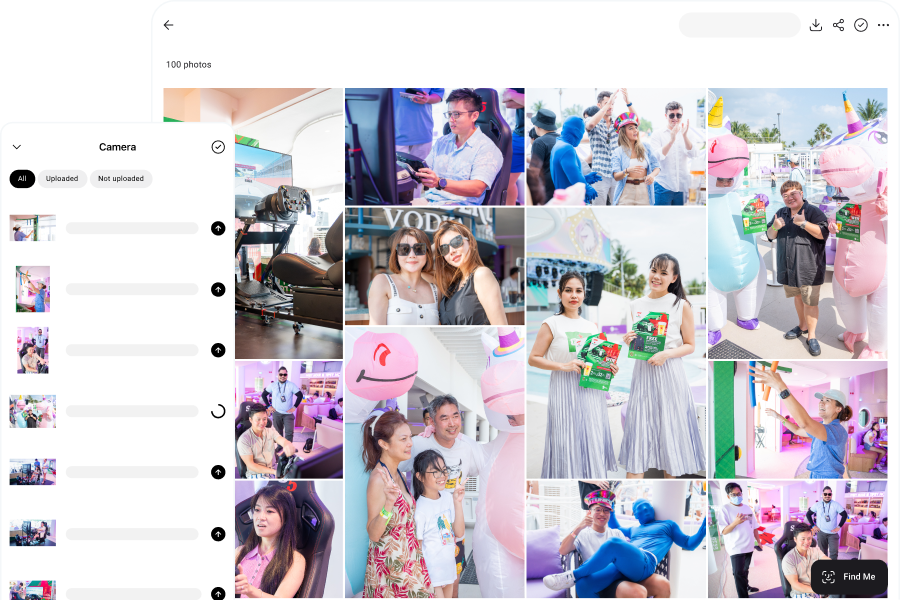
Honcho is an online gallery for photographers with AI-powered photo discovery. With face recognition, a guest can upload a selfie and see just the photos they appear in. That becomes especially useful when an event gallery has hundreds or thousands of images.
Instead of asking someone to scroll through 2,000 photos, you can help them get to their own photos in seconds. The easier it is for people to find photos they care about, the more useful the gallery becomes.
You can also share photos during the event when it makes sense. Honcho supports a camera-to-cloud workflow with supported cameras, so photos can be added while you shoot. Guests can then access them during the event instead of waiting until the next day.
For a small business seminar, a good gallery delivered the next morning might be all the client needs. At a large conference, brand activation, or sports event, instant access may add much more because people can view and share the photos while the event is still happening. Instant photo sharing can support event engagement when speed is part of the experience.
How can gallery visitors find and contact you?
Imagine someone finds a great photo of themselves in your gallery. They like your work enough to think, “Who took this?”
Can they answer that question in a few seconds?
Your gallery should make your identity clear. A visitor should be able to see who you are, what kind of photography you do, and how to reach you if they want to know more.
Honcho profiles can show your bio and contact information inside the gallery. Keep that information simple and relevant to the people viewing that particular event.

For a corporate conference, you might mention conference coverage, corporate headshots, or event activations. In a race gallery, sports photography or participant photo services may make more sense. You do not need to list every service your business offers.
The goal is simple. If someone likes your work and wants to learn more, they should never have to go searching for the photographer behind it.
How do you turn interest into a qualified inquiry?
Someone liking your work is a good start. But to turn that interest into an inquiry, you need to give them an easy next step.
One option is to add a form directly to the gallery.
Honcho lets you create forms inside your galleries, so someone who is interested in hiring you can get in touch without leaving the experience they are already in.

Keep the form short. Ask for the information you actually need to decide how to respond, such as the type of event, date or time frame, location, number of guests, and the kind of photography they are looking for.
For example, imagine someone discovers you through a conference gallery. Instead of simply sending their name and email, they tell you:
“We have a company dinner in November for 400 guests and need two photographers.”
Now you have something you can act on. You know what they are planning, roughly when it is happening, and what they may need from you.
That is the difference between someone who happened to see your work and someone who has taken a real step toward hiring you.
The easier you make that step, the less likely genuine interest is to disappear after someone closes the gallery.
How should you follow up on inquiries?
Once someone has shown real interest in hiring you, follow up more than once.
Many photographers stop after the first message. But a lead might not reply because they are busy, travelling, waiting for approval, comparing options, or simply forgot.
That does not always mean they are no longer interested.
Start by replying to what they actually asked. Mention the event where they found you, answer their questions, and suggest a clear next step.
For example:
“Thanks for reaching out. Great to hear you found me through the ABC Conference gallery. Your company dinner sounds like a good fit. If you send me the date, venue, and approximate hours of coverage, I can recommend the right package.”
If they do not reply, follow up again.
Try not to send the same “just checking in” message every time. Give them something useful in each follow-up.
Your second message could include a relevant testimonial:
“I thought this might be useful. We recently covered a similar company event, and the client especially liked how quickly guests could find their photos.”
A later follow-up could share a relevant case study, show examples from a similar event, or suggest a package based on what they told you.
The goal is not to keep chasing someone forever. It is to give genuine inquiries more than one chance to move forward.
Your gallery creates the opportunity. Good follow-up gives that opportunity a better chance of becoming a booking.
How do you know whether this photography marketing approach is working?
Track where your inquiries come from.
The easiest way is to ask every new lead how they found you. If they discovered you through an event gallery, record the specific event.
For example, someone might tell you:
“I saw your photos from the ABC Conference and wanted to ask about photography for our company dinner.”
That is a clear sign that the gallery helped create the inquiry.
Then track what happens next. Did the inquiry turn into a conversation? Did you send a quote? Did it become a booking?
Over time, you can start to see whether gallery-led marketing is actually bringing you new work.
You might find that five inquiries came from event galleries over the past few months, and two became bookings. Or you might find that people are viewing your galleries but very few are getting in touch.
Either result is useful because it tells you what to improve.
If inquiries are low, you may need to make your profile or contact options more visible. If inquiries are coming in but not converting, the problem may be your follow-up, pricing, or offer instead.
Attribution will never be perfect. Someone might first discover you through a gallery, follow you on social media later, and only contact you months afterward.
You do not need perfect data. You just need a simple habit of asking where new inquiries came from and recording the answer.
That gives you a much clearer picture of whether your galleries are helping you win new work.
How can you improve your marketing system over time?
Do not rebuild your marketing system after every shoot.
Look at the last event and find one part that could work better. Maybe guests struggled to find their photos. Maybe your name was hard to spot. Maybe interested visitors had no obvious way to contact you. Or maybe you received inquiries but never recorded where they came from.
Then fix that one thing before the next event.
- Make sure visitors can find their photos without unnecessary searching.
- Check that your profile explains who you are and how to contact you.
- Give interested visitors one clear way to inquire.
- Record where genuine inquiries came from and whether they became bookings.
- Review the results after the next event before changing anything else.
Over time, this gives you a simple marketing system built around work you are already doing.
Honcho can help with the gallery, photo discovery, and forms. Your own inquiry and booking records complete the picture.
If you want to build this workflow with Honcho, sign up for free.