
Part of our Creativity guides
Explore more ideas, inspiration, and visual techniques in our Creativity section.
Wedding couple posing is one of the fastest ways to level up your wedding photography, because it gives you consistent, flattering portraits even when your couple feels awkward, rushed, or “not photogenic.” The goal isn’t stiff, model-like posing. It’s to create natural connection and clean composition, so the photos feel timeless and emotionally real.
This guide focuses on how to pose wedding couples, not by memorising stiff positions, but by understanding when to use intimacy, movement, structure, or environment to bring out genuine connection. It’s built from photographing real couples in fast-moving wedding environments, where time is limited, energy fluctuates, and posing needs to work immediately. If you’re looking for what to say to your couples to spark natural reactions, this pairs well with our guide to photography prompts, which covers verbal direction and emotional cues. Here, we’ll focus on the physical setups that support those moments.
Whether you’re photographing camera-shy couples or confident pairs who want a more editorial look, this guide breaks wedding photography poses into clear categories so you can choose the right approach for the moment. Use it as a reference on the day to warm couples up, build variety quickly, and avoid over-directing while still staying in control of the frame.
Choose the right pose category for a quick start:
- If they look stiff or awkward: start with Movement and Energy Poses (walking, swaying, spinning)
- If they’re affectionate but shy: start with Intimacy and Connection Poses (close, calm, low-pressure)
- If they’re stylish and confident: go Editorial and Composed Poses (strong lines, clean structure)
- If the location is the star: choose Environmental and Contextual Poses (framing, scenery, atmosphere)
What Posing Solves in Wedding Photography
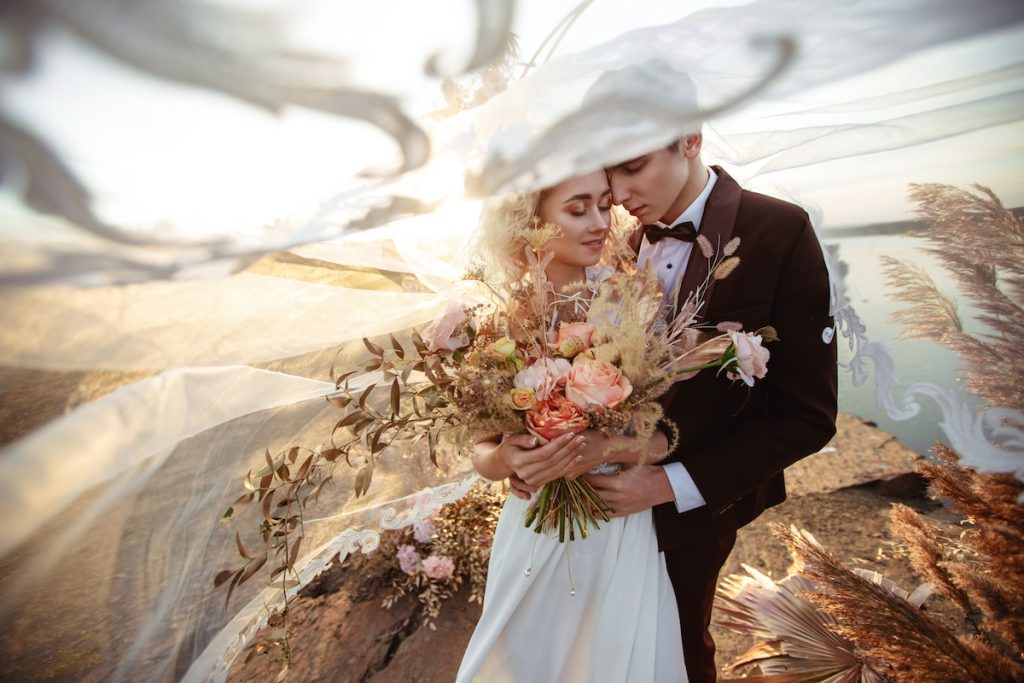
When you understand what posing actually controls, it becomes a practical tool you can use to shape the moment in real time, not just a list of positions to memorise.
- Speed: Good posing lets you create strong images quickly, even when time is tight or couples feel awkward. You’re not waiting for moments to happen, you’re setting them up efficiently.
- Confidence: Clear physical direction removes uncertainty. When couples know where to stand, what to do with their hands, and how close to be, self-consciousness drops and expressions soften.
- Consistency: Solid posing principles work across different locations, lighting conditions, body types, and personalities. They help you deliver reliable results no matter how chaotic the day becomes.
- Emotional Range: The pose determines the emotional tone of the image. Calm, playful, intimate, or editorial looks aren’t accidental, they’re a direct result of the physical setup you choose.
- Recovery: When energy dips or photos start to feel stiff, posing is how professionals reset the moment. Small adjustments in distance, touch, or movement can revive a scene without changing locations or lighting.
The Wedding Couple Pose Audit
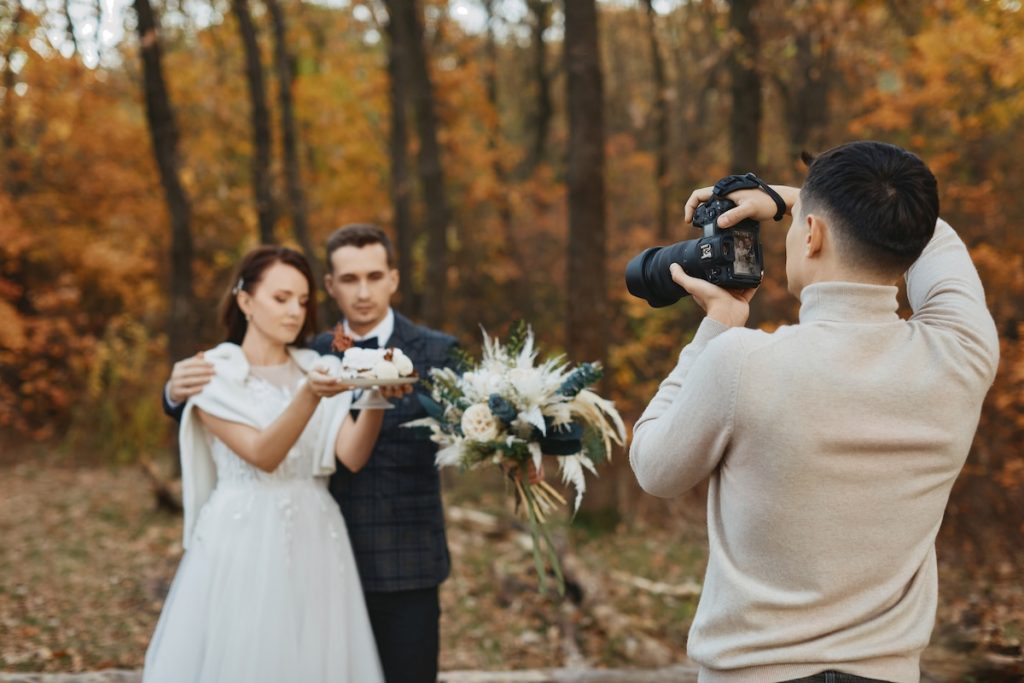
Before you take the shot, quickly check these ten things. You don’t need all of them to be perfect, but most great couple poses pass this audit instinctively.
- Hands: Are the hands doing something soft and intentional?
Avoid dangling fingers or clenched fists. Give hands a purpose: holding, resting, pulling in, touching fabric. - Chins: Are chins slightly forward and down?
This avoids tension in the neck and unflattering angles, especially when couples are close together. - Shoulders: Do the shoulders look relaxed?
Watch for shrugging or locked posture. A quick “drop your shoulders” cue fixes most stiffness instantly. - Weight distribution: Is most weight on the back foot?
This creates a natural S-curve and prevents the stiff, squared stance that makes couples look posed. - Distance: Are they close enough to feel connected?
If there’s visible space between torsos, the pose will usually feel emotionally flat. Close the gap unless distance is intentional. - Eye-line: Is the eye-line a conscious choice?
Decide clearly: camera, each other, or shared direction. Mixed eye-lines often feel accidental rather than expressive. - Touch point: Is there at least one clear point of physical contact?
Hand on waist, arm around shoulder, forehead touch. One anchor point is often enough to communicate intimacy. - Background: Is the space behind their heads clean?
Check for poles, bright highlights, exit signs, or busy edges that pull attention away from faces. - Light direction: Are faces turned toward flattering light?
Even a small head turn can dramatically improve skin tone, catchlights, and mood. - Micro-movement: Does the pose need a small action?
If expressions feel dead, add a simple cue: sway, walk one step, whisper something, breathe out together.
Most posing problems aren’t solved by adding new poses. They’re solved by small adjustments in distance, touch, or movement.
Intimacy and Connection Poses
These poses are designed to create emotional closeness and a sense of togetherness. They work by reducing physical and emotional distance, encouraging couples to slow down, settle into each other, and focus inward rather than on the camera. Intimacy-focused poses are especially effective once trust has been established, producing images that feel calm, romantic, and quietly expressive rather than performative.
Use when:
You want quiet emotion, tenderness, and natural closeness. These poses work best once the couple is relaxed and comfortable together, especially for romantic portraits or emotional pauses in the day.
Avoid when:
The couple feels stiff or camera-aware. Early in a session, intimacy poses can feel forced and lead to guarded expressions.
The Classic Embrace
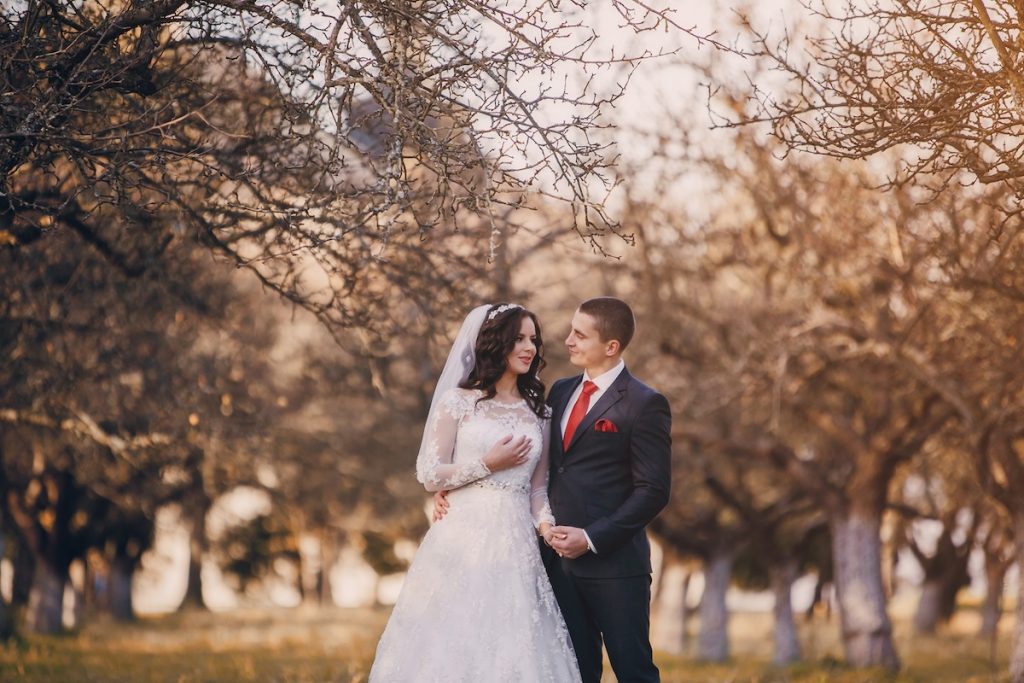
Choose a backdrop that complements the couple’s style—perhaps a cozy garden corner, a staircase draped in florals, or an open field during golden hour. Look for soft, flattering light and keep the composition clean. Position the couple close together, with one partner’s arms gently wrapped around the other’s neck or waist to create a sense of intimacy.
Encourage them to lean in slightly so their foreheads or cheeks touch, and prompt a quiet exchange—maybe a soft smile, a whispered joke, or simply a shared breath. Begin by capturing still, composed shots to highlight the elegance of the pose, then guide them into small movements like closing their eyes or laughing gently. These subtle changes bring out authentic emotion. Pay close attention to their hands and encourage soft touches or light caresses, to avoid stiffness and add tenderness to the frame.
The Forehead Kiss
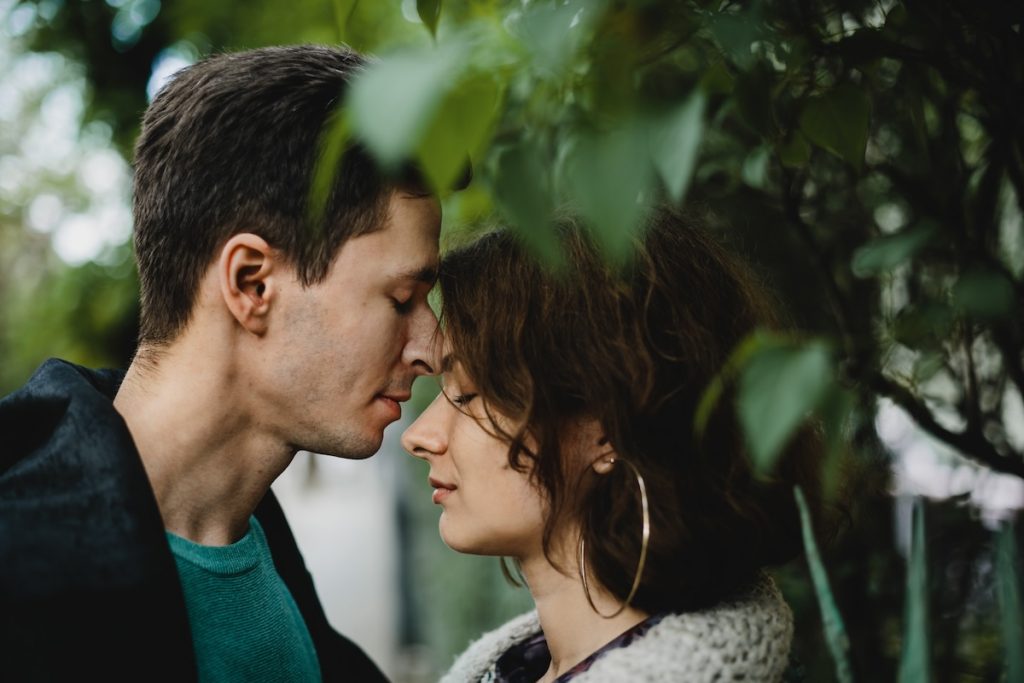
Find a location that feels soft and romantic, like the gentle light beneath tree branches, a balcony with trailing flowers, or a quiet indoor nook. Aim for a cozy, slightly diffused light that enhances the mood. Have one partner stand slightly behind or beside the other, wrapping them up in a gentle embrace. Encourage closeness since this isn’t a pose for stiff formality.
Suggest a slow, gentle kiss on the top of the head or forehead. This is a small, tender gesture, so let it happen naturally and don’t rush them. Focus on the quiet emotion and try shooting from slightly above to highlight the softness of the moment, or at eye level to keep the couple’s expressions centered.
Take your time since subtle changes in head tilt or arm placement can transform the feel of the photo. Whisper small prompts like “Breathe in and close your eyes” to help them sink deeper into the moment.
The Forehead Touch
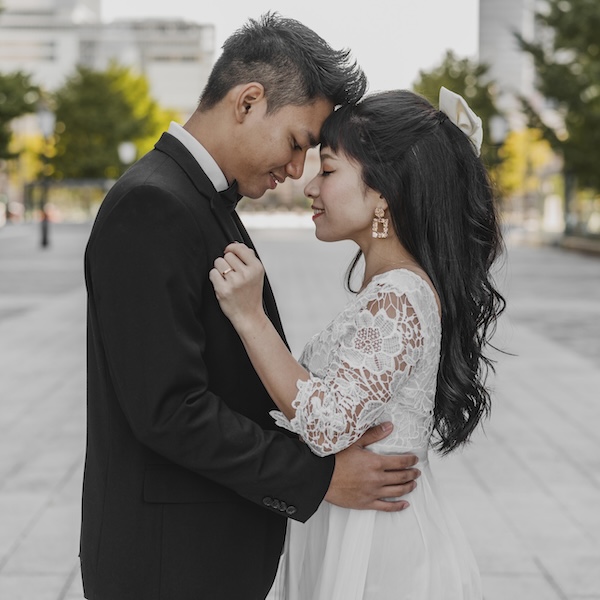
Set the couple in a quiet, softly lit space, like a forest path, a window-lit room, or under a canopy of fairy lights. Position them standing close, bodies almost touching. Gently guide their foreheads together and ask them to close their eyes. Their hands can rest around each other’s waist or hold lightly at the back.
Let them take a slow breath together, exhaling through the nose. This intimate wedding couple pose conveys deep emotional connection without needing eye contact with the camera. Capture it with a tight frame or medium crop to highlight facial details and the subtle tension in their embrace.
The Back Hug
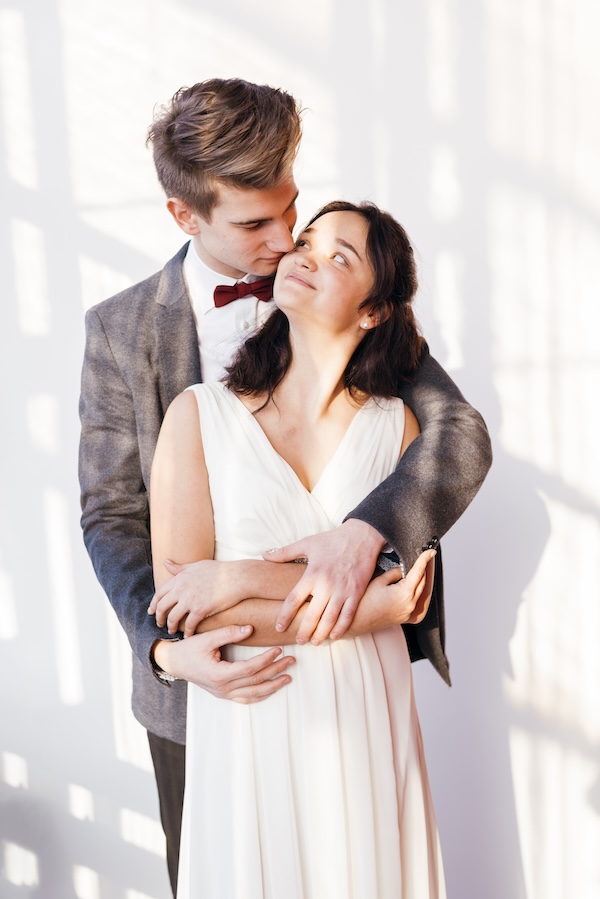
Set your couple near a clean backdrop or lightly textured environment such as a brick wall, forest edge, or softly lit window. Have one partner stand behind the other, wrapping their arms gently around the front at the waist or chest. The person in front can lightly hold the arms or lean back slightly for comfort.
Ask them to relax their shoulders and turn their heads slightly toward each other. This romantic pose works well with genuine laughter or eyes-closed serenity. Shoot both front and side angles to vary intimacy and context.
The Shoulder Rest
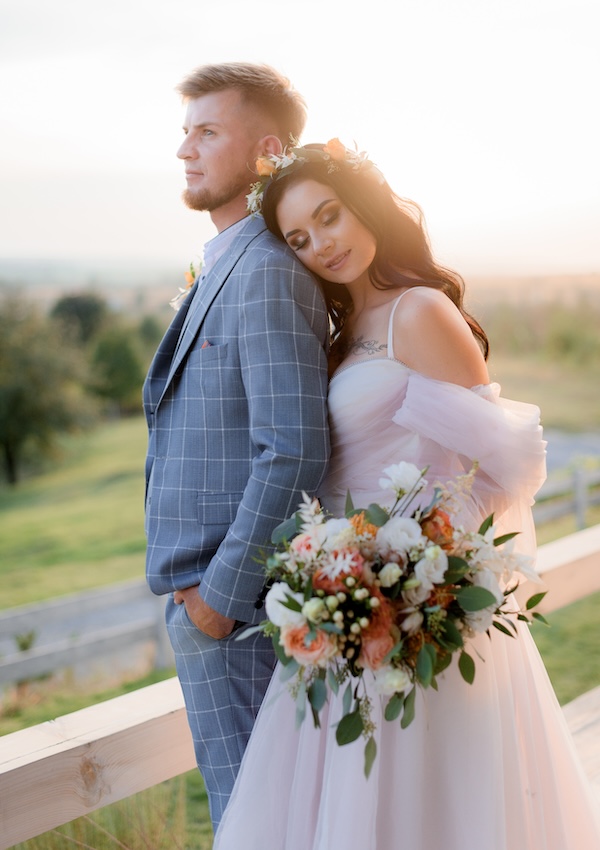
Find a quiet setting with soft textures, such as a tree trunk, blanket-covered bench, or simple interior. Ask one partner to rest their head gently on the other’s shoulder. Their eyes can be closed or looking off into the distance. Hands should rest naturally in laps or around each other. This romantic pose evokes stillness and quiet emotional support.
Candid Conversation
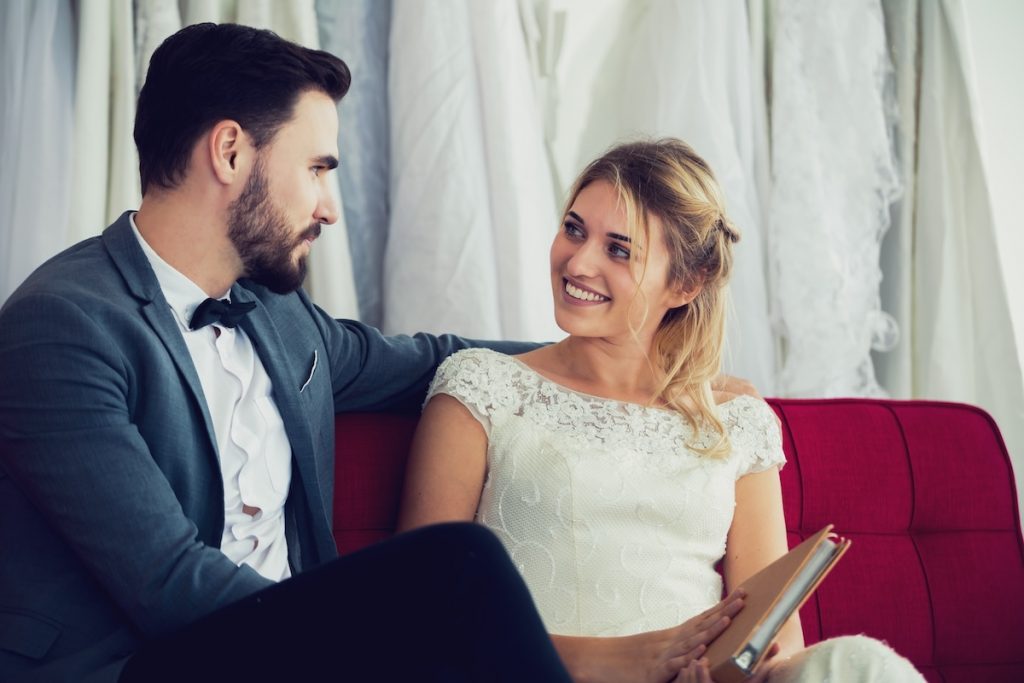
Seat or stand the couple facing each other, keeping a short distance between them. Ask them to have a real conversation or exchange compliments. This creates spontaneous reactions and genuine smiles. Shoot continuously and focus on eye contact, hand gestures, or bursts of laughter that come naturally.
Hands Holding Faces
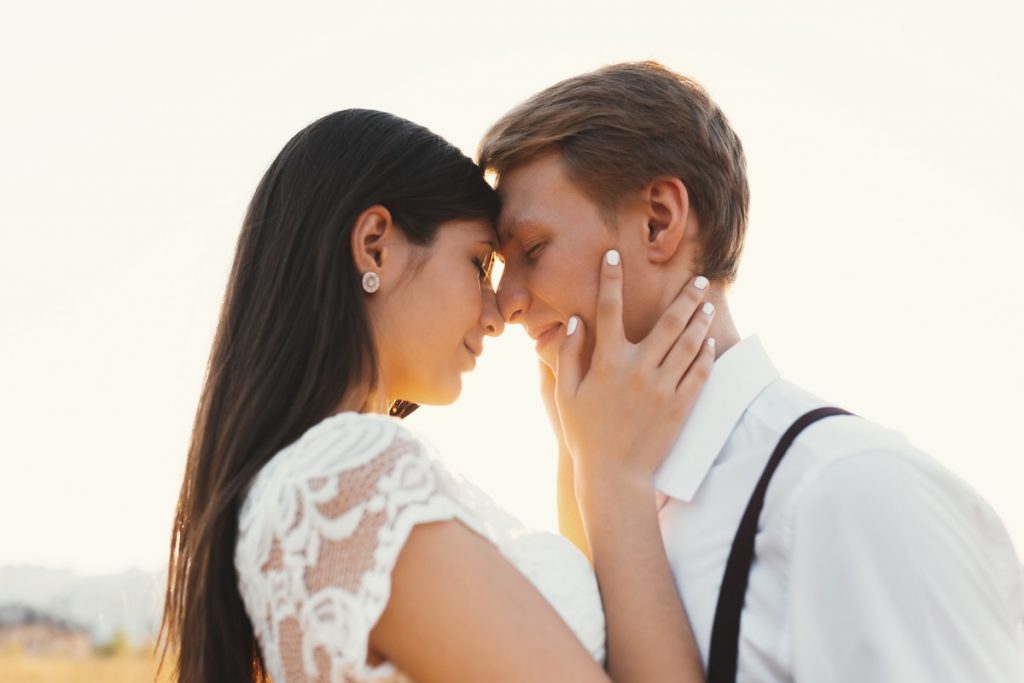
Guide each partner to hold the other’s face with both hands gently. Their foreheads can touch, or they can lean into a kiss. This romantic wedding couple pose is intimate and shows affection clearly. Ideal for tighter framing with soft lighting to bring out emotion.
Seated Forehead Touch
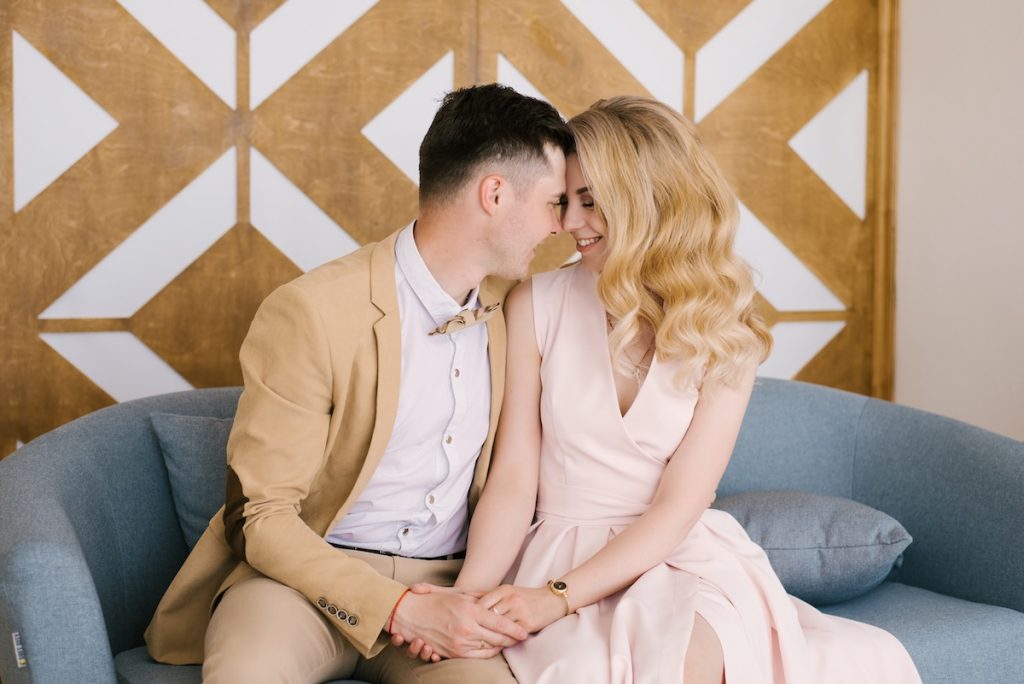
Ask the couple to sit facing each other on a low bench or step. Guide them to lean in until their foreheads touch, closing their eyes for a peaceful, private moment. Keep their hands connected naturally in their laps. This couple pose emphasizes emotional trust and bonding.
The Nose-to-Nose Gaze
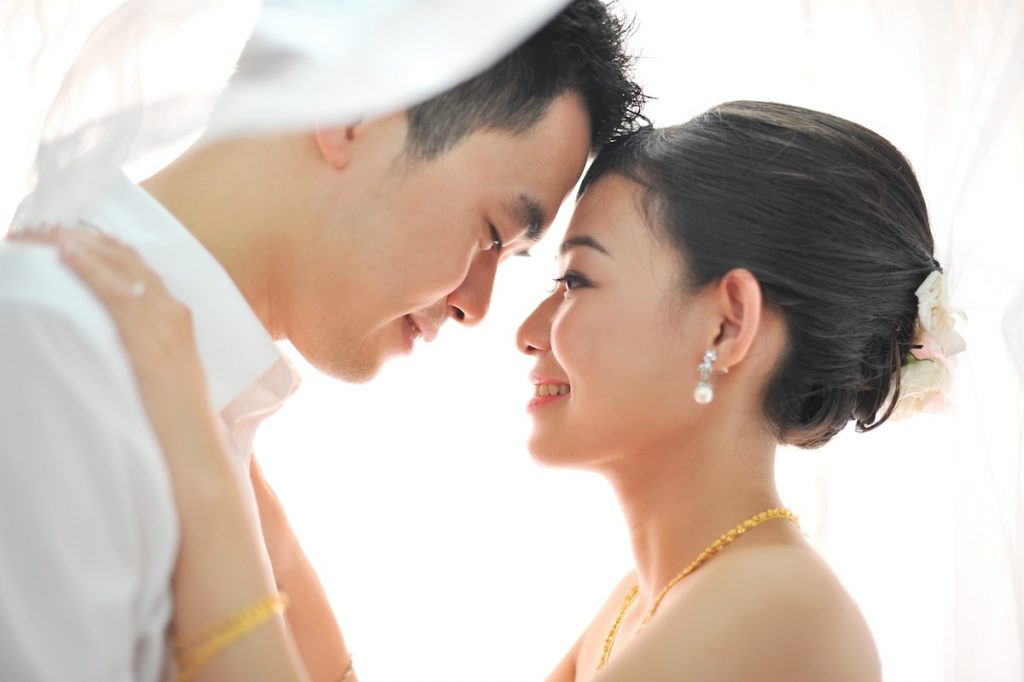
Set the couple in soft, even lighting—ideal during golden hour or near a large window. Have them face each other closely, noses almost touching, hands gently holding each other’s arms or waist. Ask them to gaze softly into each other’s eyes, keeping expressions subtle and sincere. This wedding pose captures intensity and affection with elegance. Vary your angle—over the shoulder or slightly from above—to create visual depth.
Bride Behind the Groom
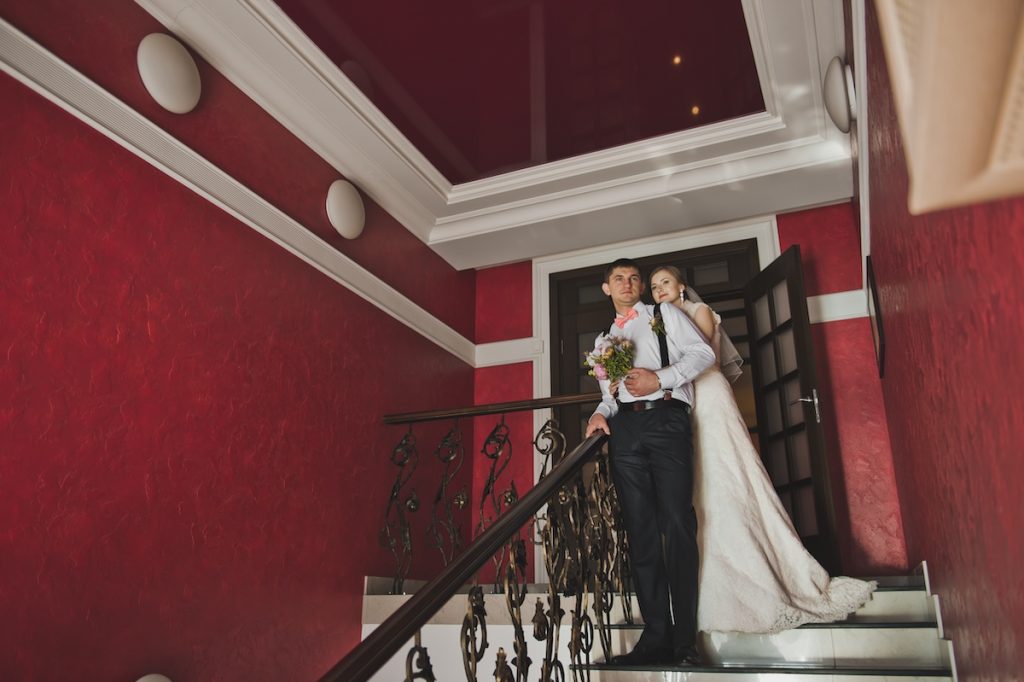
Position the groom standing tall and relaxed while the bride wraps her arms around him from behind, resting her chin lightly on his shoulder. She can either look at him lovingly or smile toward the camera while he looks away or downward. This framing creates both strength and intimacy, especially effective when the bride’s veil or dress trails behind her.
In-Between the Vows
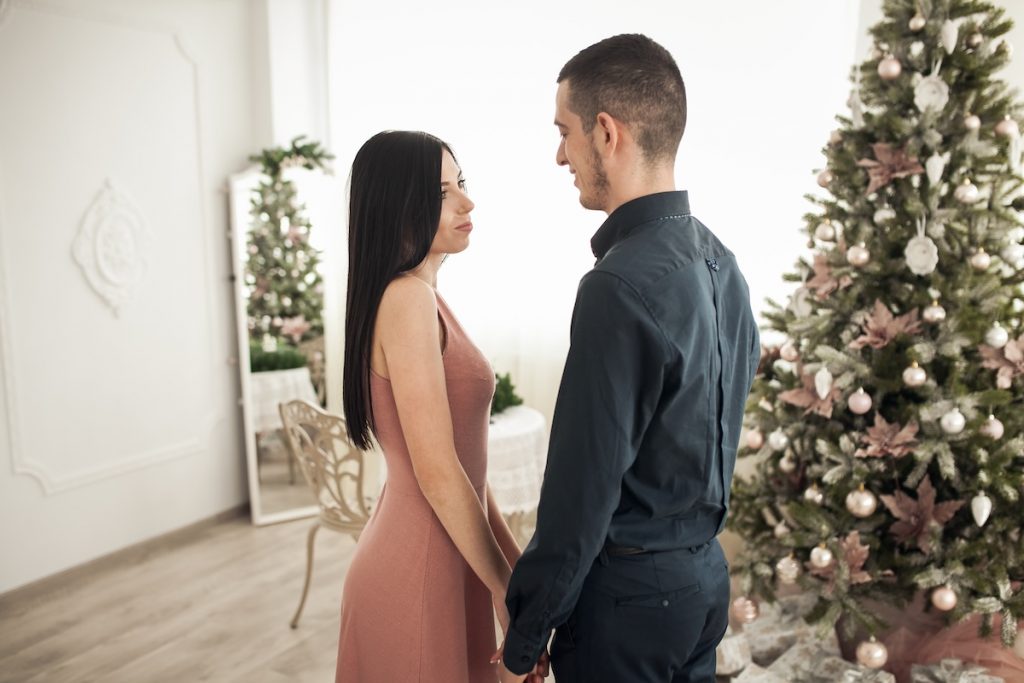
Capture the couple standing close, while holding hands as if exchanging vows. This pose channels deep emotional resonance and is best captured in soft, quiet settings. Encourage gentle smiles or closed eyes. Frame it tight to focus on hands, eyes, and small facial details.
Leaned Into the Chest
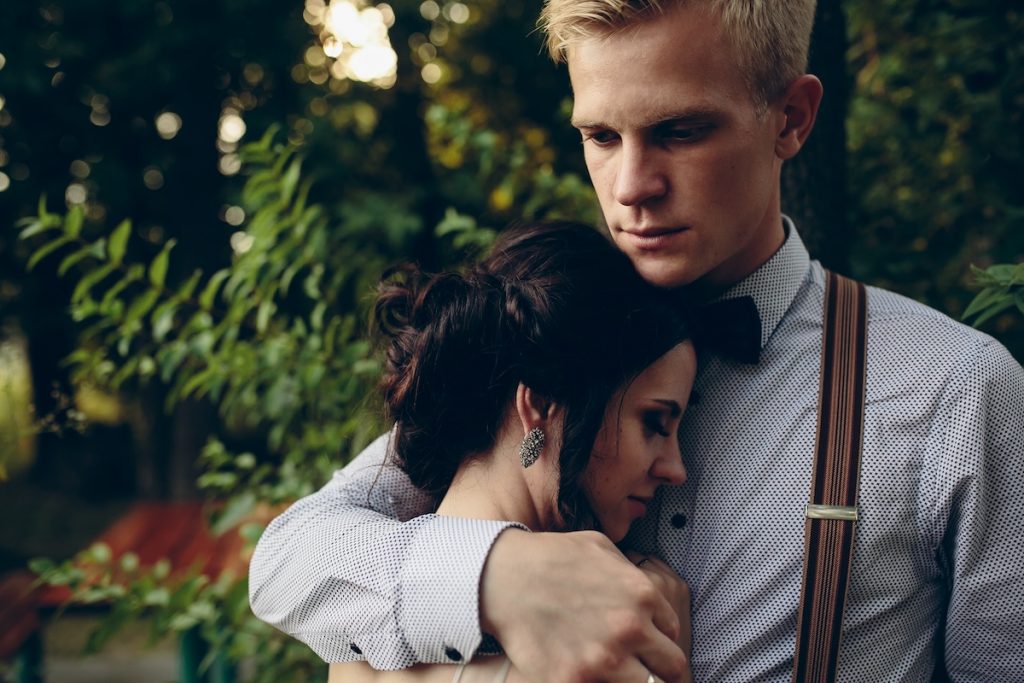
Guide one partner to hold the other closely while the second partner rests their head gently against the chest. Capture the scene from slightly behind or off to the side to show hand placement and the tender embrace. Perfect for tranquil moments, especially in quiet natural environments.
Wrapped in a Blanket
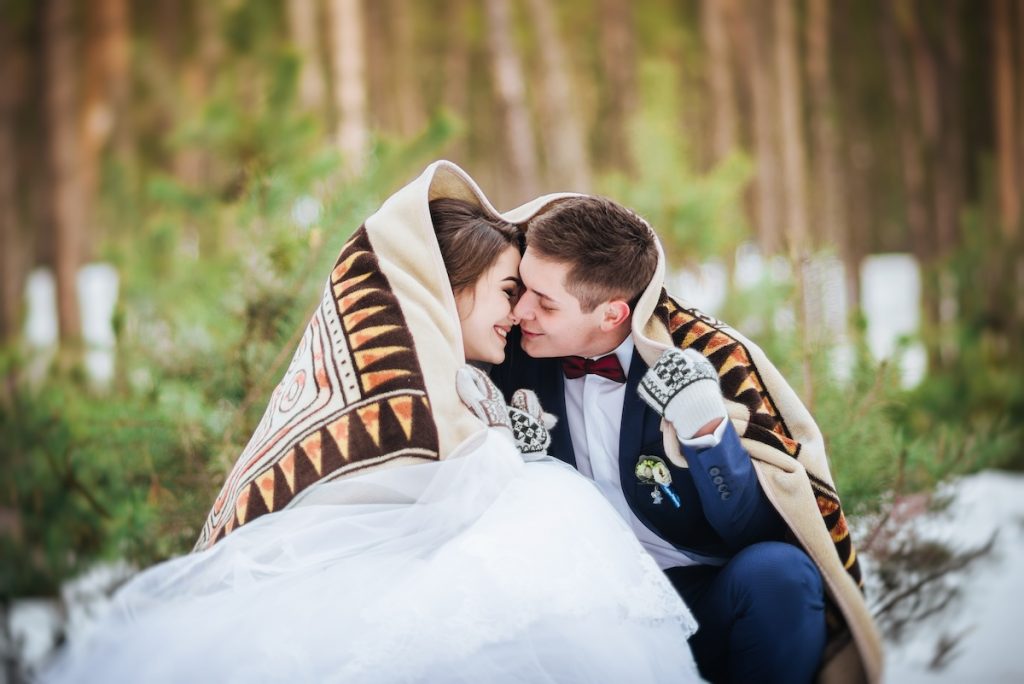
Perfect for outdoor or fall/winter shoots, wrap the couple in a large cozy blanket and have them snuggle closely. Guide them to touch foreheads, look at each other, or share a kiss. Works well with lifestyle and candid-style photography. Use soft lighting for a warm, romantic tone.
Movement and Energy Poses
Movement-based poses help couples relax by engaging the body before the mind. Walking, turning, spinning, or shifting weight gives people something to do, which naturally reduces stiffness and self-consciousness. These poses are particularly useful early in a session or whenever energy feels flat, creating images that feel spontaneous, lively, and natural without relying on exaggerated expressions.
Use when:
You need to loosen people up or inject energy. Movement poses are great early in a shoot or anytime the couple looks tense or flat, helping expressions emerge naturally.
Avoid when:
Space is tight or framing needs to be precise. Movement reduces control over timing and composition.
The Walking Shot
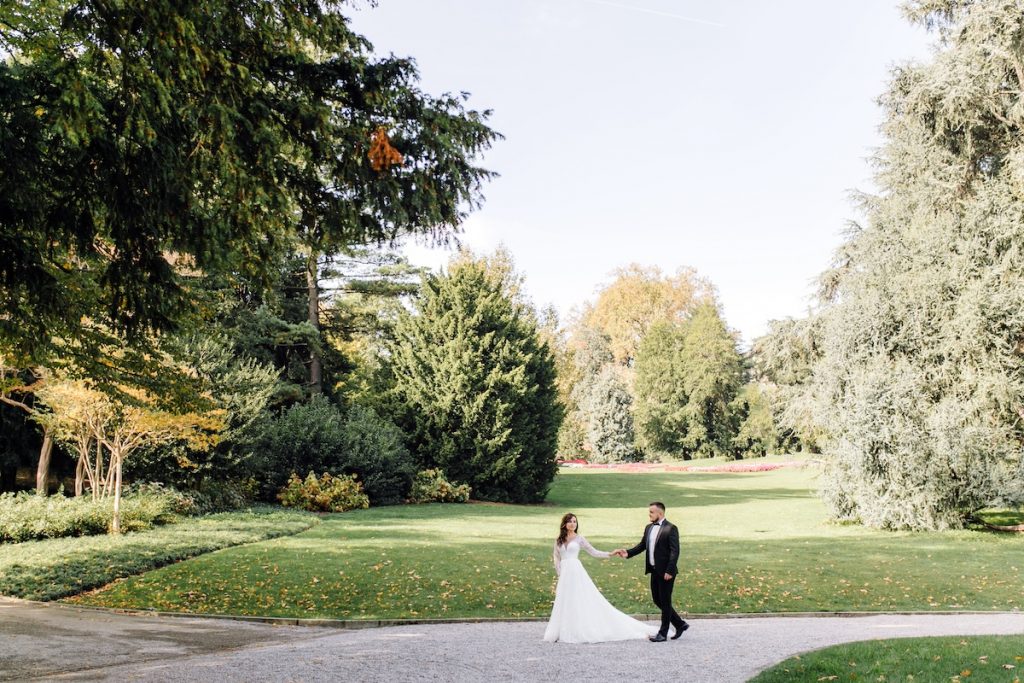
Choose a scenic path or open, airy space—like a garden walkway, a beachfront boardwalk, or a forest trail—with even lighting and a clean, complementary background. Have the couple hold hands or link arms naturally, keeping their shoulders relaxed and their steps easy. Prompt them to take a deep breath and walk slowly toward you or just past you at an angle, encouraging light conversation or laughter to keep the moment genuine.
Use a fast shutter speed to freeze motion, but don’t hesitate to try a slower speed for a touch of motion blur, since it can add a dreamy, romantic quality. Capture multiple frames as they walk, adjusting your angle to find their best expressions and interactions. And don’t stop shooting too early. Often, the most spontaneous and joyful moments happen just after they think the shot is over.
The Playful Lift

Choose an open space where the couple feels safe and comfortable, like a grassy field or a beach at sunset. Make sure the ground is even, and check that the partner being lifted feels secure. Then, have one partner gently lift the other around the waist or hips. Encourage them to move slowly and steadily, focusing on balance and connection rather than making it a big, showy moment.
Tell them to sway or do a slow spin, just enough to create gentle motion without feeling forced. Encourage laughter and playful chatter to keep it light. Use burst mode to catch every spontaneous giggle and smile as they move. Change your angles to find the best way to highlight their connection and the joy of the moment.
Keep safety in mind and make sure the lifted partner feels completely secure and confident. It’s always better to skip a lift if either partner is unsure.
The Walk and Laugh
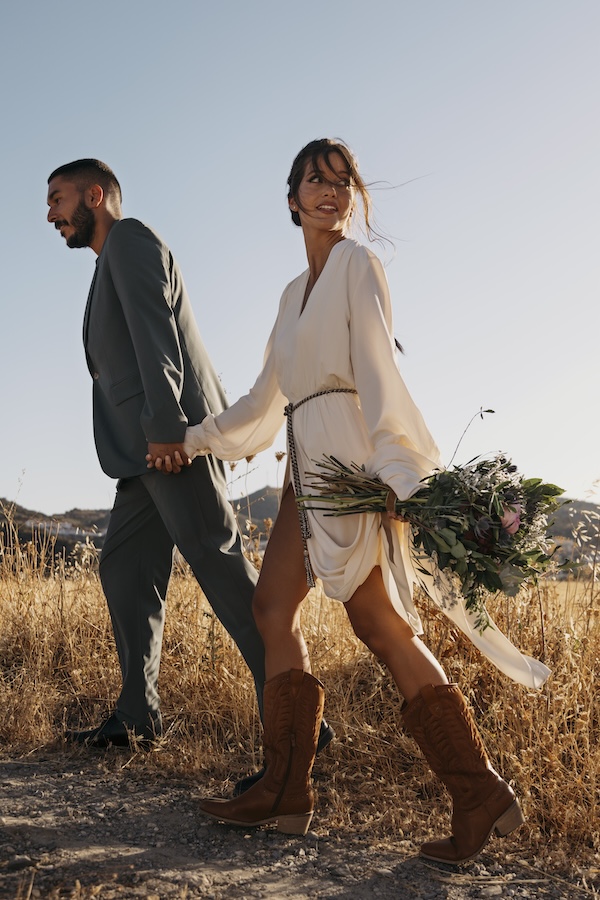
Choose an open space like a garden path, beach, or hilltop trail. Have the couple walk hand-in-hand toward or across the camera at a slow, easy pace. Position one partner slightly ahead for a sense of motion and flow. Encourage light-hearted conversation, inside jokes, or playful nudges to create genuine laughter.
As they walk, capture a burst of images at various focal lengths, from wide shots that include the landscape to tighter crops that catch laughter and eye contact.
The Dancing Hold
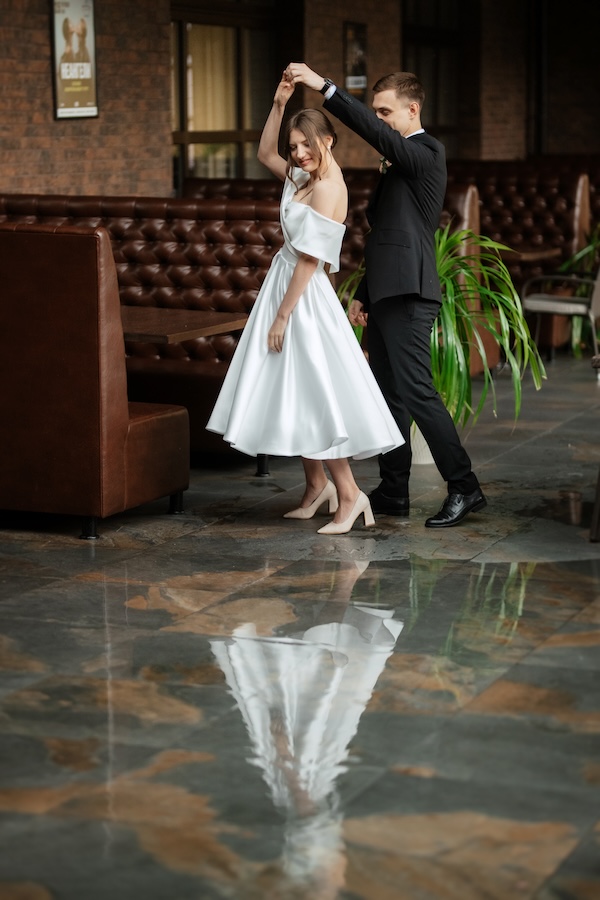
Position the couple in a semi-open space, like a courtyard, reception hall, or wooded area. Ask them to hold each other as if they’re in the middle of a private first dance. Guide hand placements: one on the waist, the other clasped, or both arms wrapped closely. Encourage subtle swaying or whispering. A soft dip or a twirl can be added if the couple is comfortable. Capture the emotional connection, not just the form.
Play soft music to help them relax and move naturally. Focus on capturing the couple mid-movement for an organic and dynamic photo.
Running Together
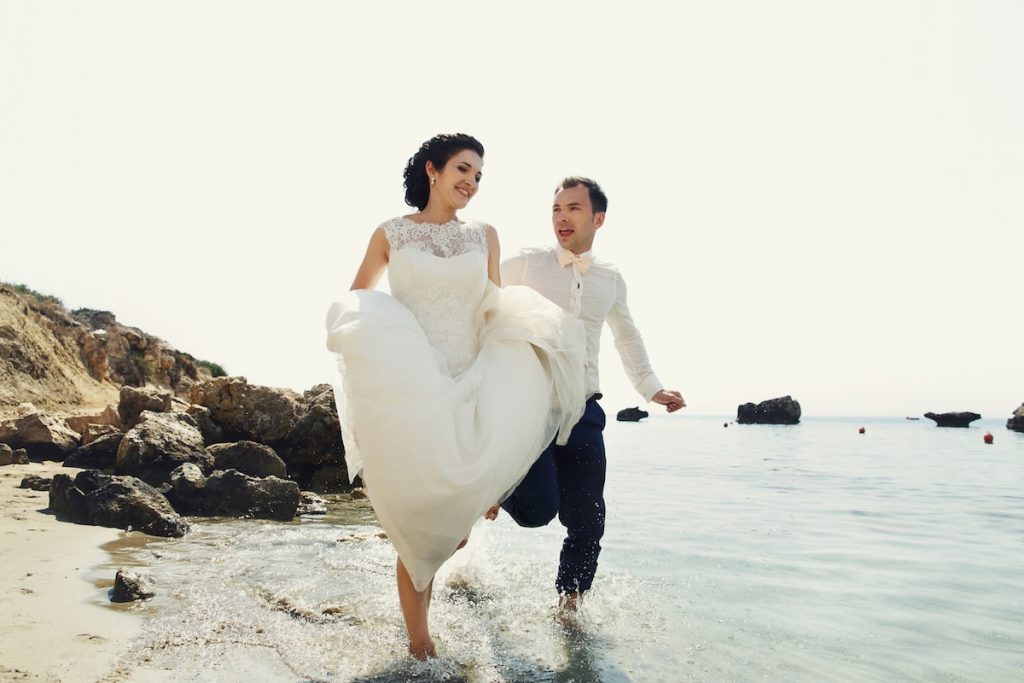
Guide the couple to run hand-in-hand, either toward or away from the camera. Choose a wide, open setting like a field, beach, or mountain trail for dynamic backdrops. Encourage genuine movement and laughter. Capture the motion at various angles and use a fast shutter to freeze action or a slow shutter for a motion blur effect.
Lift and Spin
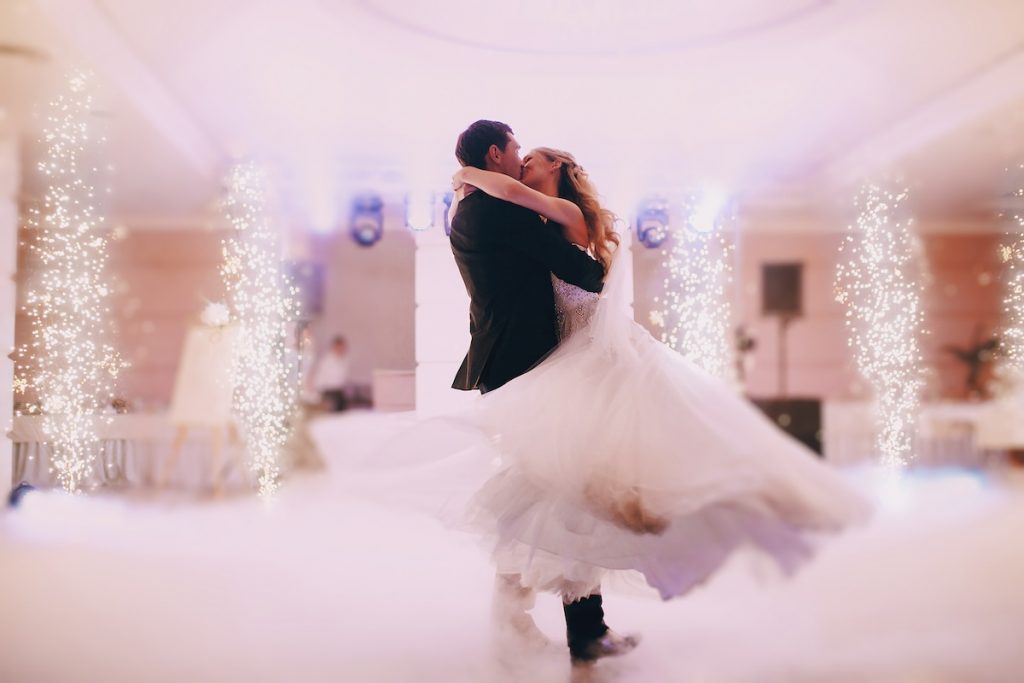
If the groom is physically capable, have him lift the bride and spin gently in a circle, ideally in an open area with flowing fabric or dramatic lighting. Instruct the lifted partner to look down laughing, while the lifter glances upward. Use high shutter speeds and shoot bursts to catch spontaneous reactions, flying hair, and motion.
Twirling Dress Shot
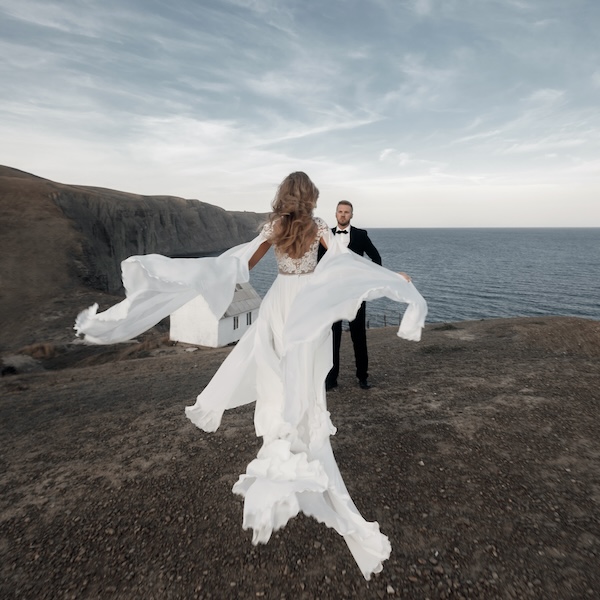
Place the couple mid-frame, and prompt the bride or one partner to twirl while the other watches lovingly. Capture the movement of the dress or veil mid-spin. Works best in open spaces or symmetrical courtyards with soft light. The joy in this shot is the contrast between motion and stillness.
Dip and Kiss
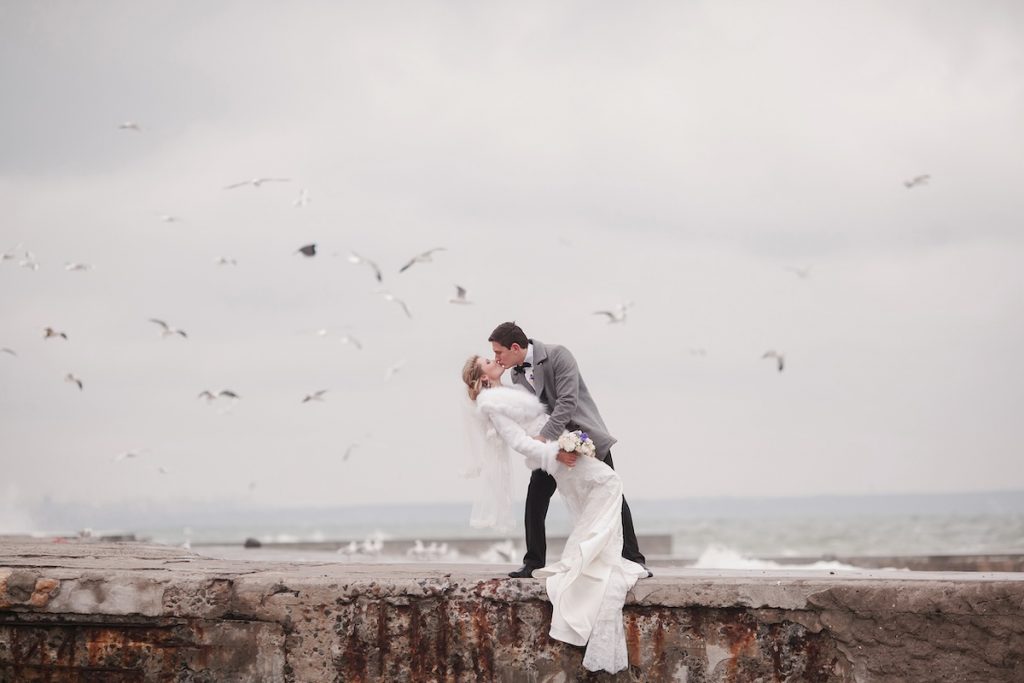
Ask one partner to dip the other gently, supporting the lower back and neck. As they lean in, capture a kiss or a moment just before. Be sure the pose feels natural and not forced, since posture and core strength are key here. This pose is ideal with twirling dresses and open settings.
Editorial and Composed Poses
Editorial poses prioritise structure, posture, and visual impact. Rather than drawing emotion through interaction or movement, they rely on body language, strong lines, and intentional stillness to create polished, magazine-style images. These poses work best when couples are comfortable being directed and when the goal is a confident, refined look that highlights style, form, and composition.
Use when:
You want polished, confident images with strong structure. These poses suit couples who are comfortable with direction and moments where style and posture matter most.
Avoid when:
The couple feels nervous or self-conscious. Without ease, these poses can exaggerate stiffness.
Side-by-Side Glance
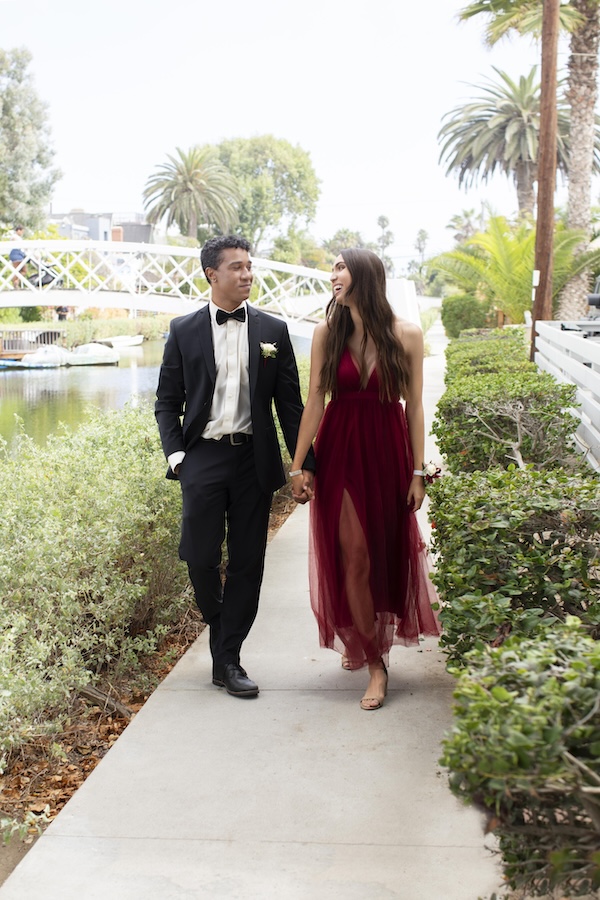
Place the couple standing shoulder to shoulder, facing forward toward the camera or slightly off to the side. Encourage them to turn their heads toward each other and share a moment, such as a smile, a whisper, or a gaze. Keep their hands loosely held or arms linked for connection.
This wedding pose creates symmetry and a sense of partnership, and it’s ideal for natural light environments with minimal distractions in the background.
Sitting on the Steps
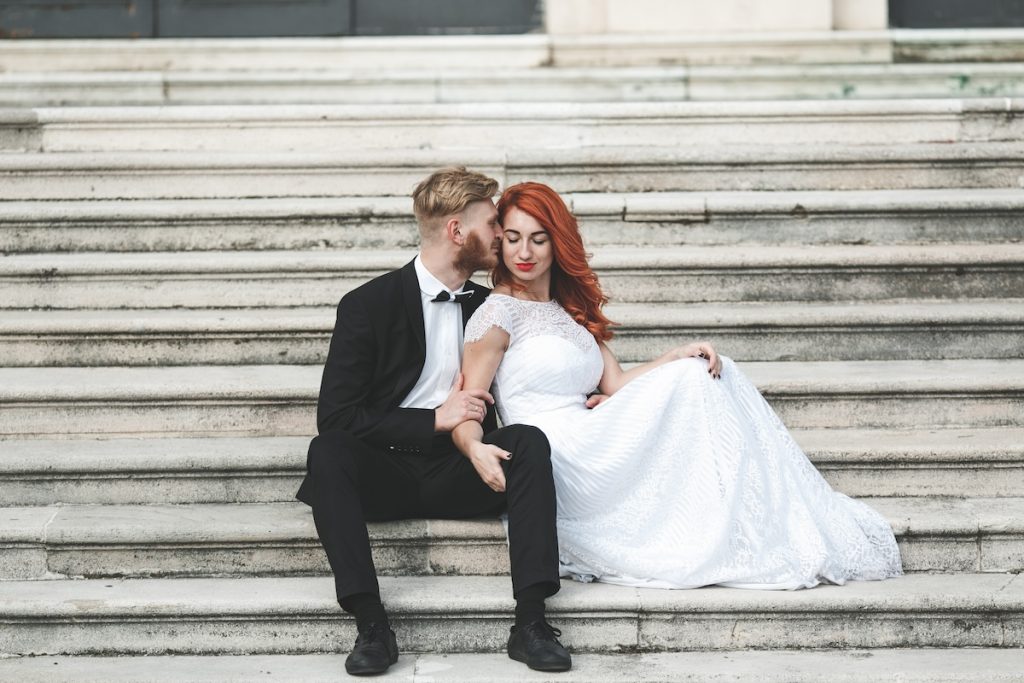
Look for a staircase with soft lighting and a neutral tone—urban, rustic, or grand architecture. Have the couple sit side by side, staggered slightly for extra dimension. One partner can rest a hand on the other’s knee or intertwine fingers. Ask them to lean into each other gently or look toward a common point off-camera. This casual pose invites conversation and natural body language.
The Veil Wrap
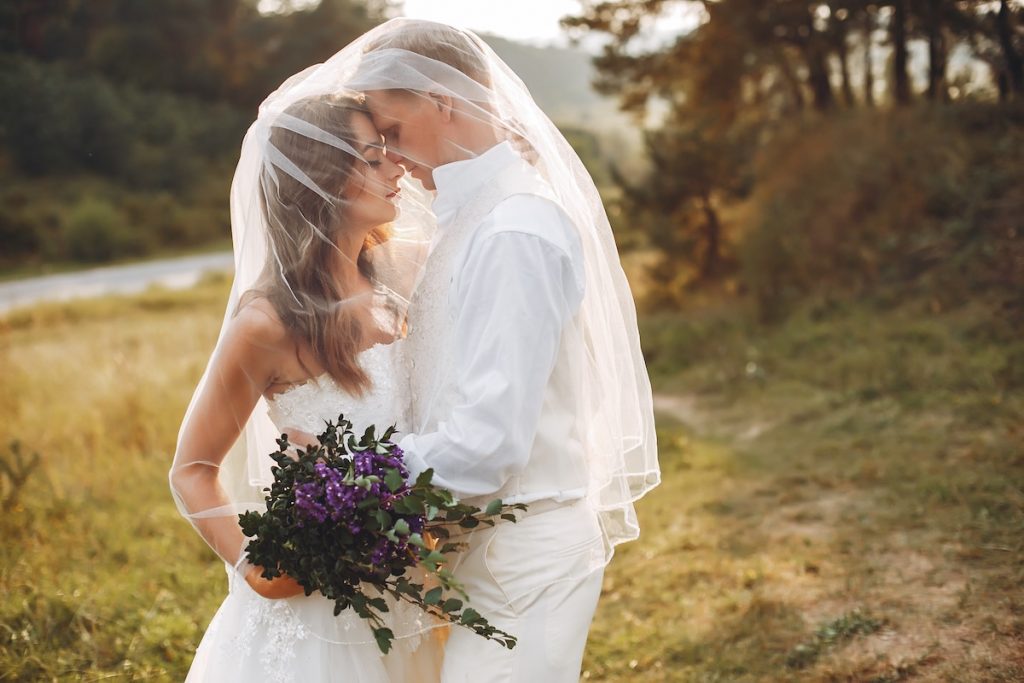
Choose a softly lit area with golden hour light or beside a large window. Drape the veil over both partners’ heads, letting it fall loosely around their faces. Position them closely: noses almost touching, foreheads together, or mid-kiss. The veil acts as a dreamy frame and enhances intimacy. Use backlight to illuminate the veil and soften facial features.
Sitting on a Lap
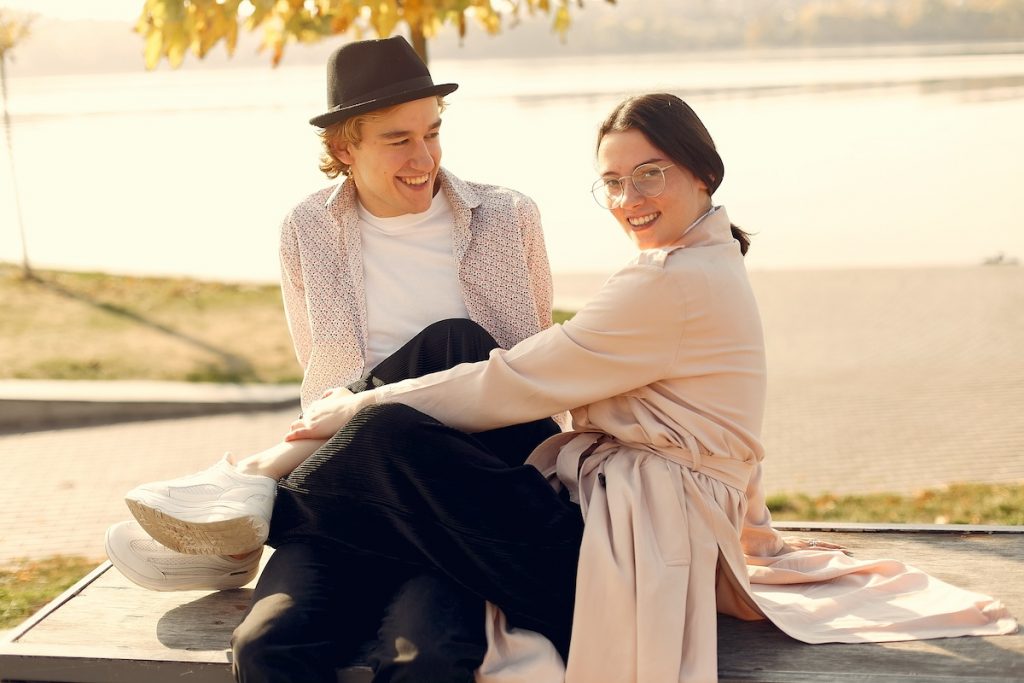
Place one partner on a bench or chair and have the other sit sideways on their lap. This creates layers and body connection. Arms can be wrapped around each other while sharing a quiet look or lighthearted moment. Use medium to close framing to show both posture and facial expressions.
Pulling Closer by the Tie or Lapel
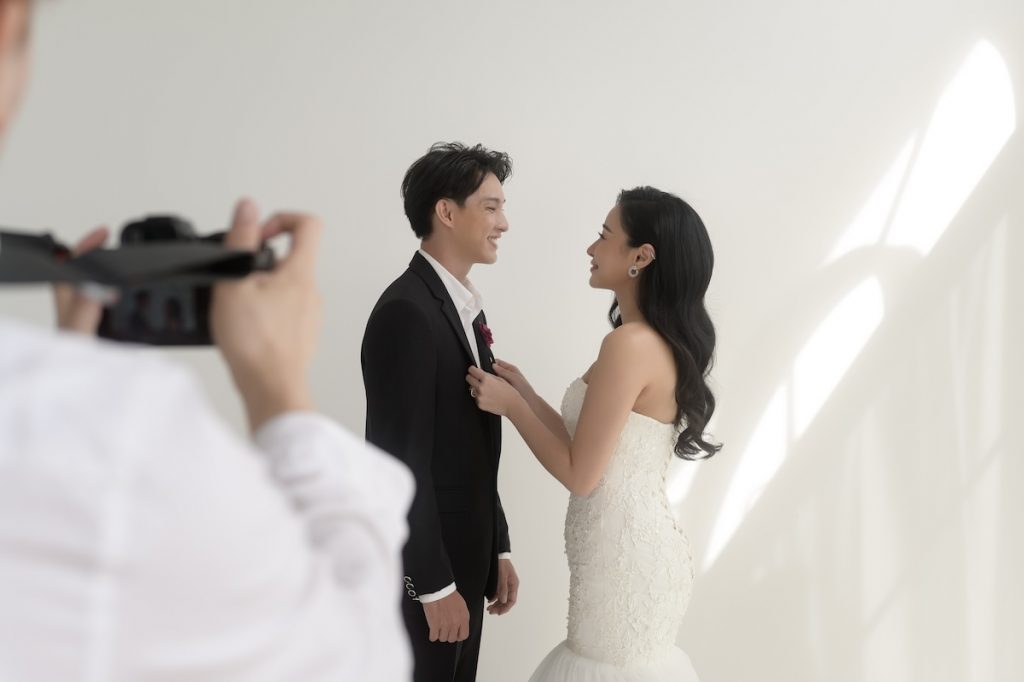
If the groom is wearing a suit, guide the bride to playfully pull on the tie or lapel to bring him closer. It creates a sense of playfulness and flirtation. Ask the groom to look down with a smile or straight into the camera for a bold look. Use dramatic light and shallow depth to elevate the moment.
Holding Hands, Facing Away From the Camera
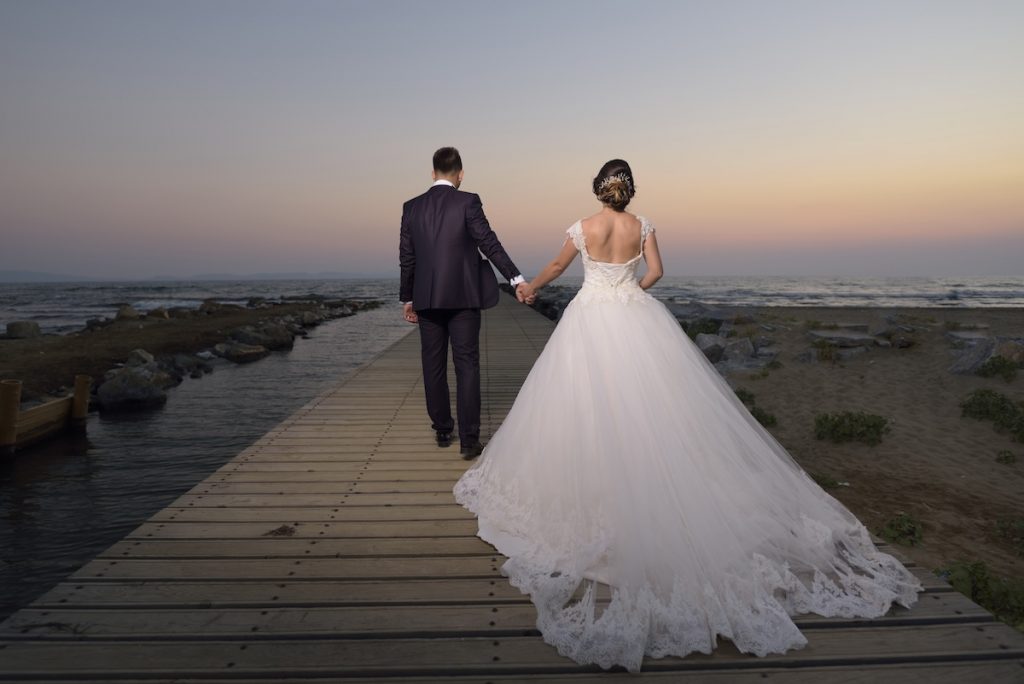
Ask the couple to walk away from the camera while holding hands. They can look at each other or forward. This wedding couple pose is ideal in scenic locations where the background tells part of the story. Add slight tilt or lean toward each other to enhance connection.
Environmental and Contextual Poses
Environmental poses use the setting as an active part of the image, not just a backdrop. Light, architecture, landscape, and space influence how couples stand, move, and interact, adding scale, atmosphere, and narrative to the photograph. These poses are most effective when the location contributes meaningfully to the story, allowing the environment to support the image without overpowering the connection between the couple.
Use when:
The location adds mood, meaning, or visual framing. These poses work well when light, architecture, or scenery helps tell the story.
Avoid when:
The background is busy or distracting. If the setting competes for attention, emotional impact drops.
Seated Connection
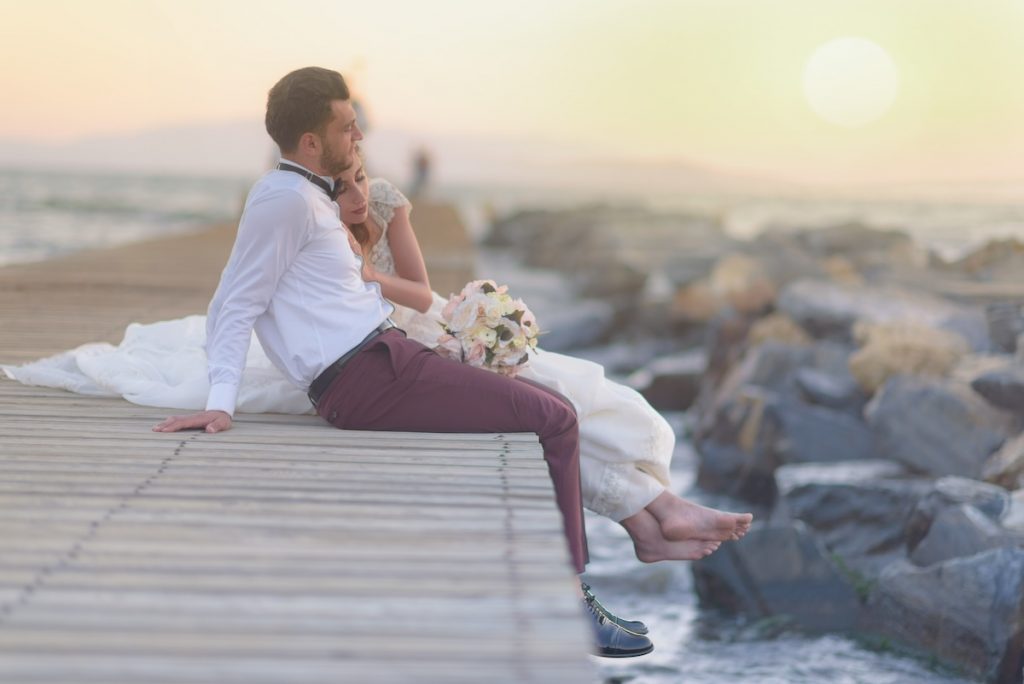
Look for a spot where the couple can sit comfortably, like a low garden wall, the steps of a grand building, or a picnic blanket under a tree. Choose a location with visual balance and a sense of place. Have them sit close together, with shoulders touching and legs casually draped. One partner might rest a hand on the other’s knee or thigh, or they might lean into each other for support.
Suggest they lean their heads together, or that one partner gently rests their head on the other’s shoulder. Encourage small movements like adjusting their posture or shifting their gaze, to keep the pose fluid and natural.
Play with your shooting angles by shooting from slightly above to make the moment feel more intimate, or from a low angle to add a grounded, cozy feel. Take time to find the angle that best captures their closeness and the environment. Seated wedding poses work beautifully for couples who might feel a little shy standing up. It helps them feel grounded and gives their bodies a natural, relaxed shape.
Leaning Against a Wall Together
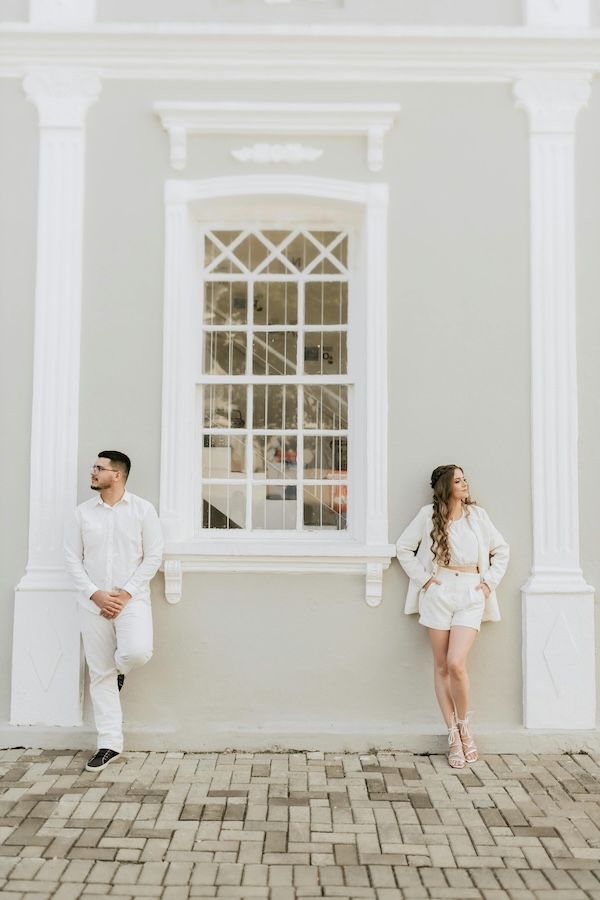
Find a textured wall or minimal backdrop and have the couple lean side by side against it, perhaps with shoulders touching. They can look off into the distance or at each other. Encourage slight posture variations to keep it dynamic. This wedding couple pose is a great option for editorial or modern couples.
Framed Between Columns or Doorways
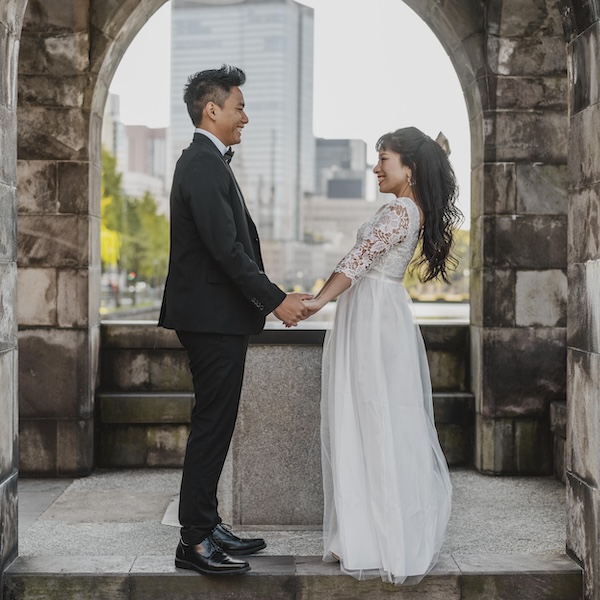
Use architecture to frame the couple within arches, windows, or doorways. Place them at the center and pose them holding hands or mid-conversation. The framing creates compositional balance, while their connection adds emotion. This wedding pose works beautifully for symmetrical shots.
Holding Hands Seated Opposite Each Other
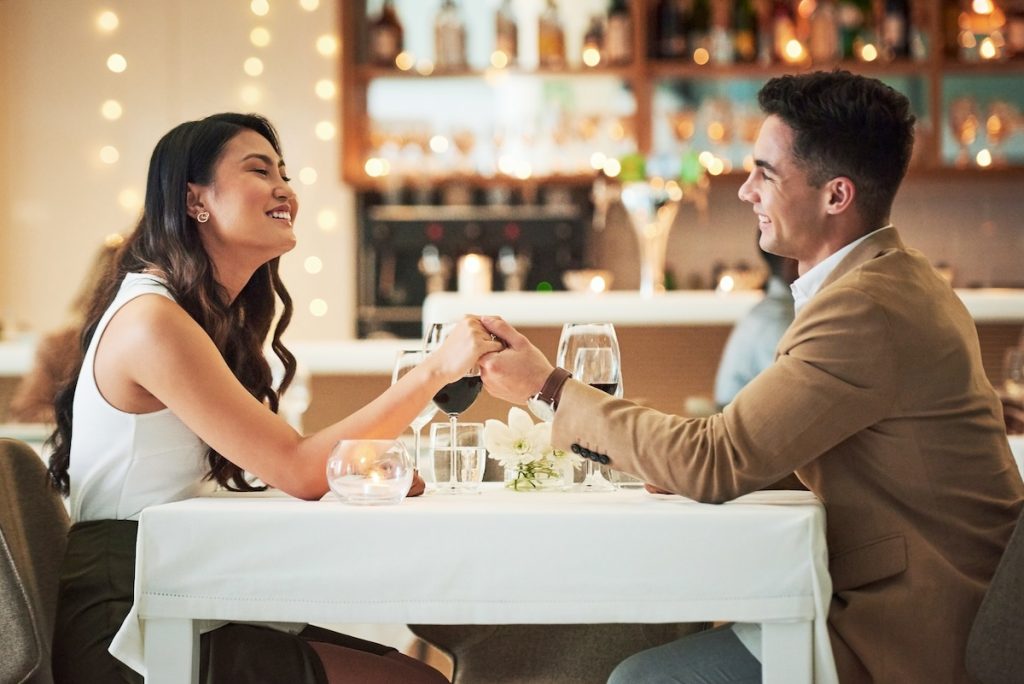
Seat the couple across from one another, at a table, on steps, or benches. Ask them to hold hands across the space and lean in slightly, sharing a laugh or private conversation. This wedding couple pose works well in coffee shops, picnic setups, or elopement-style shoots.
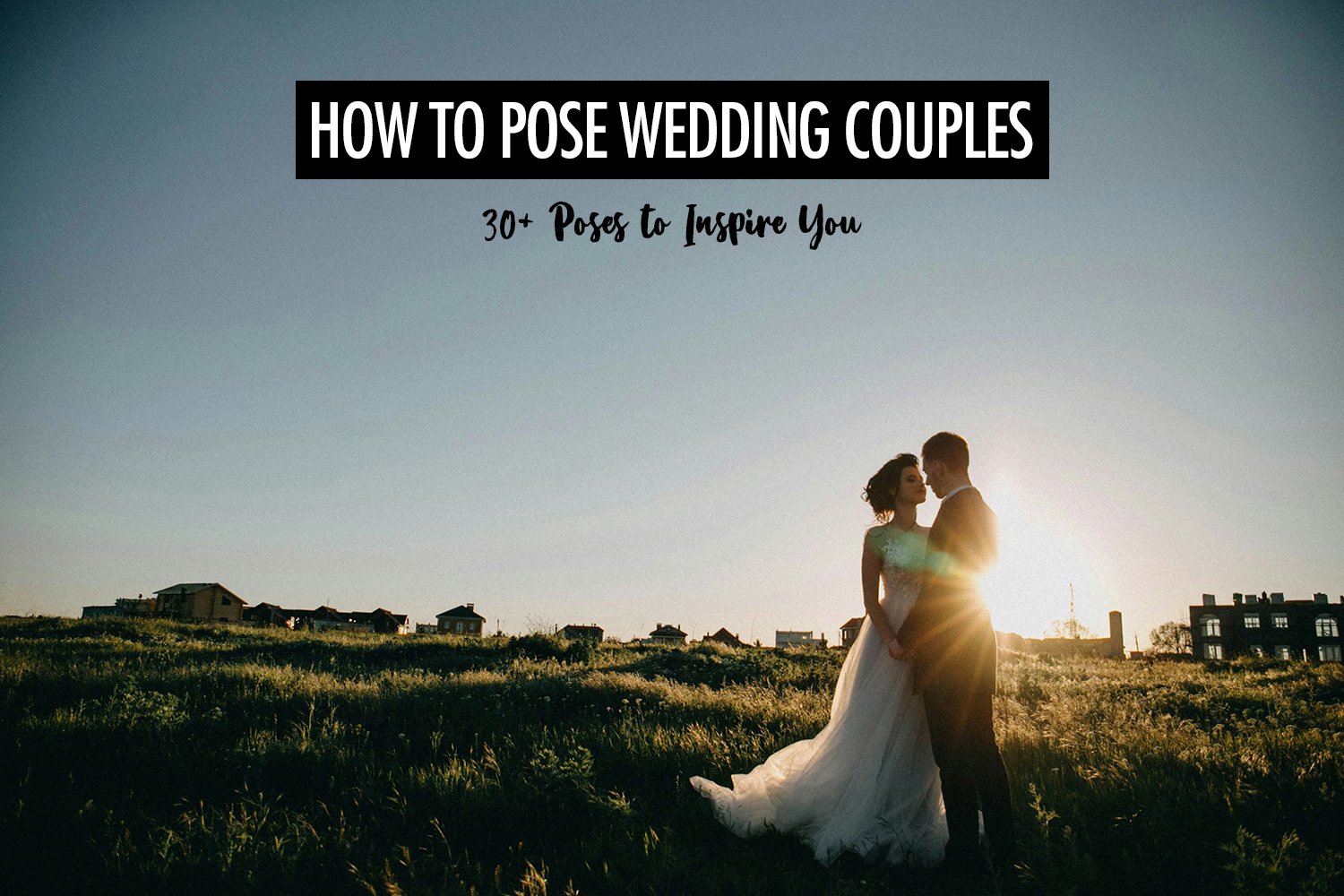
Sunset Silhouette
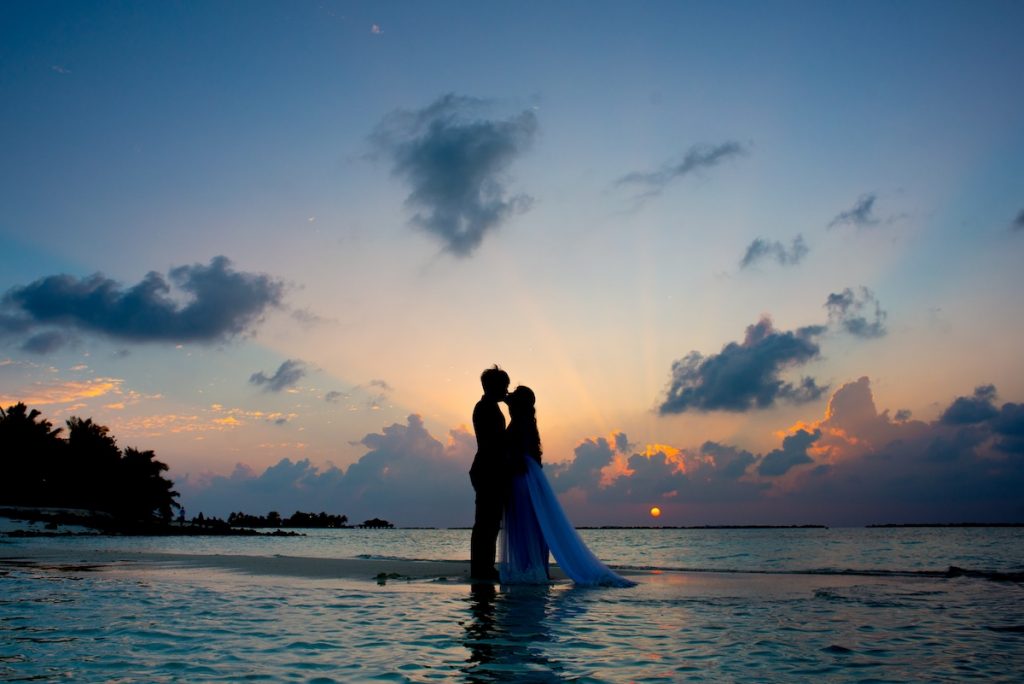
Place the couple in front of the setting sun. Have them embrace or kiss while facing each other or cheek-to-cheek. Meter for the sky and underexpose to create a dramatic silhouette. This wedding pose highlights shape and connection rather than detail.
How Experienced Photographers Run a Couple Session
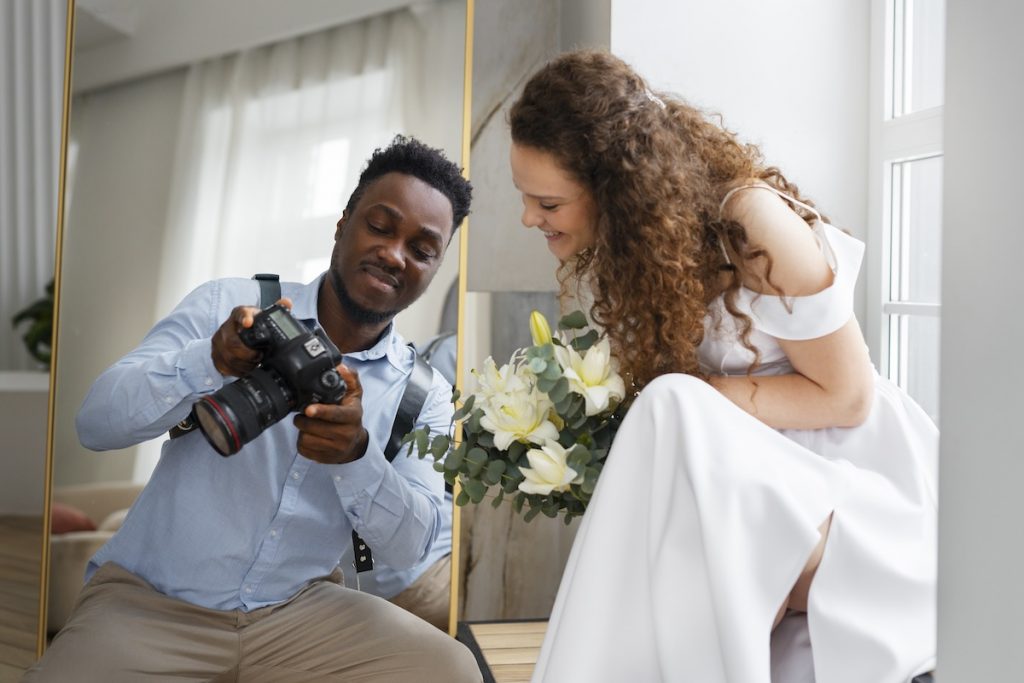
These principles are about how you apply the poses you already know. The biggest difference between beginner and experienced wedding photographers isn’t pose variety—it’s how smoothly they guide couples, adapt in real time, and stay present as moments unfold.
- Transition Smoothly: Posing should feel like a conversation, not a series of stiff pauses. Flow gently from one pose to the next, offering prompts that feel like natural extensions of the moment.
- Revisit Favorites: If you find a pose that feels especially “them,” come back to it later in the session. Small changes in expression or posture can give you a fresh set of images that still feel authentic.
- Be Flexible: Every couple has their own rhythm and comfort zone. Some will be drawn to playful, energetic poses, while others feel most at home in quiet, close moments. Let their energy guide your choices.
- Stay Present: Don’t get lost in your camera settings or in chasing the “perfect” shot. Stay connected to the couple—watch how they touch, laugh, and move together. Those subtle, unscripted moments often become the most powerful images.
- Direct, Don’t Dictate: Use prompts and gentle guidance rather than strict commands. This helps couples stay relaxed and feel like co-creators of their images, not just subjects.
- Encourage Exploration: Sometimes couples have ideas of their own—encourage them to share these! Let them take the lead on a pose or an idea, even if it’s spontaneous. Their creativity can spark beautiful, unexpected images.
By applying these principles and adapting in real time, you’ll build a flexible, intuitive approach that keeps sessions flowing naturally, even under pressure.
Posing with Props and Accessories
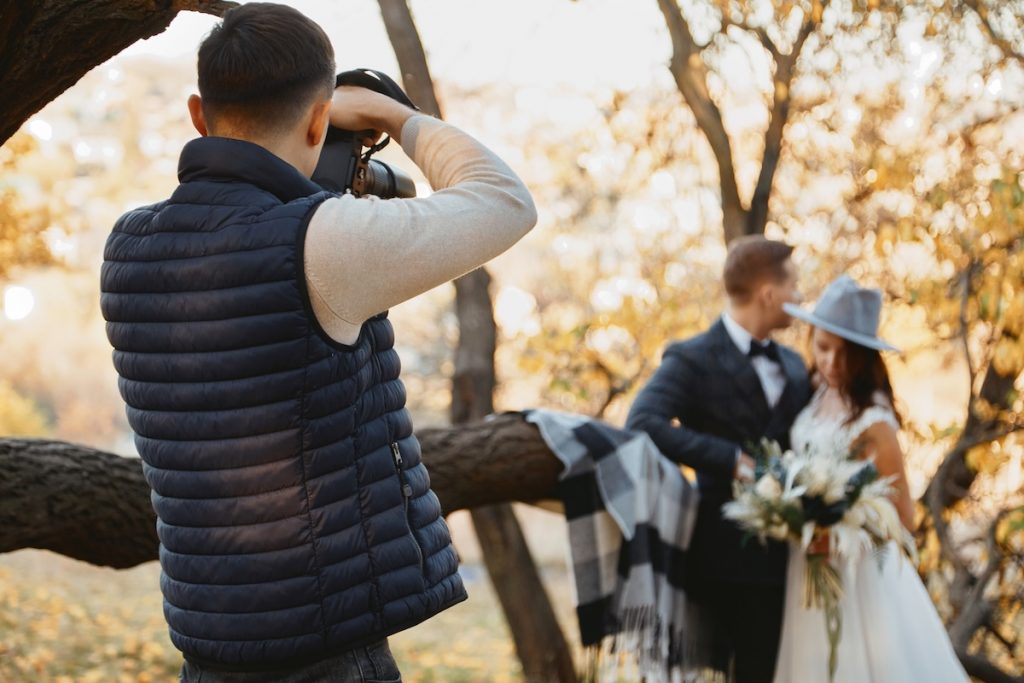
Props work best when they solve a posing problem, not when they exist just to look cute. On a wedding day, the right prop gives hands something to do, creates closeness, or adds movement without extra direction.
Use props sparingly and with intent:
- Veil: Creates a natural frame and instant intimacy. Draping the veil over both partners pulls them physically closer and softens expressions without needing verbal prompts.
- Bouquet: Gives hands a clear purpose. Holding, adjusting, or resting the bouquet prevents awkward arm placement and adds structure to standing or editorial poses.
- Jacket or suit lapel: Introduces movement and interaction. Adjusting a jacket, pulling a lapel, or slipping an arm in naturally creates connection and confident body language.
- Blanket or wrap: Solves cold-weather discomfort while encouraging closeness. Wrapping together automatically reduces distance and produces relaxed, genuine expressions.
- Sparklers or confetti: Useful for energy shots when momentum is already high. These work best at the end of a sequence, not as a warm-up, since they amplify emotion rather than create it.
Remember that props should create interaction, not act as a gimmick. If a prop distracts from faces, interrupts connection, or requires constant adjustment, it’s not helping. When in doubt, remove it and return to hands, eye-lines, and distance between bodies. The strongest wedding couple poses still come from connection first, props second.
Common Posing Problems (and How Pros Fix Them)
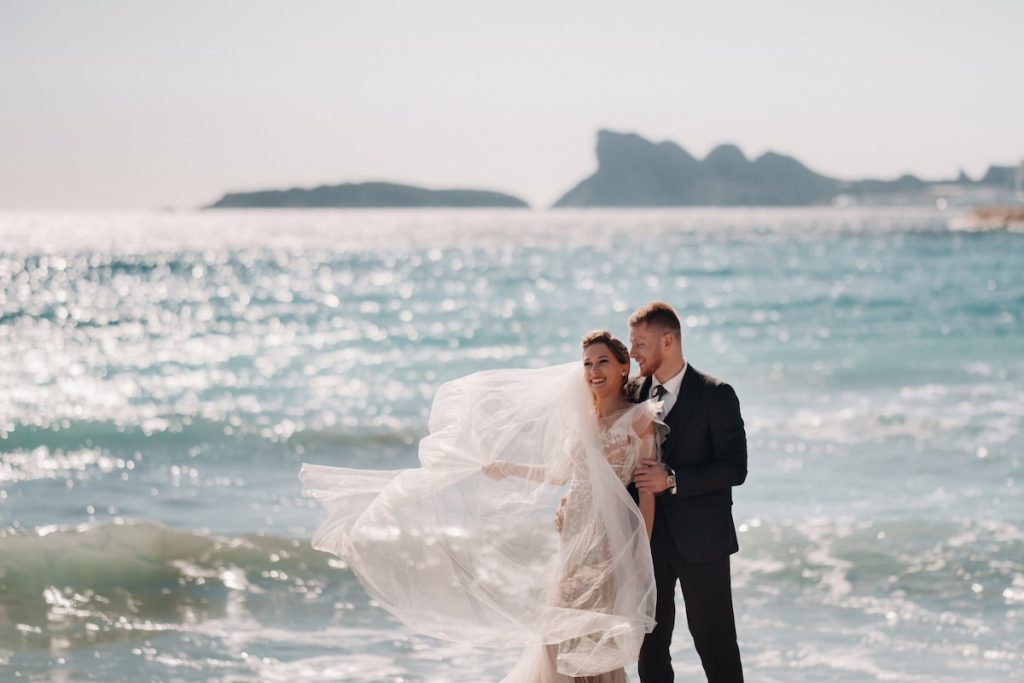
Most posing issues aren’t caused by bad poses. They’re caused by misreading what the couple needs in that moment. Experienced wedding photographers don’t just switch poses, they diagnose the problem and adjust the input.
Here’s how to do the same.
Stiff Faces
What beginners do:
They repeat the pose or ask for bigger smiles.
What’s actually happening:
The couple is self-monitoring. They’re thinking about how they look instead of interacting.
Fix:
Add motion or micro-interaction.
Have them walk, sway, lean in, or whisper something short. Movement shifts attention out of the face and into the body, letting expressions reset naturally.
Awkward Hands
What beginners do:
Ignore hands completely or fix them at the very end.
What’s actually happening:
Hands don’t know where to go, so they tense up or float unnaturally.
Fix:
Give hands a job immediately.
Hold a waist, adjust a jacket, touch a face, rest on a shoulder, or intertwine fingers. Professionals solve hands first because relaxed hands usually lead to relaxed faces.
Flat or Emotionless Photos
What beginners do:
Jump to a new pose or change location.
What’s actually happening:
There’s not enough physical or emotional closeness to trigger a visible response.
Fix:
Decrease distance and slow the pace.
Bring bodies closer, increase touch, and stop talking for a few seconds after the prompt. Pros know emotion often appears after the direction, not during it.
Chaos in the Frame
What beginners do:
Prompt interaction without setting structure first.
What’s actually happening:
Everyone is reacting at once, and the composition collapses.
Fix:
Lock positions before prompting.
Place feet, bodies, and spacing first. Then introduce one simple interaction. Experienced photographers separate structure (where people are) from expression (what they’re doing).
Distracting Backgrounds
What beginners do:
Try to “fix it in post” or hope shallow depth hides the problem.
What’s actually happening:
The environment is competing with the couple for attention.
Fix:
Move your feet before moving the couple.
Two steps left, a slight angle change, or lowering your camera often solves the problem instantly. Pros constantly scan edges and backgrounds before they ever give a prompt.
Over-Posing
What beginners do:
Stack instructions: head here, hands there, smile, turn, lean, hold.
What’s actually happening:
Cognitive overload shuts down natural expression.
Fix:
Give fewer words, then wait.
Experienced photographers speak less and watch more. One clear prompt, then silence, often produces the most authentic frame.
Under-Directing
What beginners do:
Say “just be natural” and hope something happens.
What’s actually happening:
The couple doesn’t know what “natural” looks like on camera.
Fix:
Direct behavior, not appearance.
Walking, talking, adjusting, leaning, reacting. Professionals guide actions and let expressions emerge as a byproduct.
Conclusion
Posing newlywed couples during a photo session is a balance of technical awareness and emotional sensitivity. In this guide, we’ve covered the core principles behind effective wedding couple poses, practical ways to direct real couples, common mistakes to avoid, and how to adapt your approach based on energy, timing, and environment. Together, these elements form a flexible framework you can rely on in fast-moving, real-world wedding situations.
Ultimately, great posing isn’t about precision or perfectly replicating a pose. It’s about recognising what the moment calls for and guiding couples in a way that feels natural to them. Every couple has their own rhythm, and the strongest images come from responding to that rhythm rather than forcing a formula. When you stay present, adapt as the day unfolds, and leave room for unscripted moments, your images won’t just look beautiful. They’ll feel honest, lived-in, and memorable.
Frequently Asked Questions
Start with low-intimacy, low-pressure poses that don’t require overt affection. Side-by-side walking, shared direction (looking out at the view), or light interaction prompts like talking or laughing work well. Avoid asking for kisses or close face-to-face contact early on. As comfort builds, you can gradually reduce physical distance and introduce more intimate poses if it feels natural. The goal is to respect boundaries while still creating connection through proximity and shared focus.
Avoid forcing symmetry. Instead of lining them up straight on, use offset poses such as walking, leaning, seated positions, or having one partner slightly in front or behind. Encourage natural weight shifts, bends at the knee, or gentle head tilts rather than asking someone to “stand taller” or “lean down.” Shooting from a slightly lower or higher angle can also help balance proportions without drawing attention to the height difference.
If a lift or dip feels risky or uncomfortable, swap it for grounded movement that creates the same energy. Walking with momentum, a gentle spin, a close sway, or a playful lean-in can produce dynamic images without physical strain. You can also fake the look of a dip by having one partner step back slightly while the other leans in, keeping both feet firmly planted. Safety and confidence always come before drama.
Beginners often focus on the pose instead of the reaction. They try to “complete” a pose and then move on, instead of watching what happens after the couple settles into it. In practice, the strongest images usually appear in the few seconds after a pose is established, when shoulders drop, smiles soften, or laughter breaks out. Experienced photographers treat poses as starting points, not end goals, and keep shooting through the transitions.
They avoid freezing people in place. Pros rely heavily on micro-movements and prompts, such as shifting weight, breathing together, walking a few steps, or interacting briefly before returning to stillness. Even in composed or editorial poses, they introduce subtle motion or interaction to prevent tension from building in the body. The result is structure without rigidity.