
Part of our Business guides
Explore more articles on marketing, pricing, and growth in our Business section.
You capture what feels like a strong image. The question is no longer whether it’s good, but whether it can make money, and how. Selling photos online can mean very different things depending on the kind of photographer you are. For some, it means licensing images through stock platforms. For others, it means selling prints, digital downloads, or galleries directly to clients. These options often get grouped together, but they behave very differently in practice.
One of the biggest mistakes photographers make is treating “selling photos online” as a single goal. In reality, it involves choosing between trade-offs. Passive income versus active sales. Volume versus margins. Platform-driven discovery versus building your own audience. Each approach rewards a different workflow and comes with its own constraints.
This guide is not about shortcuts or uploading a few images and hoping for steady income. It’s about understanding how photographers actually make money online today, where each model works well, and where it tends to break down. Some options prioritise convenience and scale. Others require more effort but offer greater control and long-term value.
We’ll focus on helping you make those choices deliberately. You’ll learn the main ways photographers sell photos online, how different selling models fit different goals, and how to choose platforms based on how you work in reality, not just what sounds appealing. Whether you’re looking for supplemental income, direct client sales, or a system you can grow over time, the aim is to help you pick a path that matches your expectations and your workflow.
Which Selling Model Suits You?
There isn’t one single way to sell photos online. Different photographers sell in different ways, depending on their audience, workflow, and goals. Before choosing a platform, it helps to be clear about how you want to sell your work, and what trade-offs you are comfortable with.
Here are the most common models photographers use:
- Stock and licensing
Best for photographers with a large library of broadly usable images. Photos are licensed repeatedly through stock agencies or marketplaces. This model prioritizes volume and discoverability, but typically comes with lower margins and less control over pricing and usage. - Direct client sales
Best for portrait, wedding, event, and commercial photographers who sell prints and digital files directly to clients. This approach offers higher margins and full control over pricing and presentation, but requires managing delivery, payments, and the client experience yourself. - On-demand marketplaces
Good for discoverability and reaching new audiences without driving your own traffic. Marketplaces handle hosting, exposure, and payments, making them easy to start with, though this usually comes at the cost of reduced branding control and platform fees or commissions.
There’s no universally “best” model. Some photographers rely on a single approach, while others combine multiple models depending on the type of work. Once you know which model fits your business, it becomes much easier to evaluate the platforms below and choose one that aligns with how you actually work.
Reality Check
Selling photos through stock platforms is often described as passive income, but that idea breaks down quickly once you look at how the market has evolved.
As photographer Steve Heap, who has contributed to stock agencies for over 15 years, explains, competition has intensified significantly: “It’s getting harder every year. AI-generated images and videos are definitely affecting photos of people, although travel photography remains more resilient—users still need accurate depictions of city skylines, for example, and AI isn’t quite suited for that. These days, I enjoy selling prints more, but that requires a lot of marketing effort. So, give it a try, but don’t expect to get rich!”
What matters most isn’t choosing the “right” platform, but understanding where demand still exists. Generic imagery is increasingly vulnerable to AI and oversupply, while photos rooted in real places, real events, and real expertise remain harder to replace.
Heap’s shift toward selling prints also highlights a common trade-off. Moving beyond stock platforms can offer more control over pricing, presentation, and brand identity—but it replaces platform-driven discovery with the need for active marketing. Income becomes more intentional, but far less passive.
For photographers today, the goal isn’t to choose a single platform, but to build a balanced mix. Stock photography can still work as a supplementary channel, especially in defensible niches, while online galleries and print-on-demand platforms support direct sales, stronger branding, and long-term value.
This makes subject choice just as important as selling model. So before deciding where to sell your photos, it’s worth understanding what actually sells today and why.
Types of Photos That Sell Well

Not all photos are created equal, especially in a market shaped by oversupply and AI-generated content. The categories below continue to sell not because they are trendy, but because they solve specific buyer problems that automation and generic imagery still struggle to replace.
Business and Lifestyle Photography
Photos that depict real people in natural settings—working, socializing, using technology, or simply living day-to-day moments—are among the most downloaded on stock sites. Think shots of coworkers in meetings, remote work setups, families at dinner, or friends enjoying coffee together. The key is authenticity; overly staged or generic images tend to perform poorly compared to candid, relatable visuals.
Who buys this:
Marketers, startups, agencies, and content teams.
What problem it solves:
They need flexible, relatable visuals for websites, ads, blog headers, and presentations without commissioning custom shoots.
Business and lifestyle images sell because they are adaptable. A single photo can represent productivity, teamwork, remote work, or modern life depending on context. Images that feel natural and non-staged perform best because buyers want visuals that blend seamlessly into their brand messaging rather than stand out as obvious stock.
Generic lifestyle scenes are also the most exposed to AI competition, which means success increasingly depends on specificity—real locations, believable scenarios, and culturally current details.
Technology and Innovation
From AI and robotics to smart homes and wearable tech, the digital age is shaping photo trends. Images of people interacting with gadgets, coding at a computer, or illustrating data flow are often used in editorial and commercial content, making this a profitable niche for tech-savvy photographers.
Who buys this:
Tech companies, SaaS businesses, media outlets, and educators.
What problem it solves:
They need visual metaphors for abstract concepts like AI, data, security, or digital transformation.
These images are rarely bought for literal accuracy. However, imagery that reflects real-world workflows, devices, or environments tends to outperform abstract or overly futuristic visuals as buyers become more sensitive to AI-generated clichés.
Travel and Nature
Breathtaking landscapes, cityscapes, and cultural moments remain evergreen in demand. Travel bloggers, magazines, and tourism boards are always on the lookout for striking visuals that tell a story about a place. If you have a library of well-composed shots from your travels, you’re already ahead.
Who buys this:
Publishers, tourism boards, brands, and designers.
What problem it solves:
They need authentic, location-specific imagery that AI and generic visuals still struggle to replace.
Travel and nature photography remains resilient because accuracy matters. Real landmarks, recognisable skylines, and genuine environmental conditions are difficult to fake convincingly. Buyers often want credibility as much as beauty, especially for editorial or destination-driven content.
Health and Fitness
As the wellness industry continues to grow, so does the demand for related imagery. Photos of people exercising, preparing healthy meals, meditating, or engaging in sports like yoga or running are widely used in fitness blogs, health apps, and marketing campaigns.
Who buys this:
Wellness brands, fitness apps, gyms, and health publishers.
What problem it solves:
They need aspirational yet believable visuals that communicate energy, discipline, and well-being.
These images sell when they feel achievable rather than extreme. Buyers are often looking for representation of everyday health habits rather than elite athletic performance, which is why natural lighting, diverse body types, and realistic settings perform well.
Education and School Photography
Photos related to education are always in demand—from preschool classrooms to university campuses. Shots of students studying, teachers in action, children using tablets, or graduation ceremonies are frequently used in brochures, blogs, and e-learning platforms. School portraits and event photography (like senior photos, class photos or awards days) can also be monetized directly, especially when paired with platforms (like Honcho) that offer private galleries and face-recognition tagging.
Who buys this:
Schools, parents, educational platforms, and institutions.
What problem it solves:
They need trustworthy, personal imagery that represents real students, environments, and milestones.
This category works well for direct sales because the value is emotional, not generic. Parents are not buying “a photo,” they are buying their child’s moment. Platforms that support private galleries and easy discovery make this type of photography especially viable outside of stock marketplaces.
Food and Drink
Beautifully styled shots of meals, beverages, or food preparation scenes are staples for restaurants, cookbooks, and food blogs. Whether it’s a flat lay of a brunch spread or a macro shot of melting chocolate, food photography can be highly profitable when done with attention to detail and lighting.
Who buys this:
Restaurants, publishers, brands, and content creators.
What problem it solves:
They need visually appetising imagery that immediately communicates flavour, quality, and mood.
Food photos sell because they reduce friction in decision-making. Whether it’s a recipe blog or a restaurant menu, the buyer wants the viewer to feel something instantly. Consistent lighting, clear styling, and strong composition matter more than novelty. Photos tied to real restaurants, real chefs, or identifiable dishes also retain value longer than purely decorative food imagery.
Sports and Action Photography
Dynamic, high-energy images of sports events—whether it’s local youth games, high school tournaments, marathons or professional competitions—sell well across both stock and private galleries. There’s strong demand for shots that capture the emotion and intensity of the game: a decisive moment, a team huddle, or an athlete’s celebration. These photos are especially valuable to parents, schools, and sports organizations, offering both print and digital sales opportunities.
Who buys this:
Parents, schools, clubs, organisers, and local media.
What problem it solves:
They want emotional, personal moments that cannot be recreated or replaced.
Unlike generic stock, sports photography often sells best through direct galleries. Buyers are not comparing options. They are looking for that specific moment. This is why speed, organisation, and discoverability often matter more than artistic perfection.
Diversity and Inclusion
Brands and publishers are actively seeking imagery that reflects the real world—diverse ethnicities, body types, ages, and lifestyles. Inclusive images that feel natural and respectful are not only ethically important but also commercially in demand.
Who buys this:
Brands, agencies, publishers, and organisations.
What problem it solves:
They need imagery that reflects real audiences and avoids outdated or homogeneous visuals.
These images sell because they reduce risk for buyers. Authentic representation helps brands communicate values without appearing performative. Images that feel natural and contextually grounded tend to outperform overly symbolic or forced representations. Buyers are increasingly wary of images that feel performative, generic, or disconnected from real environments.
By focusing on these popular categories—and adding your own creative spin—you can build a portfolio that appeals to a wide range of buyers. And if you have access to school events or sports teams in your community, don’t overlook the potential in selling your photos directly to families, institutions, and local media. These niches are often underserved and can yield recurring, hyperlocal income streams.
How Different Photo Categories Make Money in Practice
Photos don’t fail to sell because they’re bad. They fail because they’re sold through the wrong model. That mismatch has become more costly as AI and oversupply reshape which types of images still hold value.
Different categories tend to convert in different ways, depending on how buyers approach the purchase.
Images built around ideas or concepts (such as business, lifestyle, technology, wellness, and diversity) perform best on stock platforms. Buyers in these categories are searching for reusable visuals that can represent an idea across many contexts. Volume and relevance matter more than uniqueness, and income builds slowly over time. However, these categories are also the most exposed to AI-generated alternatives, especially when images rely on generic people, vague concepts, or interchangeable settings. Success increasingly depends on niche focus, realism, and defensible subject matter.
Photos tied to specific people or moments (including school, sports, and event photography) convert far better through direct galleries. Here, buyers are not browsing for inspiration. They are actively looking for themselves or someone they know. Speed, organisation, and ease of purchase matter more than artistic differentiation, and conversion rates are typically much higher. These images cannot be meaningfully replaced by AI, because the buyer is searching for a specific, real moment involving real people.
Images purchased for decoration or emotional value (such as travel, nature, fine art, and minimalist work) tend to sell best as prints or print-on-demand products. Buyers aren’t licensing these images for reuse; they’re buying them to live with. This model offers higher margins and creative control, but requires ongoing visibility and marketing. This is why many experienced stock contributors gradually shift toward prints: less algorithmic competition, but far more responsibility for discovery.
The key is alignment. As AI reshapes what’s easy to generate, photographers who match subject, selling model, and buyer expectations build far more durable income streams.
What Usually Doesn’t Sell (And Why)
Just as important as knowing what sells is understanding what looks strong but consistently fails to convert. Many photographers spend time producing images that are technically solid, yet commercially weak, because they miss how buyers actually think and how the market has shifted.
As competition increases and AI-generated imagery floods stock libraries, images that are vague, generic, or easily replicated lose value first. The following patterns struggle not because they are “bad,” but because they are replaceable or risky from a buyer’s point of view.
Overly Staged or Generic Stock Poses
Images that feel obviously staged tend to underperform. Forced smiles, exaggerated gestures, and overly polished interactions immediately signal stock photography, which makes buyers hesitate.
This problem has intensified as AI-generated images become more convincing. When a photo looks generic, buyers can now generate a similar image themselves, faster and cheaper. As a result, candid, specific, and believable moments hold far more value than technically perfect but emotionally empty scenes. In today’s market, realism is a competitive advantage.
Images Without Releases in Commercial Categories
Photos of recognizable people or private property may look great, but without proper model or property releases, their commercial value is sharply limited.
This is especially damaging in categories like lifestyle, business, and education, where buyers expect legal safety for advertising and marketing use. With so many alternatives available, buyers rarely take risks on images that could cause licensing issues. A missing release doesn’t just restrict usage—it often removes the image from consideration entirely.
Visually Strong Images With No Clear Use Case
Some photos are striking but difficult to apply. Tight crops, dramatic lighting, or highly stylized compositions may look impressive, yet offer little flexibility for real-world use.
From a buyer’s perspective, these images are risky. If they can’t immediately imagine how the photo fits into a website header, ad layout, brochure, or social post, they’ll move on. This matters even more now that AI can generate eye-catching visuals on demand. Human-made images still win when they solve a clear problem, not just when they look beautiful.
Stock Photo Platforms
A stock photo marketplace is an online platform where photographers can sell their photos to individuals, businesses, and media outlets for a variety of uses—ranging from website content and advertisements to editorial features and merchandise. These marketplaces act as intermediaries, connecting creators with buyers by hosting searchable libraries of photos categorized by subject, theme, and usage rights.
Photographers upload photos and earn money each time their images are licensed, typically through royalty payments based on the license type and pricing model. For creators, stock photo marketplaces offer an accessible way to generate passive income from their work, while providing clients with high-quality visuals without the cost of a custom photo shoot.
When comparing stock photo platforms, it helps to evaluate them using the same criteria. Most platforms differ less in features than in how they reward contributors over time.
When deciding where to upload your work, consider:
- Buyer type: Are buyers primarily editorial (news, media, documentary) or commercial (marketing, advertising, branding)?
- Control vs exposure: Does the platform prioritise contributor control over licensing and pricing, or mass exposure through subscriptions and bundles?
- Earnings pattern: Do earnings tend to build slowly over time, or come in unpredictable spikes based on demand and placement?
- Release strictness: How strict is the platform about model and property releases, and how much of your work will realistically qualify for commercial use?
How to use this list: Don’t pick a platform based on brand recognition. Pick based on (1) who the buyers are, (2) whether the platform rewards volume or rarity, and (3) whether you can realistically meet model and property release requirements. Shortlist 2–3 platforms, then stick with them long enough to learn what performs.
Alamy
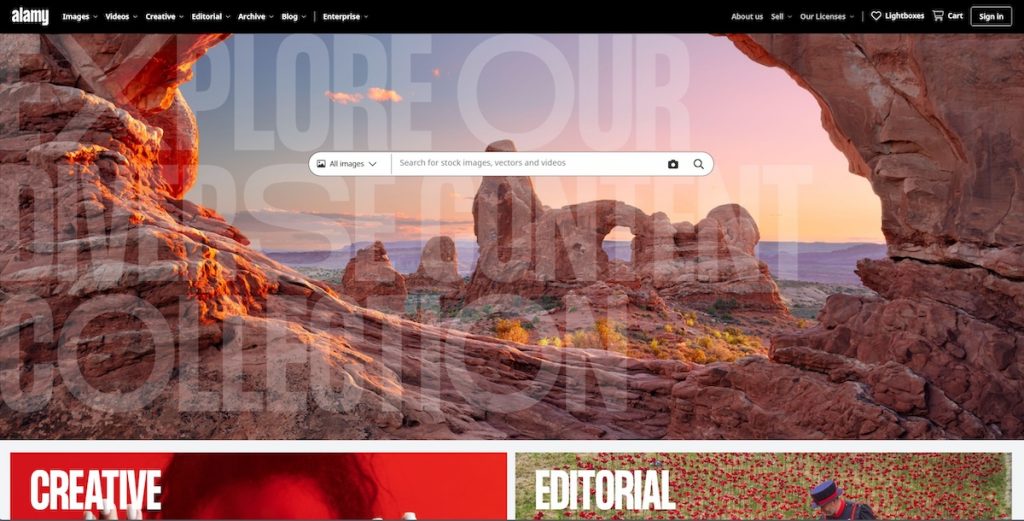
Alamy is particularly strong in editorial and documentary photography, making it a good fit for photographers with newsworthy, location-specific, or specialist content. Contributors can sell images under both royalty-free and rights-managed licenses, which gives more control over how images are used compared to purely microstock platforms.
Commission rates are higher than most competitors, with contributors earning 50% on exclusive images and 40% on non-exclusive content. Payments are made via PayPal, Skrill, or bank transfer once the payout threshold is reached. In practice, earnings tend to be irregular rather than predictable, and it can take time for new images to gain visibility in search results. Many contributors report waiting several months before seeing their first meaningful payout.
Alamy works best for photographers with large, diverse archives who are comfortable with slower sales cycles in exchange for higher per-license returns. It is less suited to those looking for steady monthly income, but valuable for long-tail earnings from editorial and documentary work.
500px
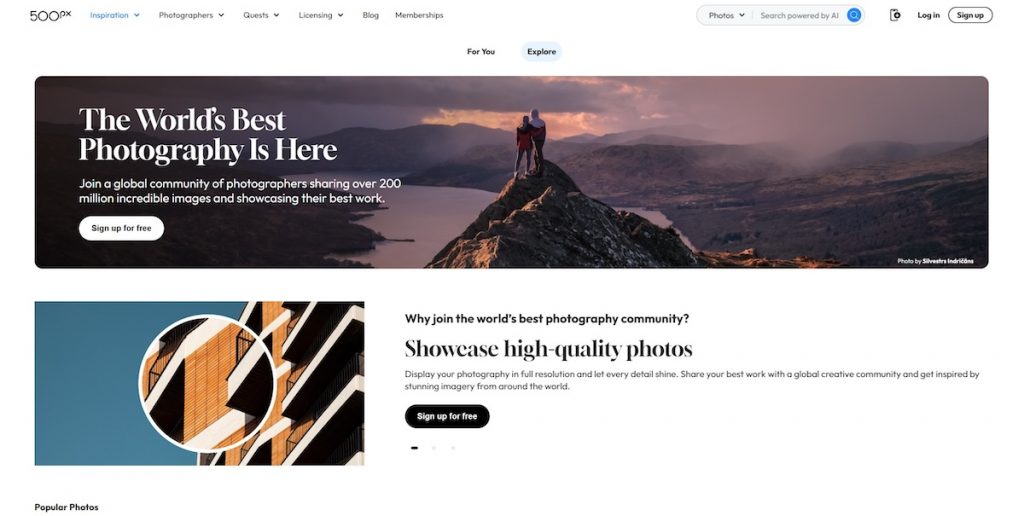
500px combines a photography community with a commercial licensing platform, allowing contributors to sell images through its royalty-free Licensing Program. Photos must be reviewed and approved before becoming available to buyers, and visibility is influenced heavily by curation and image quality.
Exclusive contributors can earn up to 60% of net sales, while non-exclusive contributors receive lower royalties. Payments are issued once contributors reach the $30 payout threshold, with processing typically taking 10 to 15 business days after earnings are cleared. Payout methods include PayPal and bank transfer options, though fees may apply depending on location.
While royalty rates are attractive on paper, sales volume is inconsistent, and earnings often depend on a small number of standout images rather than bulk uploads. Because discoverability is closely tied to curation and platform exposure, 500px tends to reward photographers with distinctive, high-impact images rather than large generic portfolios.
Overall, 500px is best suited for photographers with strong individual images who are comfortable with variable income and slower accumulation toward payouts, rather than those seeking predictable, high-volume stock earnings.
123RF
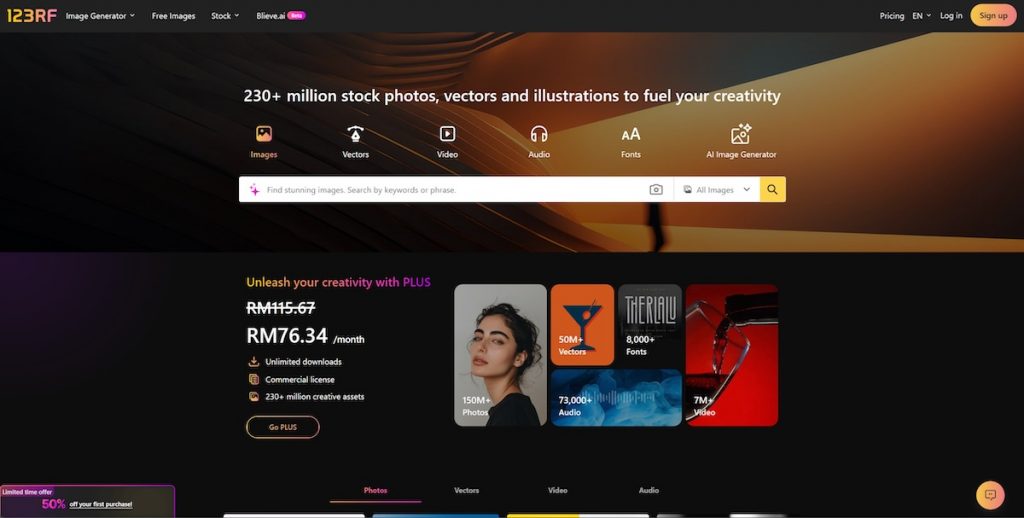
123RF is a non-exclusive, royalty-free stock platform that supports photos, vectors, videos, and audio. Contributors earn on a tiered commission structure ranging from 30% to 60%, depending on annual sales volume, which means earnings improve gradually rather than immediately.
Payments are issued monthly once contributors reach the payout threshold ($50 for PayPal or Payoneer, $100 for Skrill). In practice, earnings tend to be modest but steady for contributors who upload consistently and keyword carefully. Sales volume is generally higher than premium platforms, but individual payouts per image are lower.
123RF works best for photographers who are comfortable with incremental growth and want to distribute images widely without exclusivity restrictions. It is less appealing for photographers seeking high per-image returns, but useful as part of a broader stock distribution strategy.
Shutterstock
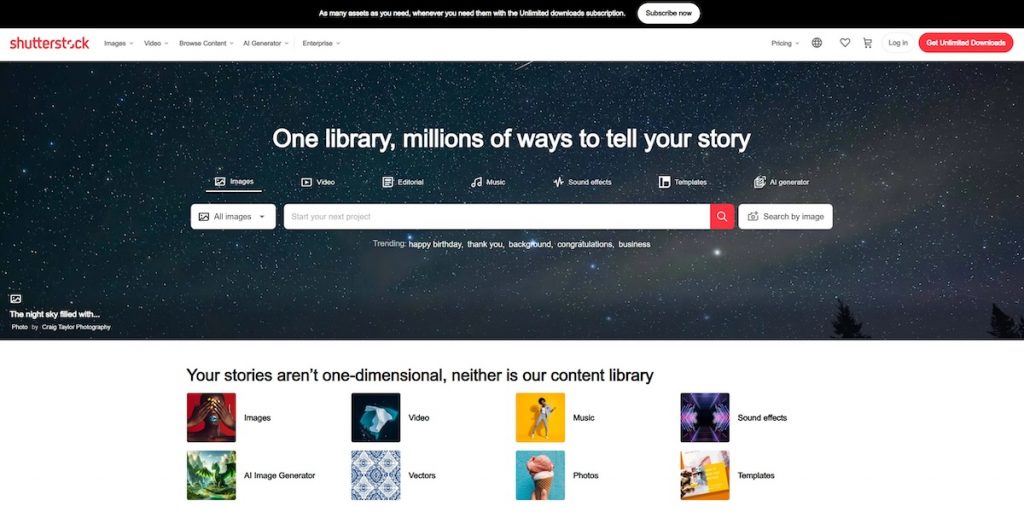
Shutterstock operates at massive scale and is one of the most competitive stock platforms in the industry. Contributors earn through a tiered royalty system that resets each calendar year, starting at lower percentages and increasing as download volume grows. Payments are issued monthly once the $25 minimum payout is reached.
Licensing is royalty-free, with most earnings coming from subscription downloads. In practice, this means high download potential but low per-image payouts, especially for non-exclusive contributors. Success depends heavily on producing commercially relevant images that match current demand and uploading consistently.
Shutterstock is best suited for photographers who treat stock as a volume-driven channel, rather than a high-margin one. It rewards persistence and market awareness more than uniqueness, and works best when combined with other platforms rather than relied on exclusively.
Getty Images
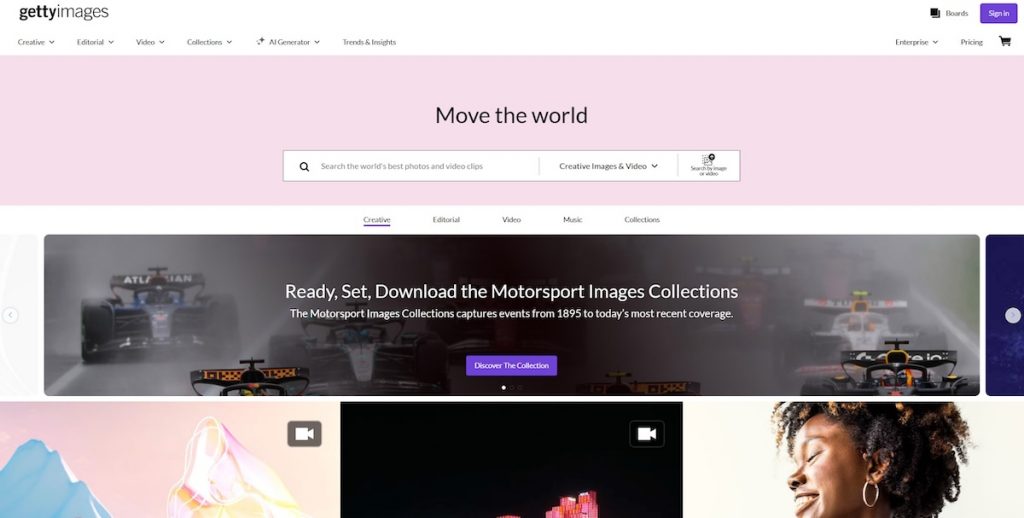
Getty Images sits at the premium end of the stock market, serving major publishers, brands, and agencies worldwide. Contributors can sell under royalty-free, rights-managed, or rights-ready licenses, depending on the agreement.
Royalties are lower than many expect, with non-exclusive contributors typically earning around 20%, and exclusive contributors earning 25% to 45% depending on performance and contract terms. Payments are issued monthly after reaching the $100 payout threshold.
Getty is selective and slower-moving, but individual licenses can generate meaningful returns. It is best suited for experienced photographers with strong editorial, commercial, or niche content, rather than beginners. Getty prioritizes quality, credibility, and subject matter over volume.
iStock
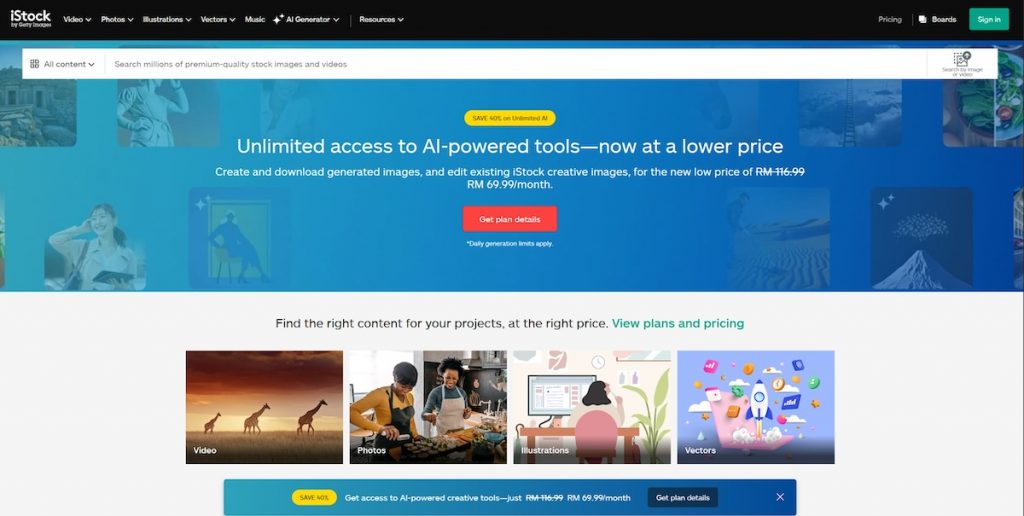
iStock operates as Getty Images’ microstock arm, offering royalty-free licensing through subscription and credit-based purchases. Non-exclusive contributors earn a flat 15% royalty, while exclusive contributors can earn 25% to 45%, depending on performance tiers.
Payments are made monthly once contributors reach the $100 payout threshold. Subscription downloads often generate low per-image earnings, especially for non-exclusive contributors, making volume essential for meaningful income.
iStock works best for photographers who are willing to commit to exclusivity or upload regularly at scale. For non-exclusive contributors, it is often better treated as a supplementary channel rather than a primary income source.
Stocksy

Stocksy is a cooperative stock platform built around fair compensation and creative control. Contributors are accepted through an application process and become co-owners of the platform. Royalties are significantly higher than industry norms, with 50% on standard licenses and 75% on extended or exclusive licenses.
Payments are issued via PayPal or Payoneer once contributors reach the $100 payout threshold. Because the library is curated, sales volume is lower than mass-market platforms, but individual licenses are typically more valuable.
Stocksy is best suited for photographers with a distinctive, high-quality style who prefer fewer sales at higher value. It is not ideal for bulk uploads, but highly attractive for photographers prioritizing sustainability and fair compensation.
Adobe Stock
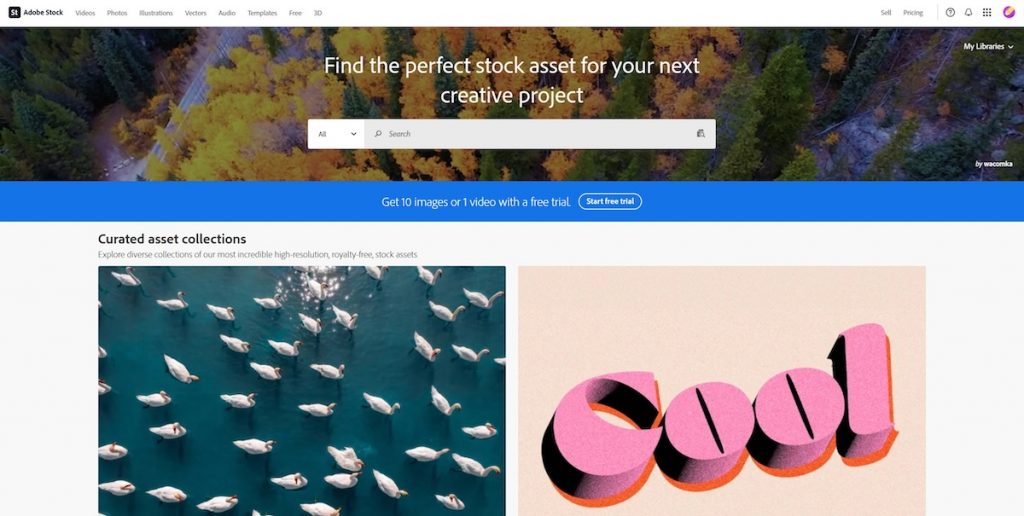
Adobe Stock benefits from deep integration with Adobe Creative Cloud, giving contributors access to a large base of professional buyers. Contributors earn 33% royalties on images and 35% on videos, with payments issued monthly after reaching the $25 minimum payout.
Most sales come from subscriptions, which can reduce per-image earnings, but high visibility within Adobe apps can offset this through volume. Contributors may also earn bonuses tied to Creative Cloud subscriptions.
Adobe Stock is a strong option for photographers producing commercially polished, broadly usable images, especially those already working within the Adobe ecosystem. It offers a balance between visibility and reasonable royalty rates.
Envato Elements
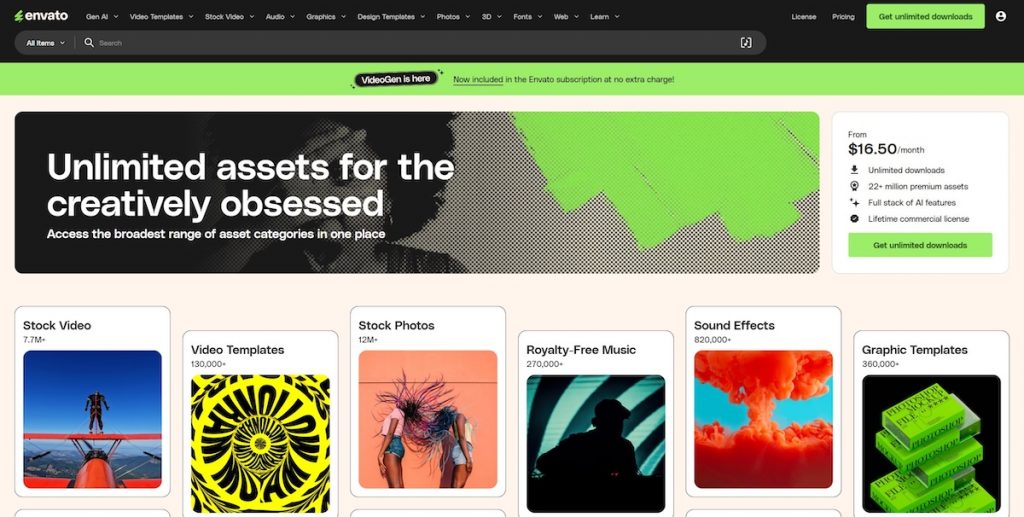
Envato Elements operates on a subscription-based model rather than per-image sales. Contributors earn through a revenue-sharing system, where 50% of net subscription revenue is distributed based on download share. Payments are issued monthly once contributors reach the $50 payout threshold.
Individual downloads generate low earnings, but contributors can benefit from recurring income if their content is consistently downloaded. Success depends on producing versatile assets that appeal to designers, marketers, and content creators.
Envato Elements is best suited for photographers who can produce high-volume, reusable content and are comfortable trading per-image value for predictable, subscription-based earnings.
Unsplash

Unsplash operates primarily as a free image platform, with monetization available through its Unsplash+ program. Contributors are paid $10 to $50 per accepted image, with payments issued monthly via PayPal once the payout threshold is reached.
Images licensed through Unsplash+ are non-exclusive and distributed broadly. Earnings are predictable per image, but limited in scale, making it unsuitable as a primary income source.
Unsplash is best used as a visibility and supplemental income channel, especially for photographers with existing libraries who want low-effort monetization alongside exposure.
Dreamstime
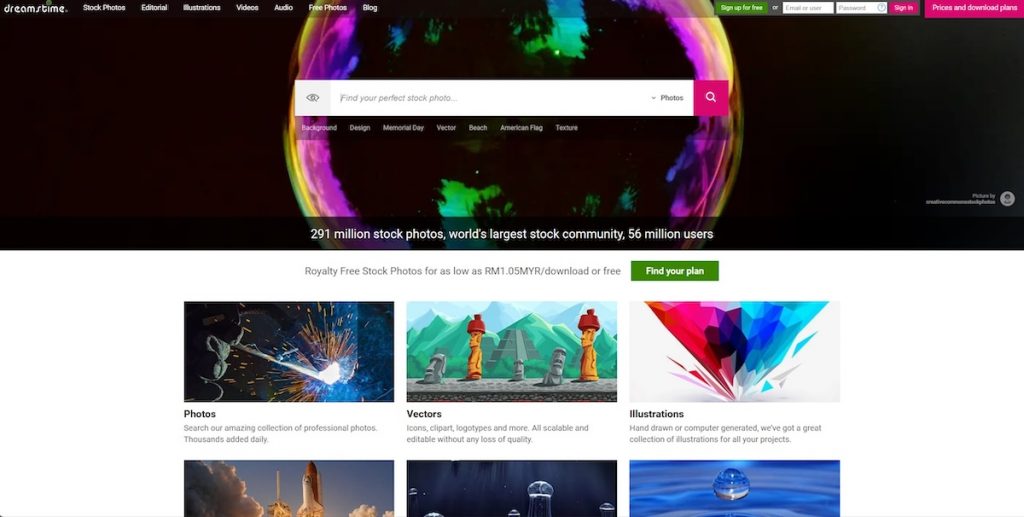
Dreamstime offers a mix of royalty-free, extended, and exclusive licensing options. Contributors earn 50% to 60% royalties, with exclusive contributors receiving higher rates. Payments are issued once contributors reach the $100 payout threshold, via PayPal, Payoneer, Skrill, or cheque.
Earnings tend to grow slowly and reward consistency. Like many microstock platforms, individual sales are modest, but higher royalties help offset lower volumes.
Dreamstime suits photographers looking for steady, long-term earnings without exclusivity requirements, particularly those building income across multiple platforms.
DepositPhotos
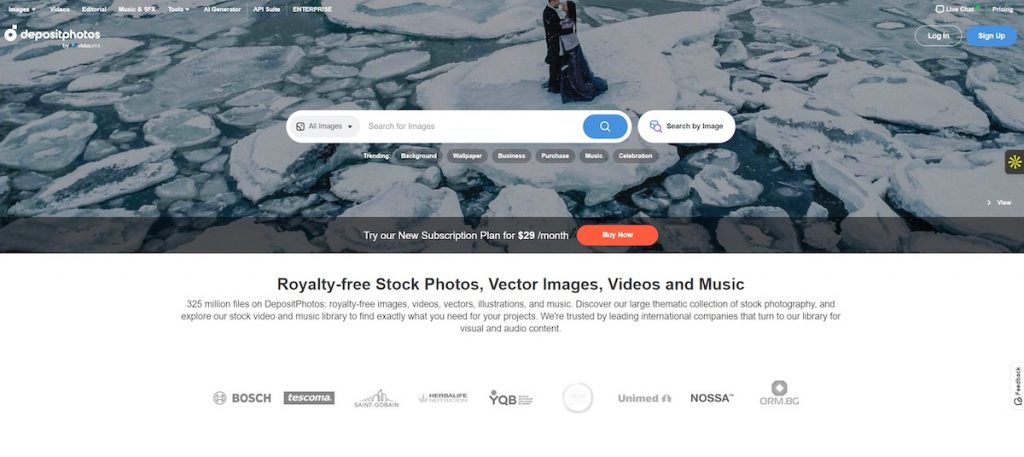
DepositPhotos operates on a tiered royalty system tied to contributor level and license type. Payments are available via PayPal, Skrill, or Payoneer once contributors reach the $25 payout threshold.
The platform emphasizes commercially relevant content, and success depends heavily on keywording and trend alignment. Earnings per download are moderate, with volume playing a key role.
DepositPhotos works best for photographers producing market-driven content who are willing to upload consistently and treat stock as a long-term accumulation channel.
Online Galleries
Online galleries are secure and customizable platforms that allow photographers to share and sell their work directly to clients in a professional and controlled environment, by building their own photography website. Unlike public stock photo marketplaces, these galleries offer greater flexibility in setting prices, managing licenses, and maintaining brand consistency.
Often protected by passwords or client-specific links, they’re ideal for event, wedding, school, or sports photographers who need to deliver large collections efficiently while preserving privacy. Many platforms also support features like watermarking, print and download options, and integrated payment systems, making them a streamlined solution for turning photo deliveries into sales opportunities.
Many photographers assume clients only want digital files because that’s what they ask for. In practice, this expectation is often shaped by what photographers choose to show. Kelley Hoagland, a maternity and newborn photographer, explains: “Featuring framed photography and fine art albums on my website and social media has helped me book more clients and sell more printed products. Many people today, especially younger generations, view photography sessions as simply receiving digital files. But I’ve come to believe that digital files alone don’t represent a truly finished product, and they can easily be lost. Showing the beauty and longevity of physical prints helps clients understand how I’m helping preserve their family’s memories and legacy.”
Honcho
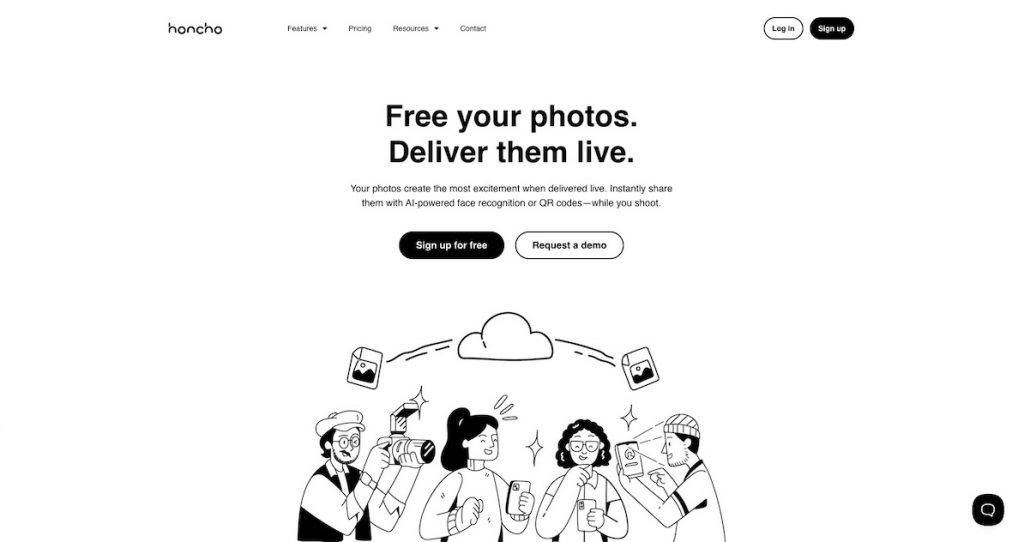
Honcho offers a modern, real-time gallery experience designed especially for event and high-volume photographers. It lets you upload and deliver photos instantly while you shoot—so that guests can buy and download their photos when they are the most motivated, during the event itself.
Their pricing is tiered to match different scales of business: there’s a Free Trial that gives you 3 albums and up to 50 photos per album; the Indie plan is $39/month for 10 GB of storage; Pro is $49/month for 100 GB; and the Studio plan offers 1,000 GB of storage for $59/month.
What sets Honcho apart is its real-time workflow. Photographers can shoot, upload, and publish on the go, allowing clients and guests to receive their photos while the event is still happening. With its face recognition, guests can upload a selfie and instantly view only their own photos, while all other images remain blurred for privacy. Galleries can also be password-protected, and photographers can choose which photos to publish or keep hidden, maintaining full control over what guests see.
Honcho also supports direct sales through digital downloads, making it easy to turn instant delivery into revenue. Its QR-based sharing, automatic tagging, and fast mobile-ready interface make it ideal for sports, school, and corporate events where speed matters. For photographers who want a modern gallery system that prioritizes efficiency, personalization, and privacy, Honcho offers a forward-thinking solution without sacrificing simplicity or professionalism.
SmugMug
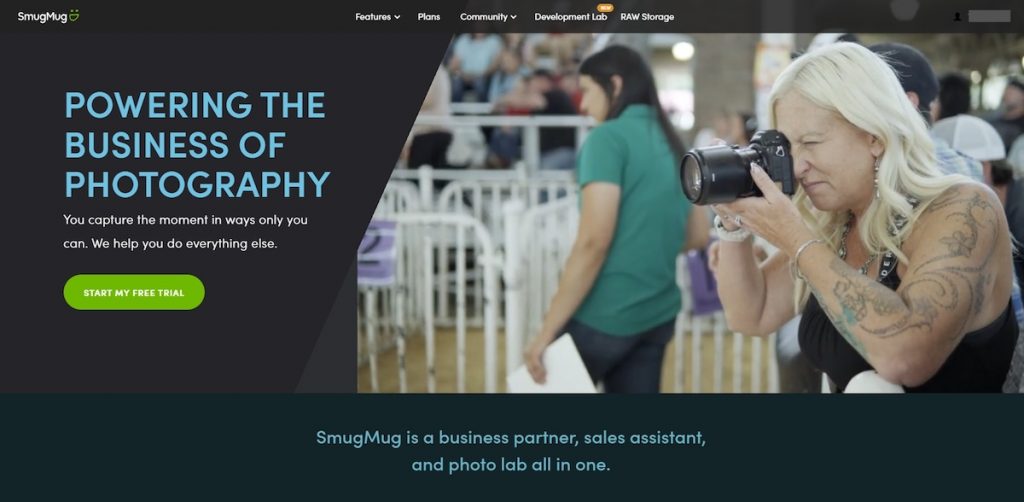
SmugMug is built for photographers who value control, customization, and commercial freedom. Unlike many gallery platforms, SmugMug focuses heavily on branding—offering extensive design customization, white-labeling, and flexible storefront options. Subscription prices start with the Portfolio Plan at $31/month (or $246/year), unlocking unlimited storage and full access to sales tools. The Pro Plan, priced at $45/month (or $384/year), adds advanced features like multiple price lists, client management tools, and marketing coupon systems.
Sales on SmugMug aren’t just about simple downloads—the platform supports curated packages, allows photographers to set their own profit margins, and provides built-in marketing support. Its commission-free model ensures you keep what you earn. Moreover, SmugMug’s integration with top-tier print labs like Bay Photo, WHCC, Fujifilm, and Loxley Colour ensures premium print fulfillment, from canvases to photo books.
SmugMug is best for professionals who want a polished online storefront with robust back-end control. It’s ideal if your brand identity and print quality are just as important as the photos themselves.
Pixieset
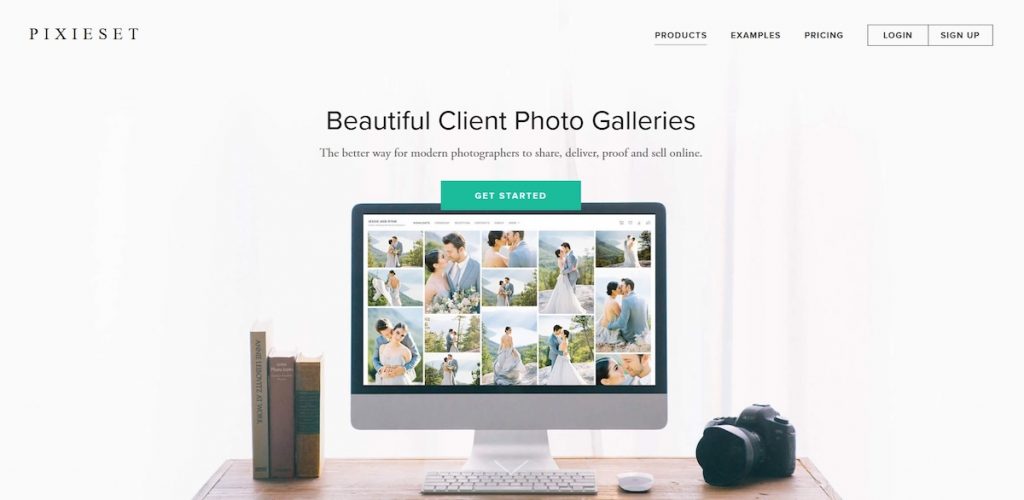
Pixieset offers a clean, all-in-one platform that blends gallery delivery with e-commerce in a way that feels intuitive and beautifully designed. Its pricing is structured across multiple tiers: from a Basic Plan at $10/month with 10GB of storage, up to the Ultimate Plan at $40/month with unlimited storage. Every paid plan removes the 15% sales commission that exists in the free version, allowing photographers to retain 100% of their earnings.
Beyond just delivering photos, Pixieset makes it simple to turn galleries into photo selling opportunities. Photographers can craft detailed price sheets, group offerings into packages, and even schedule promotions using coupon codes and seasonal campaigns. With its integrated store, clients can purchase digital files, prints, or bundles with just a few clicks. On the fulfillment side, Pixieset connects to trusted labs such as WHCC, Miller’s, Mpix, ProDPI, and Loxley Colour—making professional-grade print sales seamless.
Pixieset is an excellent fit for photographers who want a beautiful, client-friendly experience that doesn’t sacrifice selling potential. Its balance of aesthetics and automation makes it especially appealing for lifestyle, portrait, and wedding photographers.
Shootproof
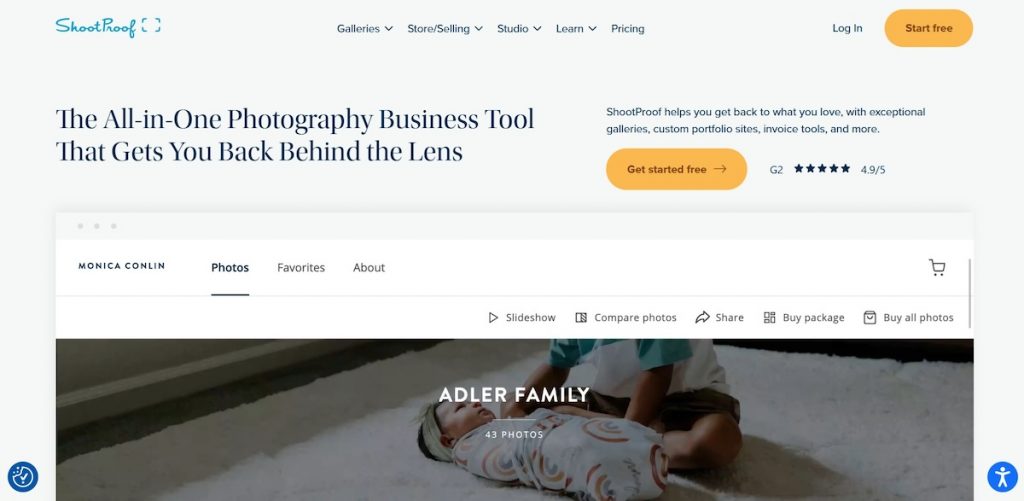
ShootProof positions itself as more than just an online gallery—it’s a full client management ecosystem. Its strength lies in the suite of business tools it bundles in, including contracts, invoicing, and contact management. Plans range from a Free Tier (up to 100 photos) to robust paid options like the 25,000 Photo Plan at $31.99/month, each unlocking unlimited galleries and comprehensive delivery settings.
The platform shines in its versatility: photographers can sell a mix of digital files, prints, or packages, complete with custom price lists and flexible licensing. ShootProof’s built-in email marketing tools make it easy to nurture sales with discount codes or personalized promotions. Print fulfillment is handled through a strong network of professional labs such as WHCC, Bay Photo, Miller’s, and Mpix, giving photographers confidence in the physical products their clients receive.
Many photographers treat selling as something that happens after the shoot. In practice, the most profitable photographers reverse this sequence. Samantha Shannon, a family photographer, describes how knowing the intended use of photos changes how she shoots: “Once I know how a family wants to use their photos, whether for a gallery wall or an heirloom album, I can shoot with purpose. ShootProof’s integration with my lab makes ordering easy for them and keeps the experience professional from start to finish.”
For those who want a more operationally focused platform—where booking, contracts, and sales live in one hub—ShootProof is an efficient, business-first solution without compromising on presentation.
Pic-Time
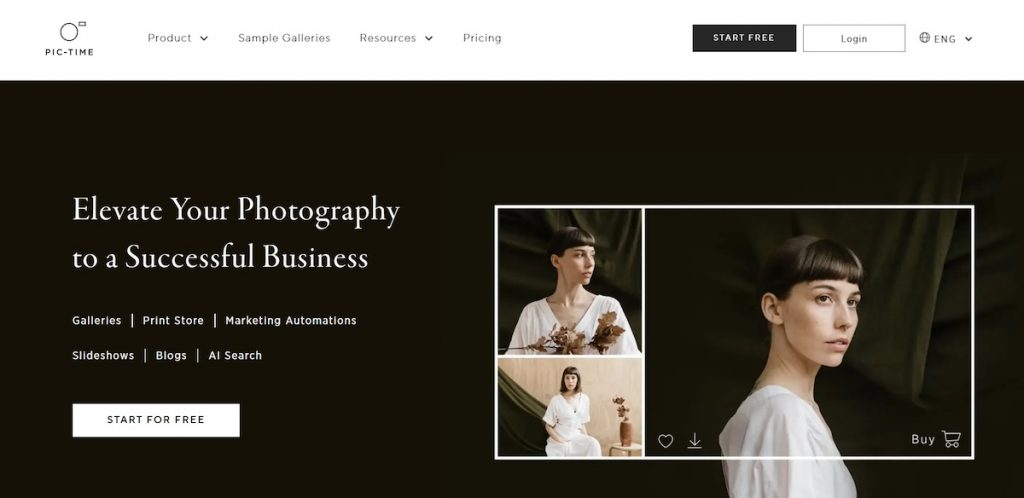
Pic-Time stands out in the online gallery space with its sleek design and emphasis on automation and scalability. Aimed at photographers who want more than just client delivery, Pic-Time doubles as a powerful sales and marketing engine. While the free plan offers 10GB of storage (reduced to 3GB after six months), paid tiers—ranging from $7/month (Beginner) to $42/month (Advanced)—unlock larger storage capacities and advanced features. These include commission-free photo selling when using direct payments, a dedicated mobile app, and access to their automated marketing tools.
Where Pic-Time truly excels is in its e-commerce flexibility and intelligent sales tools. Photographers can create customized product bundles, apply discounts, and trigger automated email campaigns that nudge clients toward purchasing prints and products. Their intuitive store system isn’t just about selling—it’s about selling smarter. Whether it’s gallery banners reminding clients of expiring access or targeted offers for anniversaries, the platform does a lot of the heavy lifting for you.
Adding to its global appeal, Pic-Time is partnered with over 30 professional print labs across multiple continents. This means your clients—from the U.S. to Australia—can receive high-quality prints with minimal turnaround. For photographers looking for a system that combines design, automation, and international fulfillment, Pic-Time delivers a polished, business-savvy solution.
Cloudspot
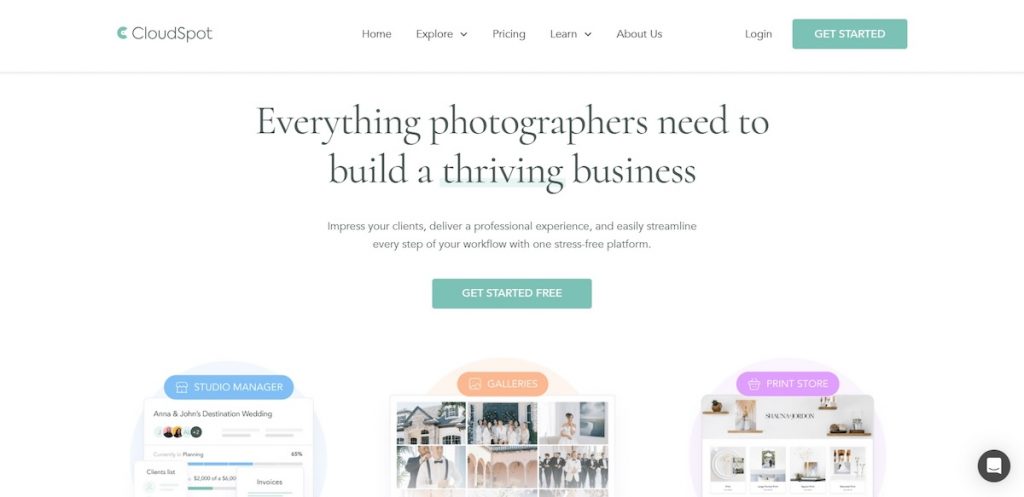
CloudSpot positions itself as a modern, user-friendly solution for photographers who want to deliver galleries, market their work, and sell their photos online—all from one clean interface. Designed with simplicity in mind, CloudSpot offers a range of subscription plans: a Free tier with 10GB of storage, followed by the Lite ($15/month for 100GB), Pro ($30/month for 350GB), and Unlimited ($45/month) plans. Paid tiers unlock commission-free sales (when using your own Stripe or PayPal), access to marketing tools, and streamlined mobile access, making it easy to manage your business on the go.
Beyond basic delivery, CloudSpot offers a smart sales ecosystem built around ease and automation. You can build custom product bundles, set up limited-time discounts, and use built-in email campaigns and banners to drive print and digital sales. The interface is built to support fast workflows—ideal for event photographers juggling multiple galleries—while keeping the client experience polished and simple. Every step, from viewing to purchase, can be tailored to reflect your brand identity.
Kristeen Marie, a professional photographer, noted how easy CloudSpot made everything—for both her and her clients. “It simplified my workflow and improved the client experience from start to finish,” she said. She praised the faster upload times, the clean and modern gallery layout, and the smoother delivery process, adding, “Their customer service has been phenomenal—they walked me through the transition and made it completely painless.”
CloudSpot also integrates with top-tier print labs like WHCC, Miller’s, and Mpix, ensuring clients receive premium physical products with minimal effort on the photographer’s part. With its thoughtful balance of intuitive design, powerful automation, and hands-off fulfillment, CloudSpot is a solid choice for photographers seeking a time-saving photo selling website that doesn’t sacrifice quality or sales potential.
Picfair
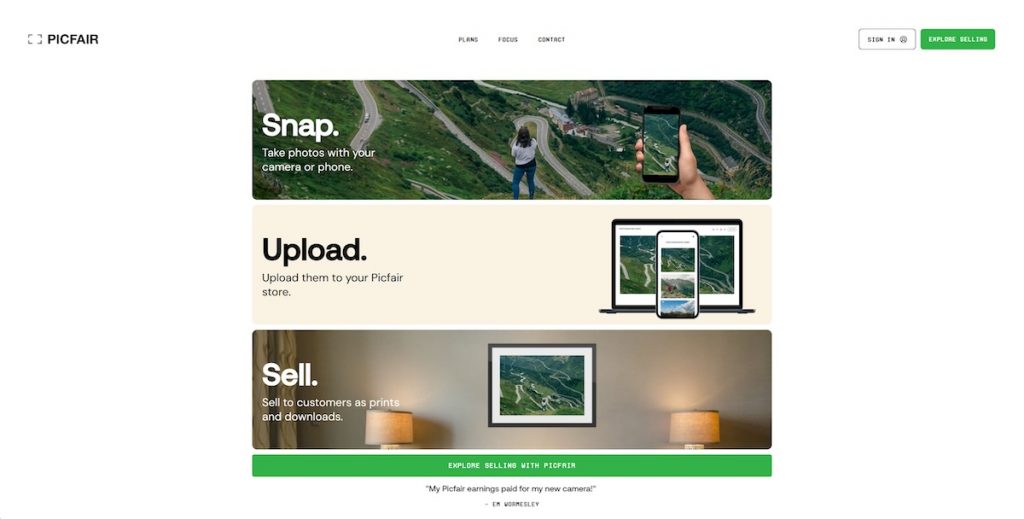
Picfair redefines the concept of selling photos online by combining the simplicity of a personal storefront with the reach of a global marketplace. Unlike many platforms that require photographers to build and manage every aspect of their gallery, Picfair handles much of the heavy lifting—allowing users to launch a professional-looking store in minutes, no coding or design skills required. Their subscription model is straightforward: the basic version is free and includes marketplace access, while Picfair Plus ($6/month or $60/year) adds custom domain support, advanced store features, and commission-free sales through your personal store.
One of Picfair’s standout strengths is its dual approach to photo sales. Photographers can sell photos via their own branded store or through Picfair’s larger marketplace, which receives traffic from image buyers across the globe. The platform supports digital downloads, personal-use licenses, commercial licenses, and even prints—making it flexible for both casual creators and working professionals. The licensing is fully automated and transparent, helping photographers earn fairly without worrying about the legal complexities.
Picfair also partners with print labs to offer high-quality physical products, including framed and canvas prints, available for global delivery. It’s an especially attractive option for photographers who want a low-effort, high-reward way to monetize their work, all while maintaining creative control and fair pricing. Picfair is ideal for those who value exposure, simplicity, and a no-nonsense sales structure.
On-Demand Print Marketplaces
On-demand print marketplaces offer photographers a unique way to sell photos online beyond traditional licensing or gallery sales. These platforms allow you to upload your photos and earn money by selling them as physical products—ranging from art prints and posters to home decor, apparel, and accessories—without handling inventory, printing, or shipping.
With global customer bases and built-in manufacturing partners, on-demand print marketplaces are a great option for photographers looking to expand their reach and generate passive income. Whether you’re a fine art creator, landscape photographer, or someone with a strong visual aesthetic, these platforms make it easy to turn your images into sellable products for everyday consumers.
Etsy
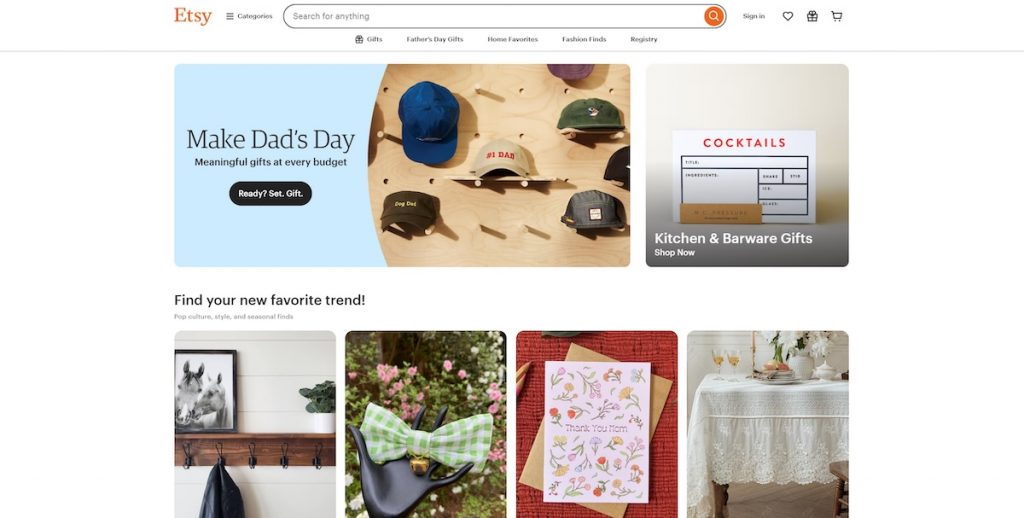
Etsy may be best known for handmade crafts and vintage goods, but it has also become a thriving marketplace for photographers selling physical prints and digital downloads. Unlike traditional stock platforms, Etsy gives sellers full control over branding, pricing, and product presentation, allowing photographers to create highly personalized storefronts. You can list everything from art prints and photo calendars to downloadable wall art, targeting a consumer audience interested in home decor, gifts, and unique visuals. There are no monthly fees to open a shop—just a $0.20 listing fee per item and a 6.5% transaction fee, along with payment processing charges.
What sets Etsy apart is its enormous buyer base and search-friendly platform, which rewards well-optimized listings with high visibility. Photographers can bundle prints, offer customization, run discounts, and take advantage of Etsy Ads to drive traffic to their shops. However, sellers are responsible for order fulfillment unless using a third-party print-on-demand integration like Printful or Gooten, which can automate printing and shipping. This gives you flexibility: you can fulfill orders yourself for greater profit margins or outsource for convenience.
Etsy is ideal for photographers with a strong visual brand who want to turn their work into tangible products for a lifestyle-driven audience. While it doesn’t operate like a traditional photo marketplace, it offers a creative, high-potential avenue for photo entrepreneurs who want to build a direct-to-consumer presence.
Platforms like Etsy are often described as passive income channels, but that framing is misleading. As Karin van Mierlo, a photography mentor at Photography Playground, points out, “For photographers selling landscape, fine art, botanical, or travel prints, Etsy can be a worthwhile platform—but it’s important to go in with clear expectations. It’s not a quick path to passive income. Like photography itself, selling on Etsy takes intention, consistency, and a strong sense of your visual voice. You’re building trust with buyers through every part of your shop: your photos, your product descriptions, your pricing, and your presence. For photographers grounded in storytelling and authenticity, Etsy can offer a meaningful way to share their work.”
This is the trade-off: greater creative control and higher margins come at the cost of ongoing visibility work.
Redbubble
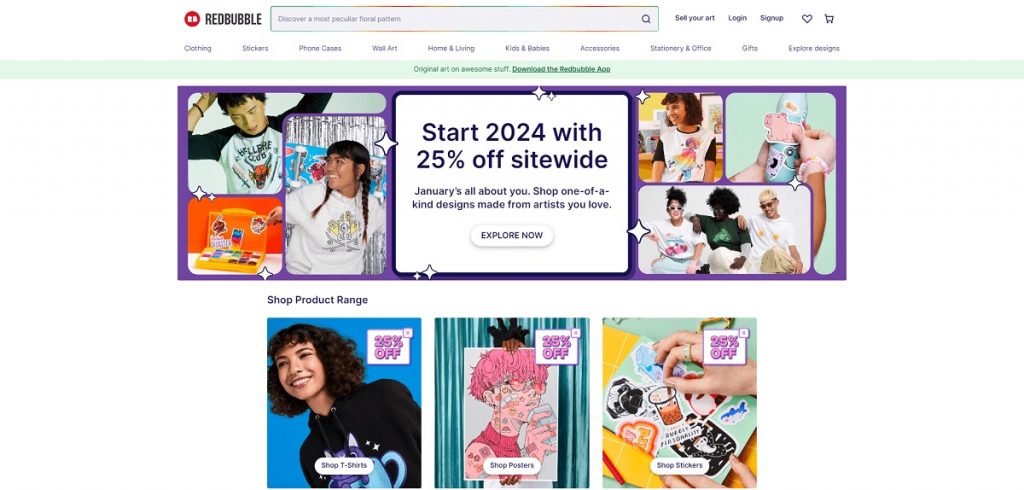
Redbubble is a popular on-demand print marketplace where photographers can turn their images into a wide variety of products without worrying about production or shipping. Once you upload your work, Redbubble allows you to sell it on everything from art prints and posters to clothing, phone cases, stickers, home decor, and more. The platform handles printing, packaging, and delivery, making it a hassle-free option for photographers looking to generate passive income through merchandise. Setting up a shop is free, and creators can upload photos and earn money through royalties, with the ability to set their own markup above Redbubble’s base price.
Redbubble’s audience leans heavily toward creative, design-forward consumers, making it a great fit for photographers with work that’s bold, aesthetic, or niche. You won’t have access to extensive marketing tools or branding customization, but the platform brings in millions of visitors monthly, giving your photos exposure without upfront investment. While you won’t have full control over the buyer experience, the sheer range of products and ease of use make Redbubble a low-barrier entry point into e-commerce.
Overall, Redbubble is best suited for photographers who want to expand into the art merchandise space without the complexities of inventory management. It’s ideal for those with a distinctive style who want to see their work on everyday items and tap into a vibrant global marketplace.
Society6
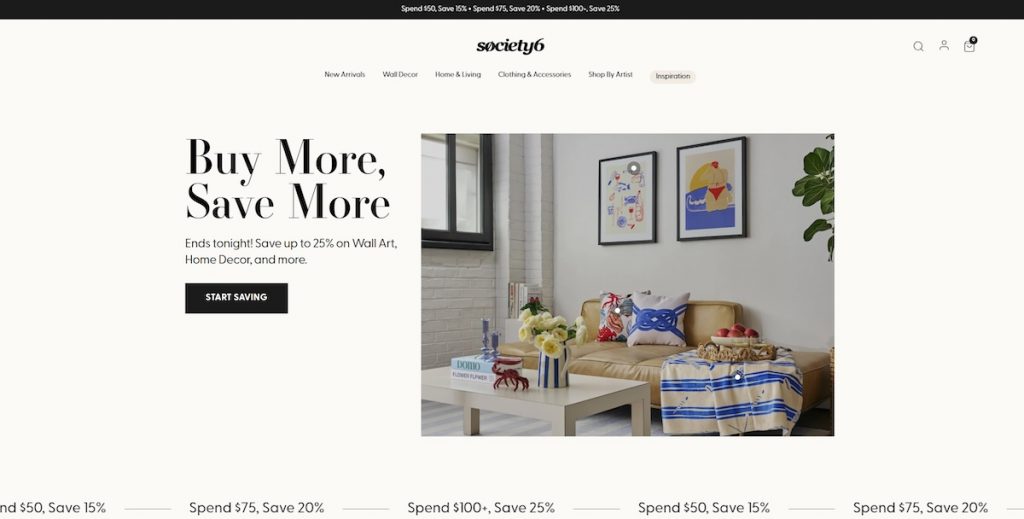
Society6 is a curated on-demand print marketplace that allows photographers and visual artists to sell their work as premium lifestyle products. Focused on design-conscious consumers, Society6 transforms your photos into high-quality items like art prints, canvas wraps, framed prints, wall murals, and even home goods such as furniture, rugs, and bedding. As a photographer, all you need to do is upload your photos and earn money—Society6 takes care of the printing, packaging, and global shipping. The platform is free to join, and you earn a standard 10% royalty on most products, with the option to set custom markups on art prints.
What makes Society6 unique is its emphasis on product quality and its aesthetic-driven marketplace. It attracts a loyal customer base looking for gallery-worthy artwork and home decor with a modern or artistic edge. While it doesn’t offer deep customization for your storefront or extensive marketing tools, Society6’s curated feel and stylish product presentation help your work stand out. The trade-off is less creative control over branding but access to a high-end audience and seamless print fulfillment.
Society6 is a strong option for photographers whose work blends art and design—particularly those who want to tap into the home decor space without managing logistics. It’s ideal for minimalist, abstract, or fine art photography that translates well into physical, design-forward products.
How to Sell Your Photos (What to Use, and When)

Selling photos online isn’t about using every platform. It’s about choosing the right path, then executing it well.
There are only three decisions you need to make, in this order:
- Do buyers already know you, or not?
- Are they buying because they recognise themselves, or because they need a visual?
- Once they arrive, how easy is it to buy?
Everything else is optimisation.
Step 1: How Buyers Discover Your Photos
If buyers don’t already know you, discovery is the problem you need to solve first.
Option A: Stock Platforms and Marketplaces
Use this when:
- Buyers are searching broadly for concepts or visuals
- You don’t control the audience
- You’re willing to trade margin for reach
Stock platforms are demand-capture tools. Buyers already know what they want. Your job is to appear in search results.
Works best if:
- You have a large or growing archive
- Your images fit common commercial or editorial needs
- You’re patient with slow, cumulative income
Avoid relying on this when:
- Your work is personal, niche, or event-specific
- You need predictable or immediate revenue
Option B: SEO and Content (Your Website or Blog)
Use this when:
- Buyers search before they buy
- Your work solves a specific, repeatable need (schools, sports, events, local markets)
SEO compounds over time. It works when your photos are tied to clear use cases, locations, or industries.
Works best if:
- You want traffic you control
- Your niche has recurring demand
- You’re building a long-term funnel, not quick wins
Avoid relying on this when:
- You need instant visibility
- You’re unwilling to invest in content or structure
SEO is about creating pages that answer real questions buyers have before they purchase. For a deeper breakdown of how photographers can use SEO effectively, including content structure and intent alignment, see SEO for Photographers.
Option C: Social Media Promotion
Use this when:
- Your audience already follows you
- Images benefit from context or storytelling
Social platforms don’t sell photos by default. They create attention. Sales only happen when there’s a clear next step.
Works best if:
- You can link directly to a gallery or storefront
- The buyer understands why they should purchase
- You’re reinforcing an existing relationship
Avoid using it alone when:
- The audience isn’t the buyer
- There’s no purchase path
Step 2: How Buyers Convert (Where Money Is Made)
If buyers already expect to see something relevant, conversion matters more than discovery.
Direct Event Sales (Highest Conversion Model)
Use this when:
- Buyers expect to find themselves or someone they know
- The purchase is emotionally motivated
This applies to schools, sports, corporate events, performances, and community shoots.
Why it works:
The buyer intent already exists. You’re not convincing anyone — you’re just removing friction.
Delivery Speed
Optimise this when:
- Emotion peaks immediately after the event
- Buyers are browsing on mobile
Fast delivery increases conversion because attention fades quickly.
Less important when:
- The purchase is considered, not impulsive
- You’re selling fine art
Pricing Structure
Pricing isn’t just about revenue, it affects decision-making.
Use tiered pricing when:
- Buyers have different use cases (personal vs commercial)
- You want to increase average order value
Use simple pricing when:
- Overthinking would reduce sales
- The decision should be fast
User Experience (UX)
UX is the hidden conversion killer.
Prioritise clean, guided galleries when:
- Buyers are non-technical
- Purchases happen on phones
- The buyer just wants to find their photo
Avoid complexity when:
- Speed matters more than education
- The buyer’s goal is obvious
Step 3: Execution Fundamentals (Applies to Every Model)
Once you’ve chosen how buyers find you and how they buy, these fundamentals determine whether the system actually works. They are not growth hacks. They are baseline execution details that compound across every platform.
Offer Direct Sales for Event-Based Photography
Selling photos directly to customers is especially effective for event-based work such as school picture days, sports tournaments, concerts, or community events.
Set up your gallery before the event. Prepare pricing, access, and purchase options in advance. After the shoot, organise images so buyers can find themselves quickly. Tools like face recognition, QR access, and mobile-friendly galleries reduce friction and increase conversion.
When buyers can find their photos instantly and purchase without confusion, sales follow naturally.
Use Relevant Keywords and Descriptions
When you upload your photos to stock sites or your own website, adding accurate and descriptive keywords is critical. Think like your customer: what would they search for to find your image? Include specifics like location, activity, emotions, colors, and any defining elements (for example, “Asian family celebrating Lunar New Year” or “female athlete mid-jump on track”). Strong metadata not only improves your search visibility but also increases the chances of your photos being discovered in a crowded marketplace.
Promote on Social Media
Your social media channels can be powerful tools for attracting attention to your work, but they work best when they point to a clear next step. Share your best shots on platforms like Instagram, Pinterest, Facebook, or TikTok, using relevant hashtags and geotags to reach targeted audiences. If you shoot niche content, like school portraits or local sports, join community groups and tag people or organisations involved (with permission).
Social media isn’t just about showing off your portfolio; it’s a place to build trust, tell stories behind your images, and drive targeted traffic to where you sell. For a comprehensive strategy on how to grow your presence, engage your audience, and turn social platforms into revenue drivers, see The Complete Guide to Social Media for Photographers.
Understand Your Legal Rights
Before selling any photo, make sure you have the right to do so. If your image includes recognizable people or private property, you may need model or property release forms—especially for commercial use. Each platform has its own rules, so it’s important to read the fine print. Understanding copyright law is also key; by default, you own the rights to your photos, but when you license them, you’re granting others specific usage rights. Make sure you know what you’re giving away and what you retain.
Maintain a High-Quality Collection
First impressions matter. A cluttered gallery or inconsistent quality can turn potential buyers away. Make sure every photo you upload meets high standards for resolution, composition, and editing. Use consistent lighting and color correction, and remove duplicates or subpar shots. The stronger and more cohesive your portfolio looks, the more professional you’ll appear—and the more likely people are to purchase from you.
Selling photos online isn’t about using every platform. It’s about choosing the right discoverability channel, pairing it with a conversion model that fits your work, and executing the fundamentals cleanly.
When those layers align, income becomes predictable. When they don’t, effort gets scattered.
How to Price Your Photos

Pricing your photos can be one of the trickiest parts of selling online. Set them too high, and you might scare off potential buyers; too low, and you risk undervaluing your work. The right pricing strategy depends on your platform, target audience, and the intended use of your images. Here’s how to approach it with clarity and confidence.
Understand Licensing Models
Most online photo sales fall under two main licensing categories: royalty-free and rights-managed.
- Royalty-free means customers pay once and can use the image multiple times within certain limits. This is the most common model on stock photography sites like Shutterstock and Adobe Stock.
- Rights-managed allows more control and exclusivity—you license the photo for a specific use, duration, and region. These images usually command higher fees and are ideal for premium or niche content.
Choosing the right model depends on your goals. Royalty-free is best for high-volume, passive income, while rights-managed is better suited for fewer, higher-paying clients.
Set Tiered Pricing Based on Usage and Format
If you’re selling photos directly through your own site or a marketplace like Etsy, consider offering different price points for different formats:
- Low-res for web use: Ideal for bloggers and small businesses
- High-res for print or commercial use: Priced higher due to broader rights
- Prints: Priced according to size, framing options, and delivery costs
You can also offer packages like “5 images for $30” to incentivize bulk purchases and increase order value.
Factor in Platform Fees and Commissions
Many stock photography platforms take a significant portion of your earnings—sometimes up to 60%. When setting your prices or choosing which platform to use, factor in these commissions. For example, if a platform pays $0.25 per download, you’ll need to sell photos in volume to see meaningful income. On the other hand, selling independently lets you keep a larger share but may require more effort in marketing and customer service.
Consider the Value of Your Work
Not all photos should be priced the same. Unique, hard-to-replicate images—such as drone shots, conceptual art, or exclusive event coverage—can be priced higher. Similarly, if you’ve invested time in detailed retouching, advanced editing, or niche subject matter, your pricing should reflect that effort and expertise.
Offer Subscription Plans or Bundles
To attract repeat buyers or businesses that need content regularly, consider creating subscription plans or bundles. For example, offer monthly access to a curated gallery for a flat fee, or discount sets of 10–20 photos. This model works well for photographers targeting bloggers, content marketers, or local organizations like schools and sports clubs.
Ultimately, your pricing strategy should balance market demand, your creative value, and your long-term goals. Be flexible, test different approaches, and don’t be afraid to raise your prices as your brand and portfolio grow.
Legal Considerations When Selling Photos Online

Selling your photos online isn’t just about aesthetics and marketing—it’s also about staying legally protected. Failing to understand your rights or comply with platform and copyright laws can lead to takedown notices, lost revenue, or even legal trouble. Here are the key legal areas every photographer should be aware of before putting their work up for sale.
Model and Property Releases
If your photo features recognizable people, you’ll need a model release—a signed agreement that gives you permission to use and sell images of that person for commercial purposes. The same goes for property releases if your image features private property, artwork, or locations with restricted rights (like certain buildings or branded items). Editorial images (like news-style photos) often don’t require releases, but they can only be used in non-commercial contexts such as journalism or education.
Always err on the side of caution: if you think an image might require a release, get one signed before uploading or selling. Most stock photo sites will ask for these documents as part of the submission process.
Understand Copyright Basics
By default, you own the copyright to every image you take. This means no one can legally use, copy, or sell your work without your permission. When you sell a photo or license it to a buyer, you’re not giving away ownership—you’re granting certain rights to use the image under specific conditions. Be clear on what you’re licensing:
- Is it for one-time use or unlimited?
- Is it for commercial or personal use?
- Is the buyer allowed to alter or redistribute the image?
Using clear licensing terms helps protect your rights and avoid misunderstandings down the line.
Know the Terms of Each Platform
Every platform you upload your photos to has its own terms of service and licensing agreements. Some allow you to retain full rights while offering non-exclusive licenses to buyers. Others may require exclusivity, meaning you can’t sell the same photo elsewhere. Always read the fine print to understand how your photos can be used, what rights you’re giving up, and how much control you retain.
Additionally, some platforms may automatically watermark your images or take a portion of your revenue. It’s your responsibility to weigh the pros and cons of each before committing.
Protecting Your Work From Theft
While there’s no way to completely eliminate image theft online, there are steps you can take to reduce the risk:
- Add watermarks to preview images on your website or gallery
- Use low-resolution images for online display and deliver high-res files after purchase
- Register your photos with a copyright office in your country for extra legal protection
- Use tools like Google Reverse Image Search or Pixsy to monitor unauthorized use of your photos
Being proactive about protecting your work ensures that your creative effort doesn’t get exploited without proper credit or compensation.
Understand Tax Obligations
Once you start earning income from photo sales, you may be required to report it for tax purposes, depending on your country’s laws. Keep detailed records of your earnings, expenses (like gear, editing software, or hosting fees), and any platform commissions. You might qualify for deductions as a self-employed creative, but it’s always best to consult a tax professional familiar with freelance or digital sales.
Navigating the legal side of photography might feel overwhelming at first, but it’s essential for running a sustainable and professional business. By understanding your rights and responsibilities, you can confidently sell your photos online without worrying about legal pitfalls.
Tools and Resources You Need

To sell photos online effectively, having the right tools in place can make a huge difference in how you create, present, and protect your work. Below are essential resources every photographer should consider using.
Keyword Research Tool
Using strong keywords is critical for making your photos discoverable on stock sites and search engines. Tools like Google Keyword Planner, Ubersuggest, or Ahrefs can help you find relevant and high-traffic keywords related to your photo themes. This is especially useful when writing titles, descriptions, or tags, helping your images appear in search results and increasing the chances of making a sale. By targeting specific niches—such as “school sports day” or “sunset beach portraits”—you attract more qualified buyers. Regular keyword research also helps you stay on top of trending topics and seasonal demand.
Culling and Editing Software
Efficient photo culling and editing tools are a must—especially when managing hundreds of images from events like sports matches or school photos. Photo Mechanic is excellent for fast culling, while Lightroom and Photoshop remain industry standards for editing. For a more efficient workflow, AI software like Aftershoot, Imagen, or Honcho can automatically cull, edit and deliver your photos, with Honcho offering additional features like instant sharing via facial recognition and QR codes—perfect for high-volume sessions like school or sports photography. Clean, consistent edits help build your brand identity and make your collection look more polished. Investing in proper software not only improves your quality but also increases the perceived value of your work.
Online Portfolio
A professional online portfolio acts as your visual storefront. Platforms like SmugMug, Format, or Squarespace let you showcase your best work, categorize your images by genre, and even sell prints or digital downloads directly. Make sure your portfolio is mobile-friendly, loads quickly, and clearly communicates your style and expertise. A well-curated portfolio builds trust and makes it easier for potential clients to visualize how your photos fit their needs. It’s also a great place to highlight testimonials, case studies, and pricing information.
Contracts and Legal Documents
To protect yourself and your clients, always use clear contracts. These should outline licensing terms, pricing, usage rights, and delivery timelines. Tools like Jotform, HoneyBook, or Bonsai allow you to create, send, and sign contracts digitally. Contracts prevent misunderstandings and ensure that both parties agree on expectations before work begins. Including model and property releases in your workflow is crucial for legal compliance—especially when selling commercially through stock photography platforms.
Wrapping Up
Selling photos online today is less about chasing a single platform and more about understanding how value is created and where it is eroding. The days of uploading large volumes of generic images and expecting steady returns are largely behind us. What still works is clarity: knowing what you shoot, who it is for, and how buyers expect to purchase it.
Stock platforms continue to play a role, especially for concept-driven imagery that solves common visual problems. Direct galleries perform well when photos are personal, time-sensitive, or emotionally specific. Print and print-on-demand make sense when images are meant to be lived with, not reused. Each model rewards a different kind of effort, and each fails when it is applied blindly.
The photographers who adapt best are not those who pick “the best” platform, but those who align their subject matter, selling model, and distribution strategy. They focus on defensible niches, real-world specificity, and workflows that match how buyers actually behave.
In other words, success comes from intention, not volume. When you treat selling photos as a system rather than a gamble, you gain control over your income, your audience, and the long-term value of your work. That is a far more sustainable position than relying on any single marketplace to do the work for you.
Frequently Asked Questions
For most photographers, selling directly to clients through an online gallery with built-in payments is the simplest option. It gives you full control over pricing, branding, and delivery without relying on third-party marketplaces.
Direct sales offer higher margins and more control, but require you to bring your own audience. Marketplaces provide built-in exposure but usually take a larger cut and limit how you price or present your work.
Yes. Many platforms support both, allowing clients to download files, order prints, or purchase photo products. Some services also handle print fulfillment automatically.
Not always. Some platforms let you sell through hosted galleries or storefronts. However, having your own website helps with branding, trust, and long-term marketing.
Most platforms connect to payment providers like Stripe or PayPal and deposit earnings directly into your account. Payout timing and fees vary by platform.
Yes. Many photographers combine tools, for example using one platform for client delivery and another for stock licensing or print sales. The right setup depends on your workflow and audience.
Pricing depends on your market, usage rights, and business goals. Client work is typically priced higher and sold directly, while stock and marketplace sales rely on volume rather than per-image value.
Requirements vary by country and region. If you are selling regularly, it’s best to check local regulations around business registration, taxes, and digital sales.