
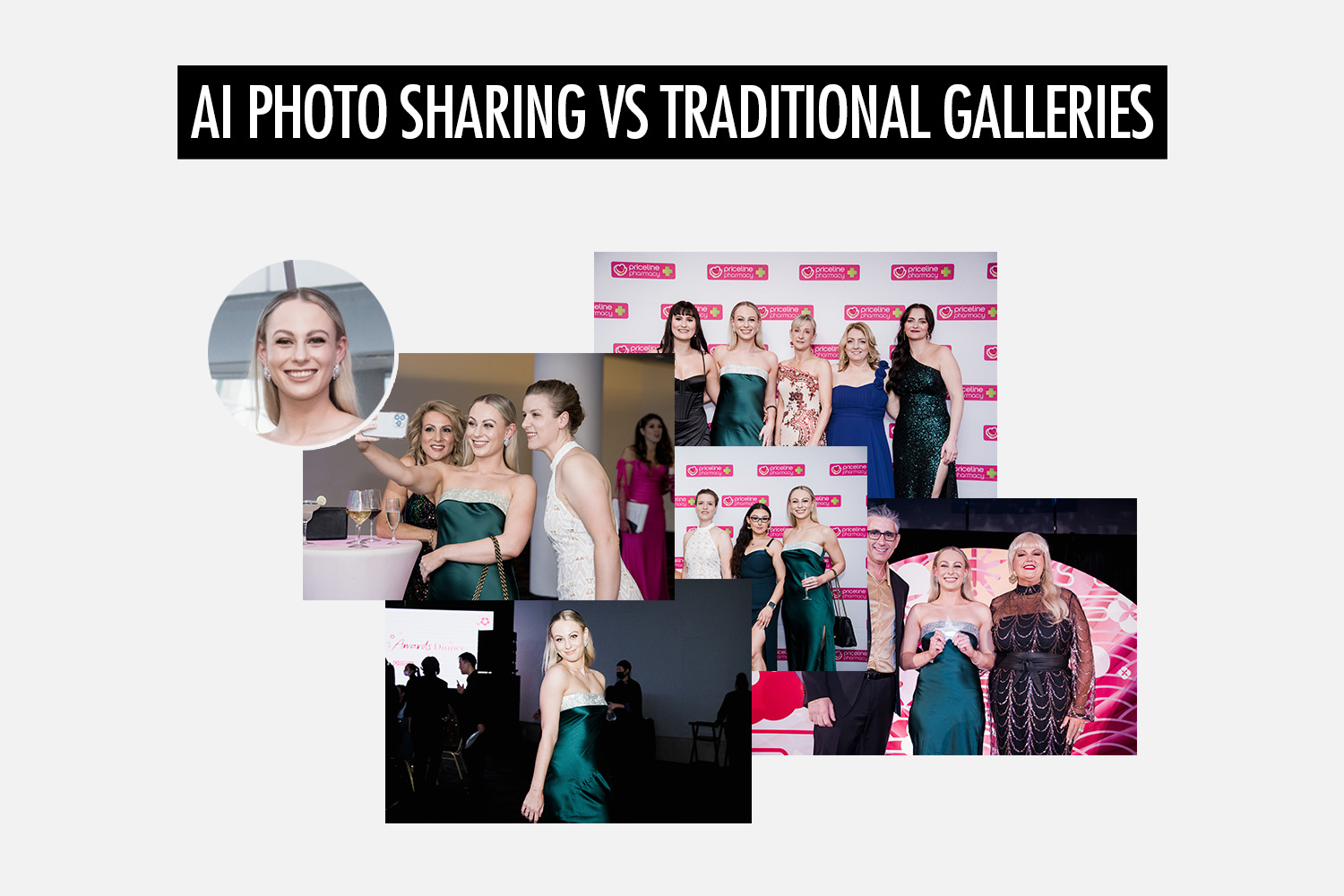
AI photo sharing and traditional photo galleries both help photographers deliver images online, but the experience is very different.
With a traditional gallery, guests have to scroll through the photos manually to find their own images.
AI photo sharing uses features like face recognition, instant uploads, and email notifications to help people find and receive their own photos more easily.
In this article, we’ll compare AI photo sharing with traditional photo galleries, so you can decide which approach makes more sense for your shoot.
What Is a Traditional Photo Gallery?
A traditional photo gallery is an online gallery where photographers share a finished set of images with a client or audience.
After the photos are uploaded, everyone gets access through the same gallery link. This works well for many types of photography, especially when the gallery is small, curated, or meant for one client.
But when there are hundreds or thousands of photos, guests often have to scroll through the gallery manually to find the images they want.
What Is AI Photo Sharing?
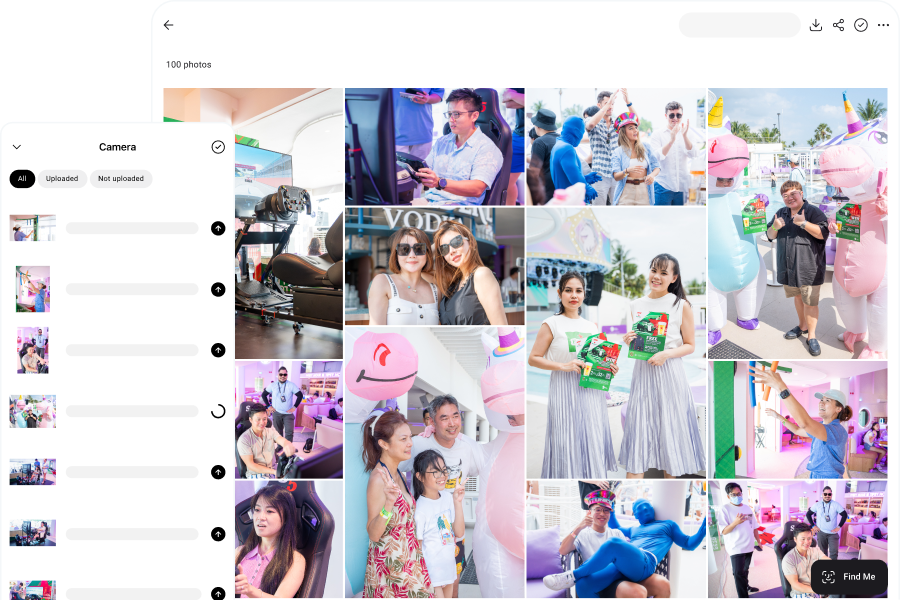
AI photo sharing is a smarter way to deliver and organise photos online. Instead of making everyone search through the same gallery manually, it uses AI features to help people find and receive their own photos more easily.
The most common example is face recognition. A guest can upload a selfie, and the gallery shows the photos they appear in.
AI photo sharing apps can also include instant uploads during the event, email or WhatsApp notifications when new photos are found, and privacy controls that limit what each guest can see. This makes it especially useful for events where many people need access to their own photos.
Quick Comparison Table
Here’s a quick overview of how the two approaches compare.
| Traditional Photo Gallery | AI Photo Sharing | |
| Finding photos | Guests scroll through the gallery manually | Guests can find their own photos with face recognition |
| New photo updates | Guests need to check the gallery again | Guests can receive notifications when new photos of them are found |
| Privacy and access | Access is controlled at the gallery level | Photos can be blurred until a guest matches through face recognition |
| Upload workflow | Photos are usually uploaded after the shoot | Photos can be uploaded during the event if the platform supports live uploads |
| Best for | Small, curated, or client-focused galleries | Events where many people need to find their own photos |
How Guests Find Their Photos
In a traditional photo gallery, guests have to look for their photos manually. They open the gallery, scroll through the images, and try to spot themselves.
This works fine when the gallery is small. But at larger events, it quickly becomes frustrating. If there are hundreds or thousands of photos, most guests will not scroll through everything just to find a few images of themselves.
AI photo sharing makes the search more direct. Instead of browsing the whole gallery, guests can use face recognition to find their own photos. They upload a selfie, and the gallery shows the images they appear in.
This makes the experience much faster, especially for conferences, headshot booths, races, weddings, and other events where many people are photographed.
How Guests Know When New Photos Are Ready
With a traditional photo gallery, guests need to check the gallery themselves. If the photographer uploads more photos later, guests may not know unless the organiser or photographer sends another message.
This can be easy to miss. Once people leave the event, they may not think to revisit the gallery, especially if they already checked it once and did not find what they were looking for.
Some AI photo sharing platforms make this more proactive and personalised. For example, Honcho lets guests receive email or WhatsApp notifications when new photos of them are found.
Instead of receiving a generic update that more photos have been added, guests are notified when the gallery finds photos that match them through face recognition. This makes the experience feel more personal and gives them a reason to come back without having to search again.
Privacy and Access
With a traditional photo gallery, access is controlled at the gallery level. Anyone with the link can browse the full gallery, unless it’s password-protected.
This can be a problem when the gallery is shared widely. At public events, corporate events, or large gatherings, guests may not want every photo to be visible to everyone else.
AI photo sharing makes access more personalised. Instead of showing the full gallery to every visitor, photos can be blurred until a guest matches with them through face recognition.
This means guests can still find their own photos by uploading a selfie, while reducing how much of the gallery is openly browsable. For public galleries, that creates a better balance between easy access and privacy.
How Photos Go Live During the Event
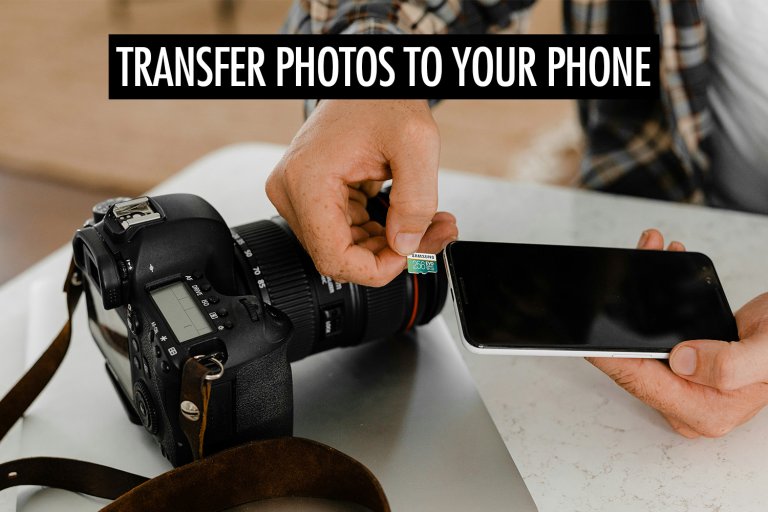
With a traditional photo gallery, photos are usually uploaded after the shoot. The photographer finishes the event, transfers the files, selects and edits the images, uploads them to a gallery, then shares the link with the client or guests.
AI photo sharing can work differently when it includes live upload features. For example, Honcho lets photographers send photos straight from their camera to an online gallery while they shoot.
This means guests do not have to wait until after the event to see their photos. As new images are uploaded, they appear in the gallery during the event, ready for guests to find through face recognition.
Conclusion
Traditional photo galleries work well when the shoot is small, curated, or mainly meant for one client. They are a good fit when people do not need to search through a large number of images.
AI photo sharing makes more sense when many people need to find their own photos, especially at events where new images are being added throughout the day. Features like face recognition, personalised notifications, live uploads, and more controlled access can make the gallery easier for guests to use.
The simplest way to think about it is this: if you are delivering photos to one client, a traditional gallery may be enough. If you are helping many guests find their own photos, AI photo sharing is the better option.