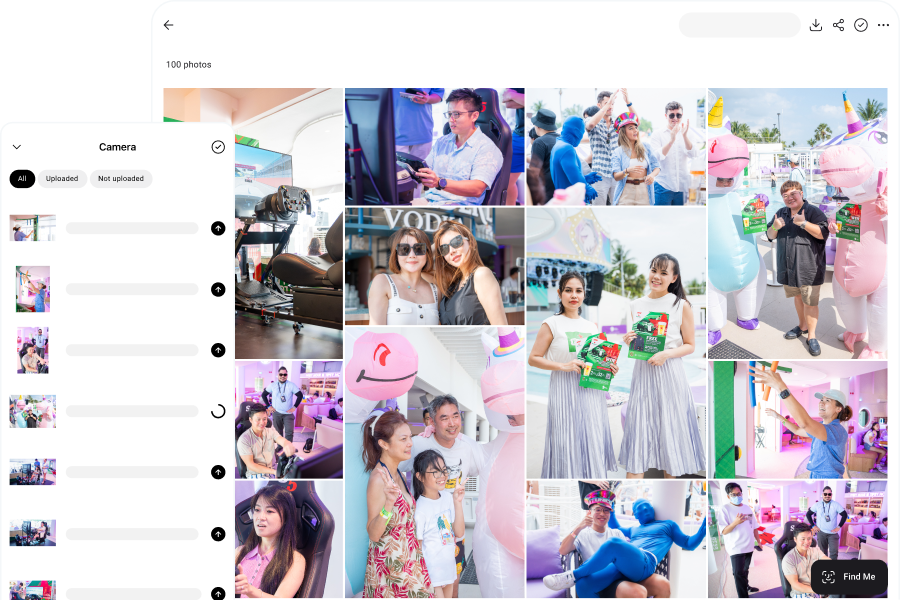

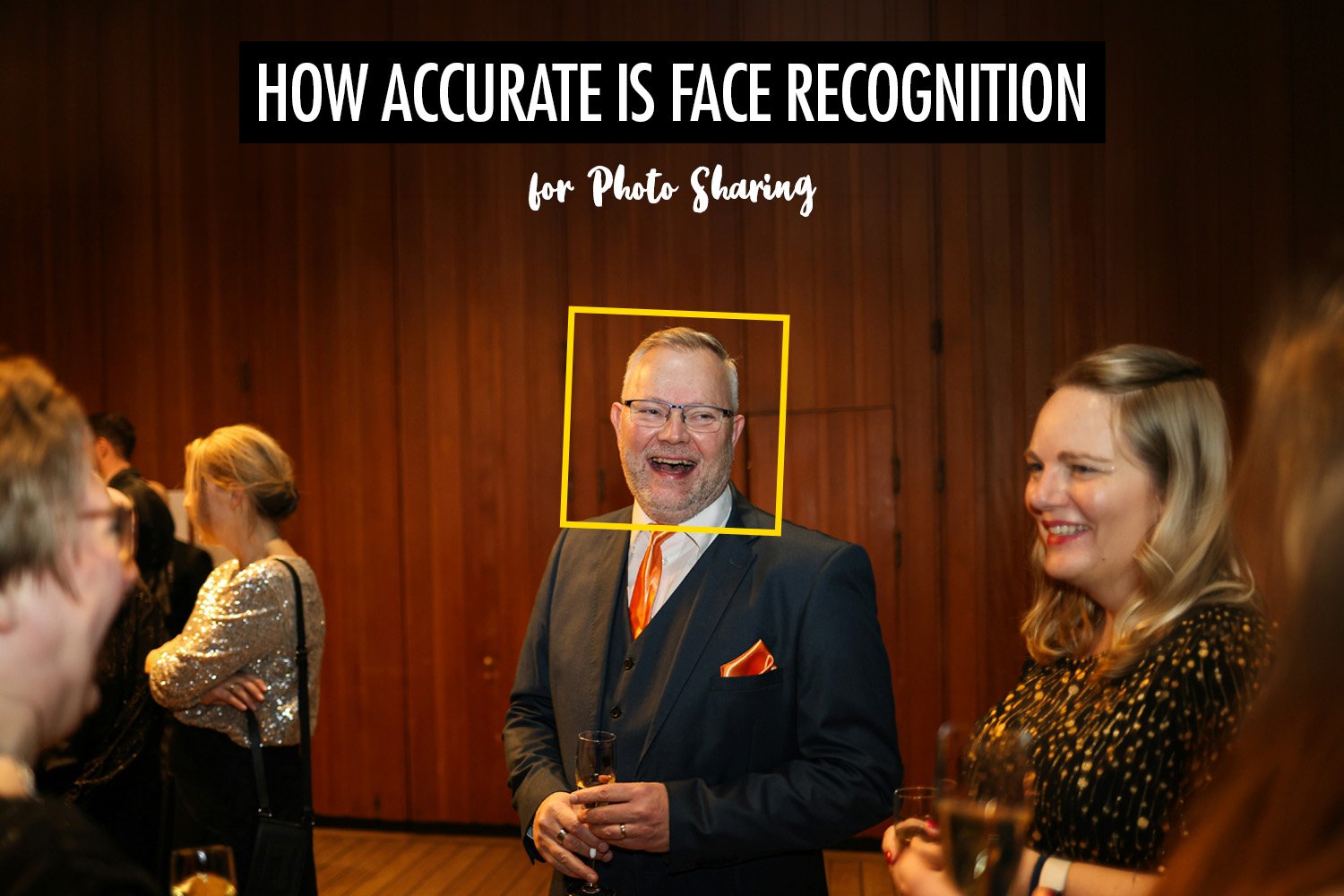
At large events, finding your photos is a hassle.
You’re usually dealing with hundreds or thousands of images, and most people won’t scroll through all of them. That’s why face recognition has become such a useful tool for photo sharing.
But how accurate is it?
In most cases, it works very well, even in real-world conditions. It’s not perfect, but it’s more than good enough.
In this article, you’ll learn about the accuracy of face recognition, what affects it, and what to expect when using it at events.
What Accuracy Means for Face Recognition
When people talk about accuracy in AI face recognition, it comes down to two things:
- Did it find your photos?
- Did it show you the wrong ones?
There’s always a trade-off between these two.
If the system is too strict, it avoids showing the wrong photos, but it may miss some of yours. If it’s too lenient, it finds more of your photos, but increases the chances of showing someone else’s.
In more technical terms, this is the balance between recall (finding more of your photos) and precision (avoiding incorrect matches).
So we have to find the right balance. The goal is to show you as many of your photos as possible while keeping incorrect matches to a minimum.
How Different Conditions Affect Accuracy
Face recognition works by analysing key facial features like the eyes, nose, and jawline. When these features are clear, accuracy is high. When they’re harder to see, accuracy can drop.
A few factors make the biggest difference:
- Lighting: This affects how much detail is visible. Good lighting makes recognition easier, while dark or uneven lighting can hide or wash out facial features.
- Angles: This affects how much of the face is captured. Face recognition works best when the face is clearly visible, and becomes less accurate at more extreme angles.
- Obstructions: This affects whether key features are visible. Sunglasses, masks, hands, or other people in crowded scenes can block parts of the face.
- Image quality: This affects how clearly features are captured. Motion blur or low resolution reduces the detail the system can work with.
Earlier systems struggled in these conditions. Modern systems handle them much better, recognising faces across different lighting, angles, and even when parts of the face are obscured.
How Well Do Modern Systems Handle This?
Modern face recognition apps can exceed 99% accuracy, even in real-world scenarios.
Earlier systems often struggled with changes in lighting, angles, or partially blocked faces. They relied heavily on clear, front-facing images, which made them unreliable in event settings.
Modern systems like Honcho are much more robust, especially when it comes to face recognition for events.
They’re trained on large, diverse datasets that include variations in lighting, angles, and occlusions. Instead of depending on a single clear view of a face, they learn patterns across many examples, which makes them more resilient when conditions change. Diverse training data also reduces face recognition bias, so the system performs well across different demographics.
They also use more advanced models that can recognise a person from partial information. Even when parts of the face are obscured, there’s often enough signal from the remaining features to make a correct match.
Real-World Examples
So how does this hold up at actual events?
Here are a few examples using Honcho.
Lighting: Dim and Uneven Venues
At events like dinners or conferences, lighting is often low or uneven.
This can hide or wash out facial features, but modern AI photo sharing apps can still recognise faces in most cases, especially when there are other clearer photos of the same person.
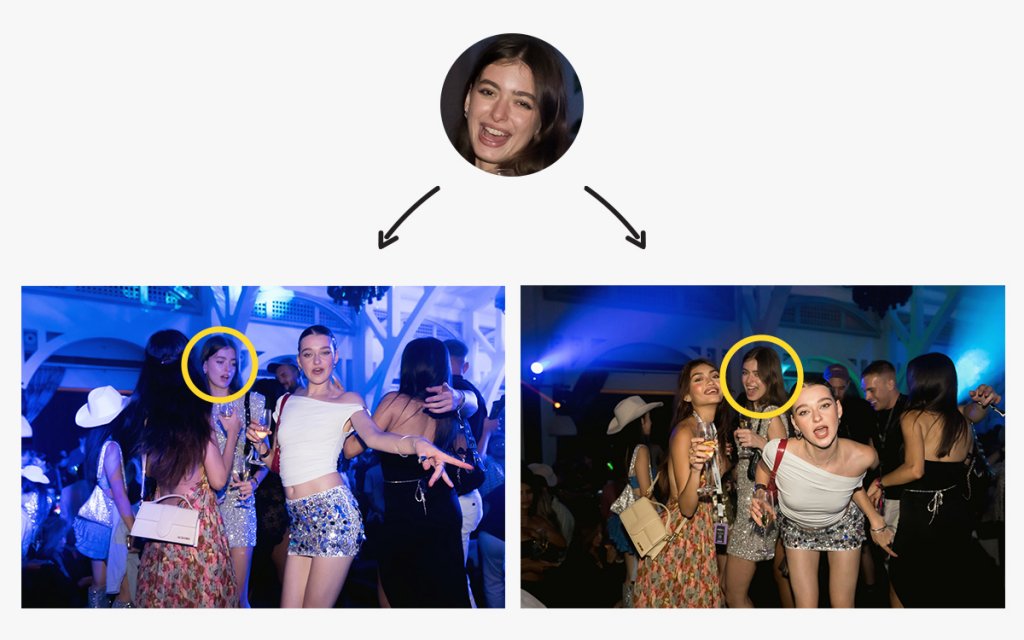
In this example, the subject is identified across two photos taken in a dim, unevenly lit environment. Even though the lighting and angle change between shots, the system is still able to match the same person correctly.
Angles: Candid and Side Profiles
Not every photo is front-facing.
People turn their heads, move around, or get captured mid-conversation. These angles reduce how much of the face is visible, but modern systems can still match many of these shots.
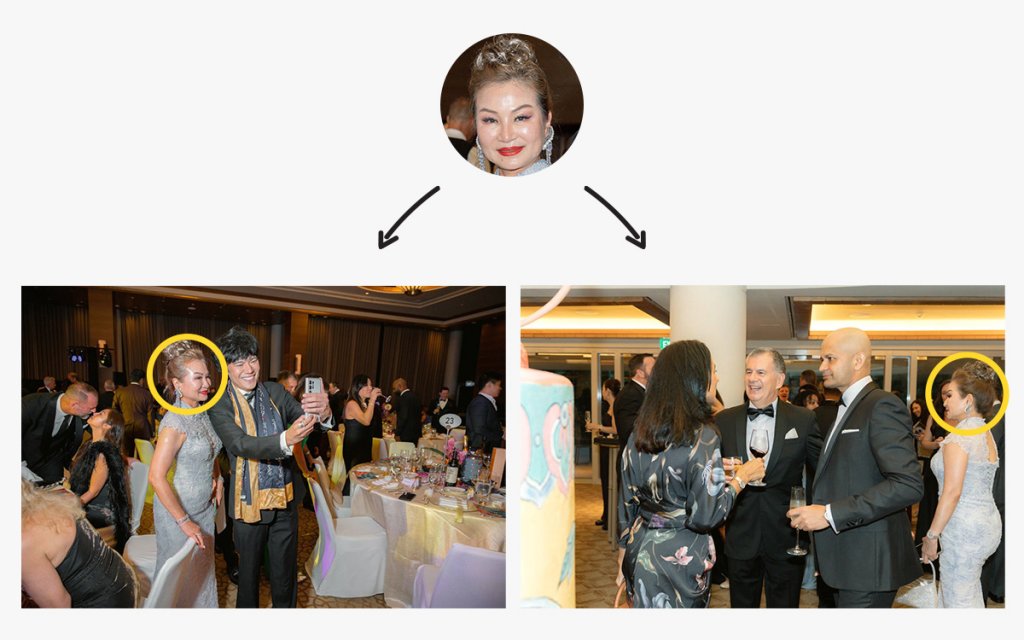
In this example, the subject is matched across two candid photos. In one, she is facing the camera more directly, while in the other, her face is turned to the side and partially visible. Even with the change in angle, the system is still able to identify her correctly.
Obstructions: Crowds and Accessories
In crowded scenes, faces are often partially blocked.
Guests may also wear glasses, masks, or hold props. Even with these obstructions, recognition can still work using the visible parts of the face.
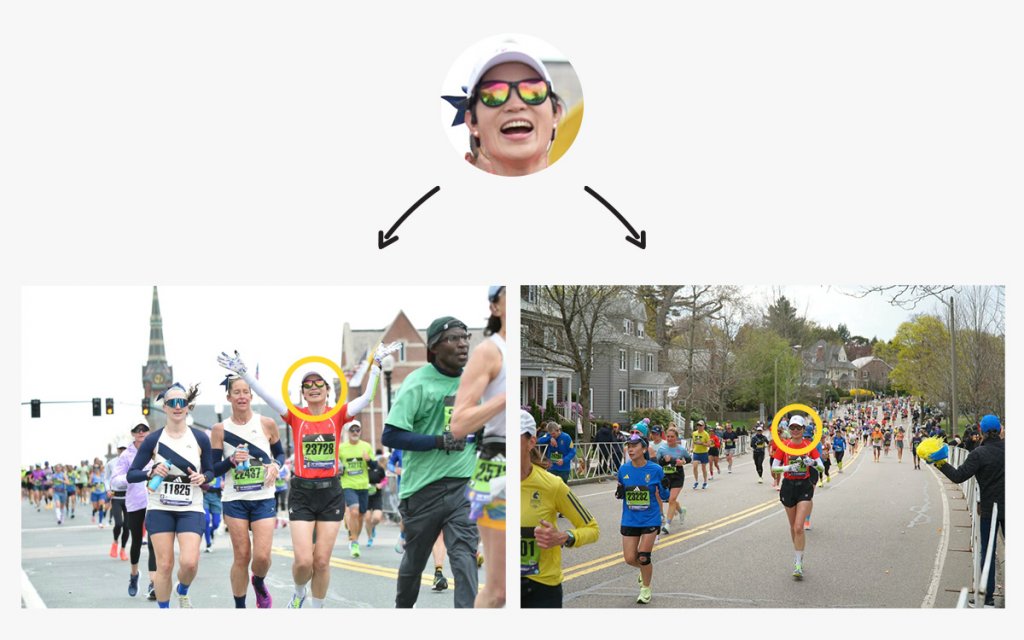
In this example, the subject is identified in a crowded race despite wearing a cap and sunglasses. Even when the face is smaller in the frame and partially obscured, the system is still able to match her correctly.
Image Quality: Motion and Blur
Photos aren’t always perfectly sharp.
Motion blur or lower-quality images reduce the detail available, which can affect accuracy. Even so, modern systems can often match these photos if there are clearer images to reference.
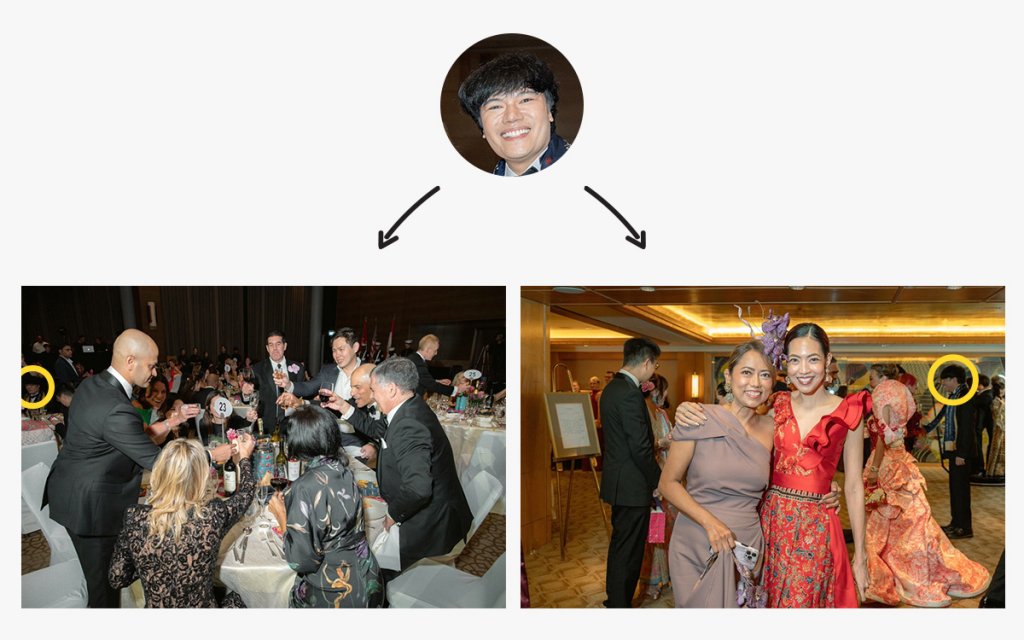
In this example, the subject is identified across two photos where the face appears small in the frame, which reduces the visible detail. In one, the face is less distinct, and in the other, while slightly better lit, the person is still in the background and turned to the side. Despite the lower effective resolution in both images, the system is still able to match the same person correctly.
Conclusion
As we’ve seen, face recognition accuracy depends on factors like lighting, angles, obstructions, and image quality. These conditions are an unavoidable part of every event.
Modern AI photo sharing apps are trained to handle these variations, which is why they work reliably across most scenarios. Most people can find the majority of their photos in seconds, without scrolling through hundreds or thousands of images.
That’s the real value of face recognition. It turns a frustrating search into a simple, instant experience.
If you want to understand how it works in more detail, from the guest experience to the underlying process, you can read our full guide on face recognition for photo sharing.