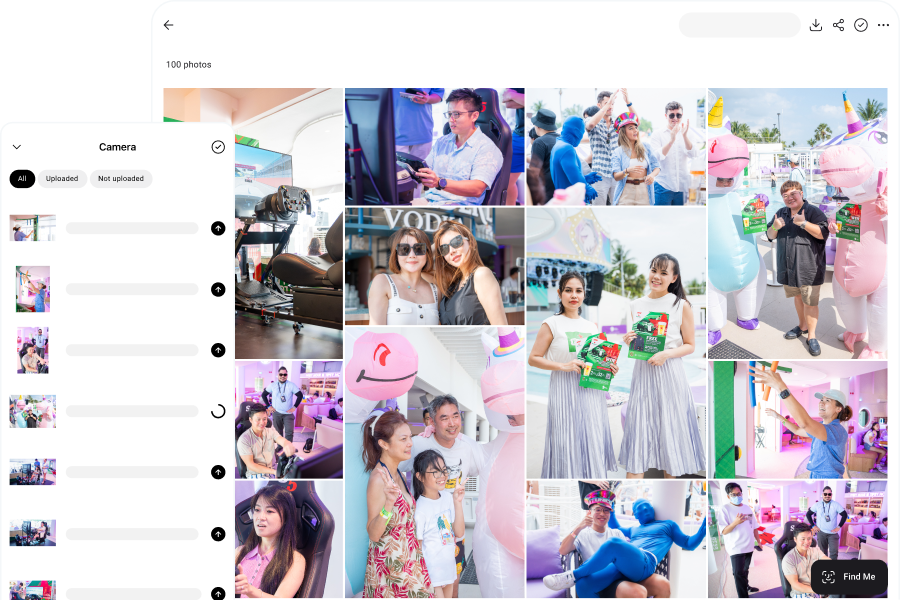

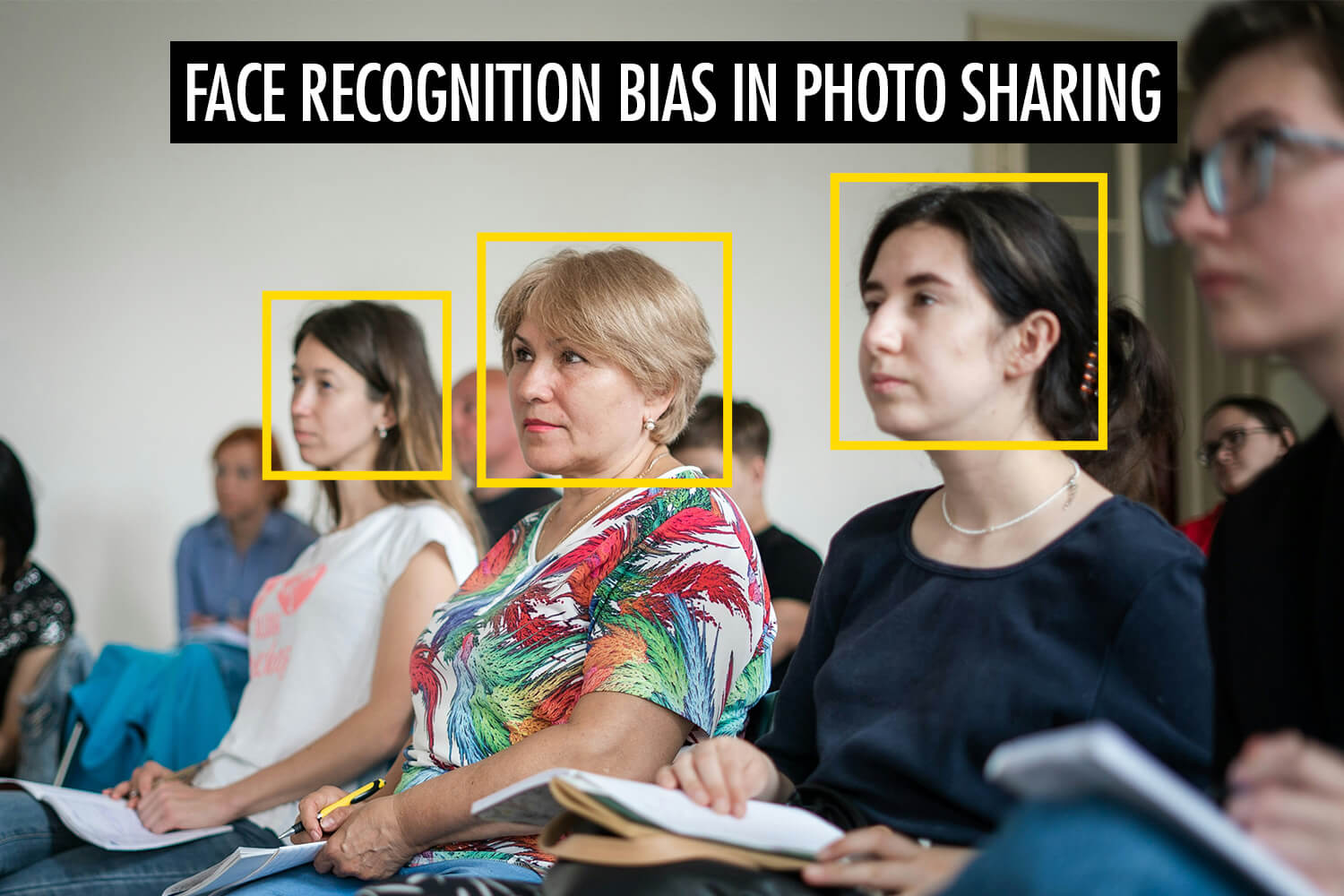
Face recognition can make event photo sharing much faster, especially when guests need to find their own photos from hundreds or thousands of images.
But does it work equally well for everyone?
The honest answer is that AI face recognition can be biased. Performance can vary across factors like race, gender, age, skin tone, and facial features.
In this article, we’ll look at what bias means in the context of event photo sharing, why it happens, how it affects photographers and guests, and what to look for when choosing a face recognition tool.
What Does Bias in Face Recognition Mean?
Bias in face recognition means the system performs better for some groups of people than others.
This can happen when the system is trained or tested on data that does not represent enough variety. If the data includes more examples of certain groups and fewer examples of others, the system may become better at recognizing the people it has seen more often.
For AI photo sharing, this matters because event galleries often include a wide mix of guests. A wedding may have multiple generations of family members. A corporate event may include people from many countries and backgrounds. A school or sports event may include children and adults.
If the face recognition system has not been built and tested with that variety in mind, some guests may have a harder time finding their photos than others.
The Impact on Guests and Photographers
Bias affects the guest experience.
When someone uploads a selfie and expects to find their photos, the process should feel simple and fair. If some guests consistently have a harder time finding their images, the experience feels unreliable.
Instead of letting guests find their photos on their own, photographers may need to answer messages, search through the gallery manually, or reassure clients that the photos were captured.
AI face recognition is used to reduce manual sorting and make large galleries easier to share. If the system works inconsistently, it weakens one of the main reasons photographers use it in the first place.
How Better Systems Reduce Bias

Better face recognition systems are built and tested with a wide range of people in mind.
That starts with diverse training data. If a system is trained on faces across different skin tones, ages, genders, and facial features, it has a better chance of performing fairly across different groups.
It is not enough for face recognition to work well on a narrow set of examples. Better systems are tested across different groups of people, so performance gaps can be identified and improved.
A good system also needs to balance finding enough photos with avoiding poor matches. If the threshold is too strict, some guests may miss photos that should have been shown. If it is too loose, guests may see images that do not belong to them. Platforms built for event photo sharing, like Honcho, need to keep improving this balance because it affects both fairness and overall accuracy.
No face recognition system is perfect, and bias cannot be solved once and forgotten. It requires continuous testing and improvement.
What Photographers Should Look For
Start with the guest experience. A good face recognition app should make it easy for different guests to find their photos, regardless of age, gender, skin tone, or appearance. Ideally, guests should be able to open a gallery, upload a selfie, and see their photos without creating an account or downloading an app.
Privacy is becoming more important for event organisers and guests, especially at public events. Face recognition should help protect that privacy. With Honcho, galleries can be blurred by default, so guests can only view the photos that match them, and no one else’s.
The best systems make photo sharing feel easier for both sides. Guests get a simple way to find their images, and photographers spend less time sorting, sending, and answering follow-up messages.
Conclusion
Face recognition can be biased, and photographers should be aware of that when using it to share event photos.
Instead of pretending the technology is perfect, it is better to understand where bias can happen and choose systems that are built to reduce it.
When done well, face recognition is a powerful tool. It helps guests find their photos faster, protects privacy, and reduces the amount of manual sorting photographers need to do.
For a broader overview of how the technology works, you can read our full guide to face recognition for photo sharing.